REVIEW · BERLIN
Private Taxi Tour through Berlin East and West and Kiez 4-6h
Book on GetYourGuide →Operated by GAT-Productions · Bookable on GetYourGuide
Berlin has a split personality, and you get both. This private taxi-style tour ties the landmarks together with the story of how the city was broken, rebuilt, and then rejoined. I especially like the mix of city-driving with small walk-ins where the history actually lands on your face, not just through a window. One thing to keep in mind: the language is German or English, so if you need another language, you may rely on translation.
What also makes this work well is the comfort factor. You ride in a leather-seated SUV with AC, parking is handled, and you stay hidden from the curb (no awkward parade of strangers following you). You’ll also get the Humboldt Forum rooftop included, which turns a long day of looking at Berlin into a real viewpoint moment. The one possible drawback is that, because it moves fast across East and West, you’ll need to like short stops and photos over slow museum-style time.
In This Review
- Key things I’d plan around
- Private Berlin Taxi Tour: East, West, and the City’s Split Story
- Riding Comfort: An SUV That Keeps You Focused on the Views
- How the Route Works: From Kurfürstendamm Glam to East Berlin’s Big Statements
- The Berlin Wall Story You’ll Feel at Potsdamer Platz and Beyond
- Checkpoint Charlie: Short Walk, Big Impact
- The Humboldt Forum Rooftop: The View That Feels Like a Payoff
- Museum Island and the Rebuilt East: Not Just Pretty Buildings
- Living in the In-between: Friedrichstraße and the Center of Power
- East Side Gallery and the New Berlin Wall Memory
- Other Stops That Build the Whole Picture
- Price and Value: Is $124 Per Person Worth It?
- Who This Tour Fits Best (and Who Might Prefer Something Else)
- Should You Book This Berlin East-West Taxi Tour?
- FAQ
- How long is the private taxi tour?
- Where does pick-up happen?
- Is airport pick-up included?
- What vehicle and comfort level do you get?
- Is the Humboldt Forum rooftop ticket included?
- What other entrance tickets are included?
- What languages are offered?
- What should I bring for the tour?
Key things I’d plan around
- Small, private format with a prepared route so you don’t waste time guessing
- Short walking exits at key Wall-related sites like Checkpoint Charlie and near Brandenburg Gate
- Humboldt Forum rooftop entry included, so you get a signature “City Palace area” viewpoint
- West-to-East flow that helps the city history make sense, not just list buildings
- SUV comfort and “higher view” for easier sightseeing and better photos
Private Berlin Taxi Tour: East, West, and the City’s Split Story
This is one of those Berlin experiences where the point is not just what you see, but why you see it in a certain order. Berlin’s modern look is shaped by destruction, rebuilding, and decades of separation. When you drive it as one connected route, you start noticing patterns: the choices planners made, what got rebuilt, what stayed scarred, and how political power shaped neighborhoods.
You get a licensed guide who mixes Berlin history with a personal, lived perspective. And because your guide also drives the taxi, the whole thing has a practical rhythm—quick repositioning by car, then small walking moments to make the story concrete. That matters in Berlin, where distances can be deceptive and public-transport routes can leave you zigzagging around the same areas.
The format is also good value for the kind of day you’re getting. At $124 per person, it’s not “cheap,” but it’s often cheaper than combining multiple paid attractions with a standard private guide plus transit. The included items like parking and the Humboldt Forum rooftop ticket help make the price feel less like a guess.
You can also read our reviews of more private tours in Berlin


Riding Comfort: An SUV That Keeps You Focused on the Views
Berlin sightseeing can be tiring, especially when weather flips or you’re squeezing in a lot of highlights. Here, you ride in a luxury SUV with leather seats, AC, and Wi‑Fi on board. You sit higher than you would on many buses, so you get a better line of sight for boulevards, skyline shots, and big-picture urban design.
Another smart detail: you don’t need to wait outside at a busy pick-up spot. Your driver texts you when they’re heading over and again after arrival. That sounds minor until you’ve already spent time in Berlin trying to coordinate meeting points that are impossible to find in real life.
For the best experience, pack like this is a viewpoint day:
- Bring a jacket (the rooftop can be windy).
- Pack water (a small bottle is plenty).
- Bring an umbrella if the forecast looks unsettled.
You’ll also want comfortable shoes for the short walks. Most are brief, but they add up when you’re moving across East and West.
How the Route Works: From Kurfürstendamm Glam to East Berlin’s Big Statements
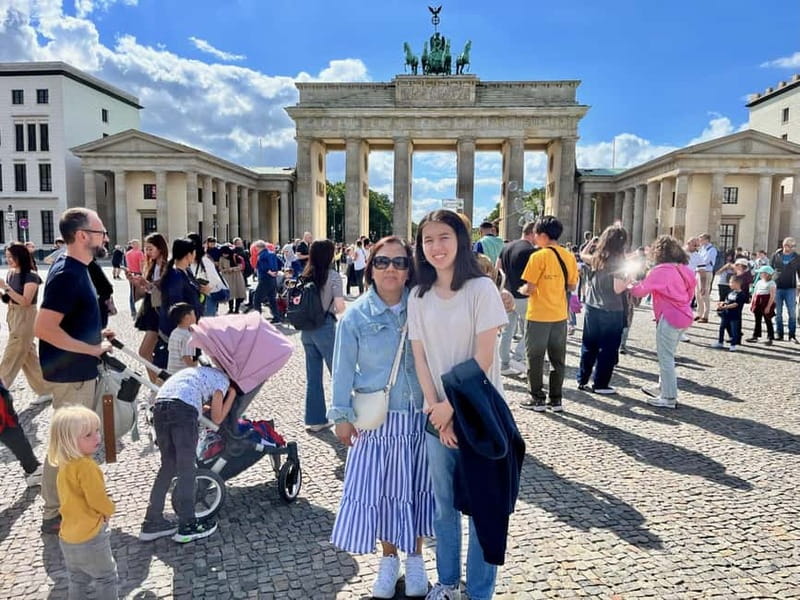
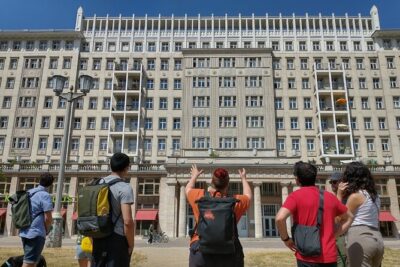
The route is designed to help you build mental maps. You start with West-side highlights first, then gradually shift toward East Berlin’s historical core. That order matters because Berlin’s architecture is telling you two different stories—under capitalism and under communism—even when the streets look similar.
On the West side, you’ll pass major retail and grand-city landmarks. Kurfürstendamm is a classic boulevard feel—big buildings, open sightlines, and the kind of streetscape that makes you understand why West Berlin became a magnet. You also head toward places like the Kaiser Wilhelm Memorial Church area, Europa-Center, and KaDeWe territory (often recognizable even if you don’t shop there). These stops work as “orientation landmarks,” showing you where West Berlin projected culture, commerce, and modern life.
Then the route starts transitioning. You’ll pass Bendlerblock and the Memorial for German Resistance (Gedenkstätte Deutscher Widerstand), where the mood shifts from boulevard sightseeing to the darker layers of German history. The Neue Nationalgalerie and Berliner Philharmonie area keep the “West as cultural power” theme going, before the city shifts toward the Wall story.
The Berlin Wall Story You’ll Feel at Potsdamer Platz and Beyond
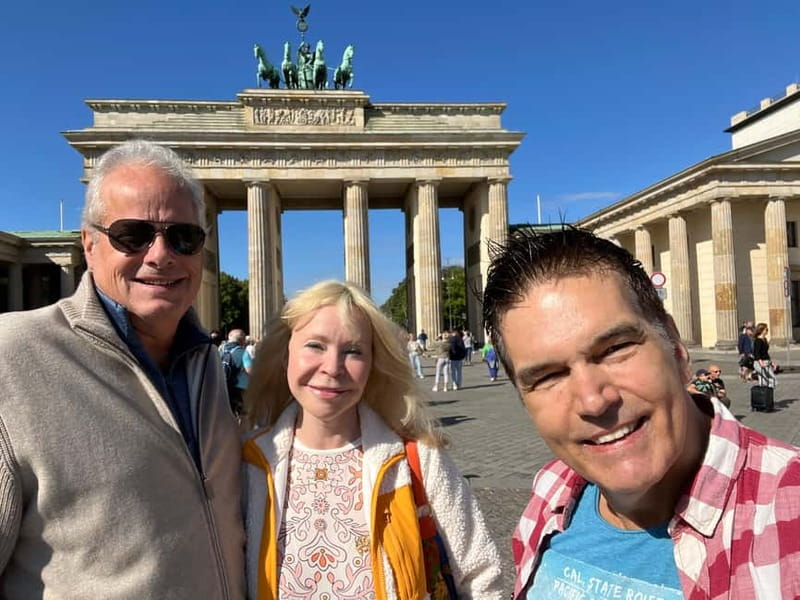
One of the tour’s strengths is how it anchors big history in a place you can actually point to. You start this Wall-focused stretch around Potsdamer Platz, which was part of the famous death zone between East and West.
Here’s what to notice as you look around: Potsdamer Platz was essentially erased in the pre-war and wartime damage, then the border landscape created an empty strip where movement was controlled and life was severed. The space was about 80 meters wide between the front wall and the back wall. In the 1990s, the area reopened in a modern way—think Sony Center and the Mercedes-Benz Quarter—so it can be hard to imagine what it looked like before the reunion. Having the guide explain the “before and after” makes the current skyline feel like a recovered wound.
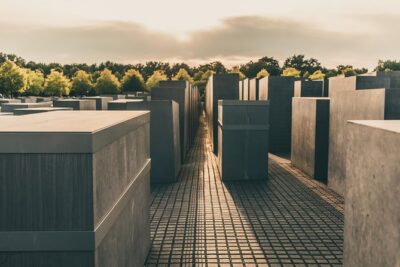
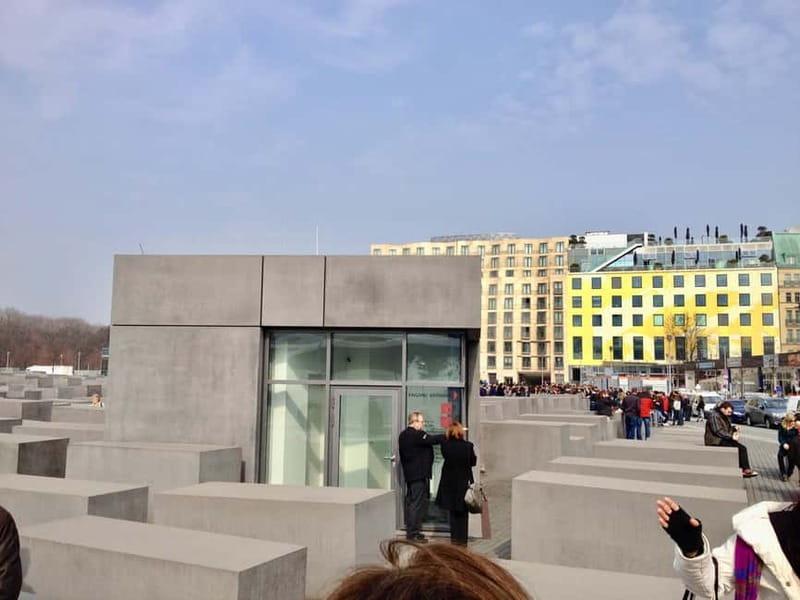
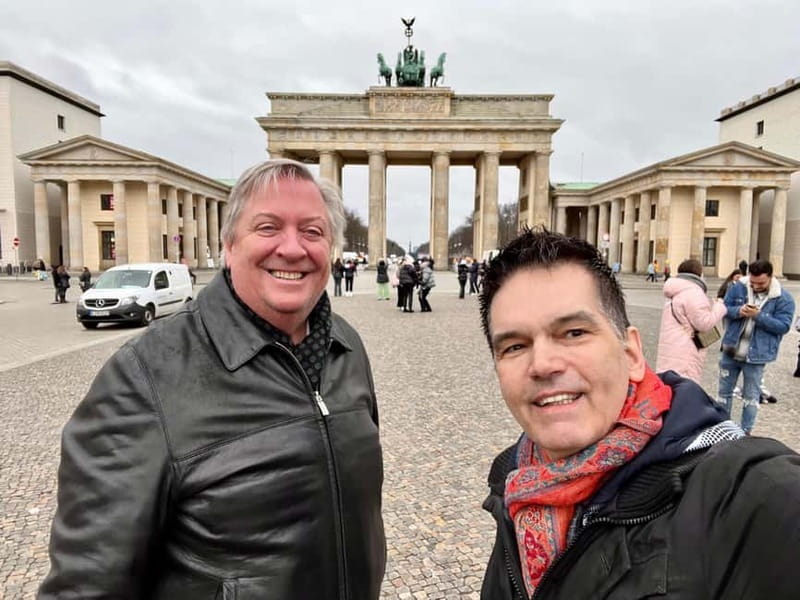
From Potsdamer Platz, you drive north toward Brandenburg Gate, with key memorial moments along the way. You’ll pass the Holocaust Memorial with its 2,711 stelae, dedicated to the 6 million murdered Jews of Europe. This stop isn’t there for a quick photo—it sets the moral weight for everything that follows in the Cold War story.
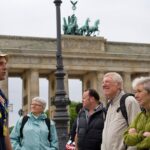
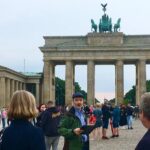
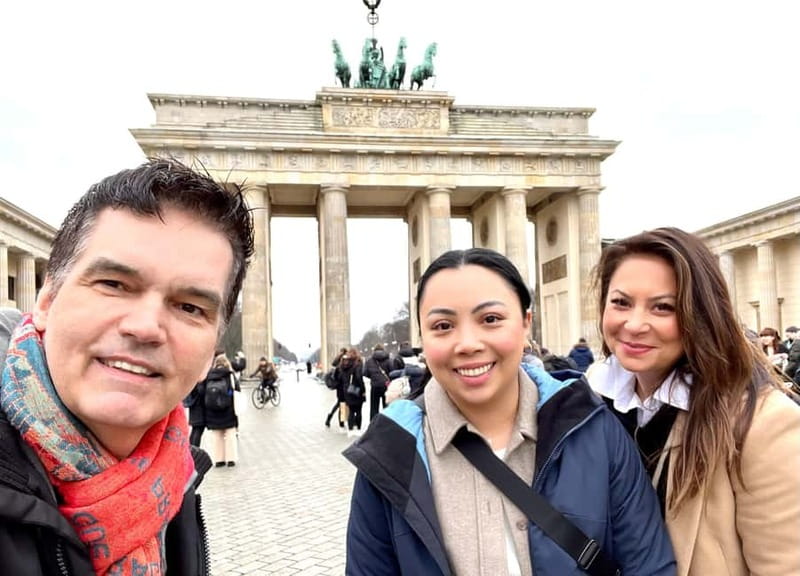
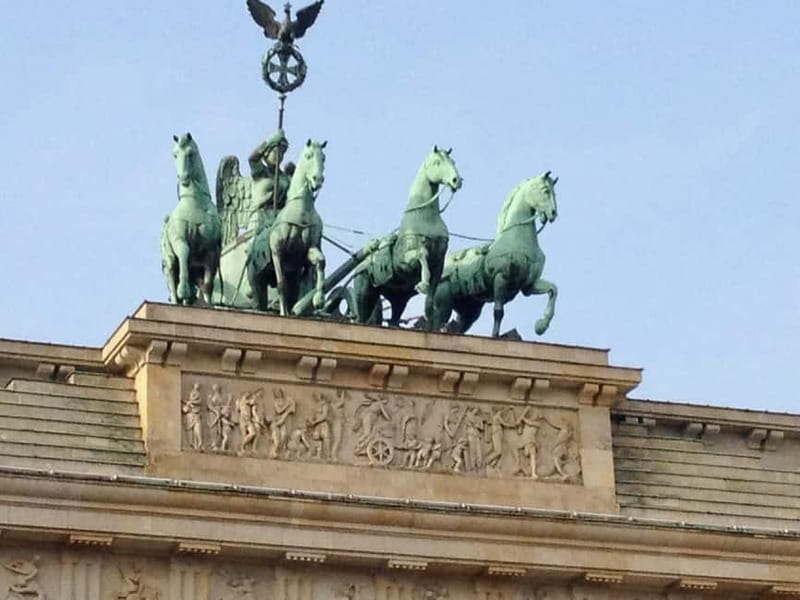
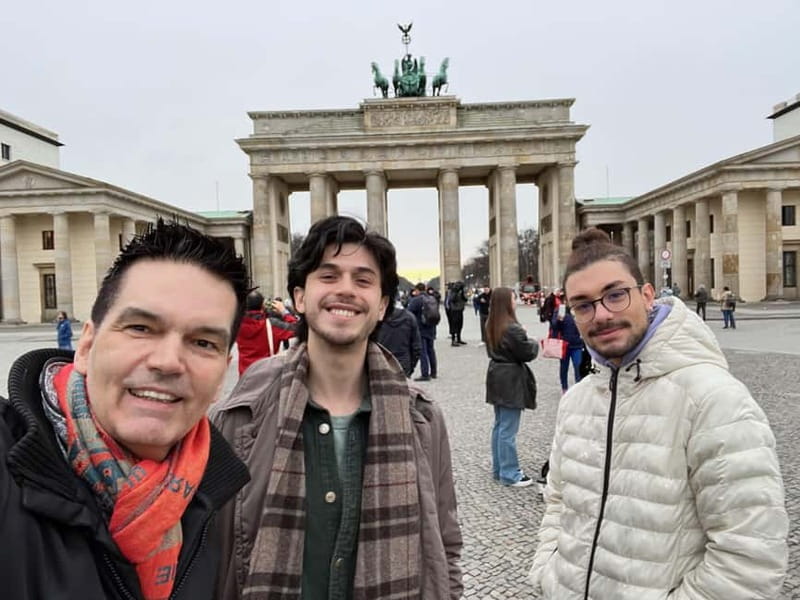
Brandenburg Gate itself matters because it was part of the historical city fabric long before the 20th-century border era. The guide’s framing helps you understand why the old city’s layout influenced how East Berlin developed, and why the reunification era feels like more than politics—it’s about reshaping the identity of streets and squares you thought you already knew.
Checkpoint Charlie: Short Walk, Big Impact
The tour includes a guided time at Checkpoint Charlie with a short walk (around 10 minutes). This is one of those Berlin spots where tourist photos can sometimes flatten the reality. The value here is the context: the guide connects the site to the larger border system—how checkpoints functioned, what was controlled, and how the city’s divided power played out on the ground.
You’ll get close enough to really register the place, not just look at it from across the street. The walking time is intentionally short, which is good because the surrounding area can be busy. You still get the emotional “hit,” but you avoid losing too much time in crowds.




The Humboldt Forum Rooftop: The View That Feels Like a Payoff
If you’re going to choose one “signature moment” on this tour, make it the Humboldt Forum rooftop (entry is included). Berlin has plenty of great viewpoints, but this one connects architecture, restoration, and modern Berlin’s new government-era identity.
The rooftop is the kind of stop where the guide’s storytelling pays off. Looking across the city, you can see why Berlin grew back toward its former border edges and why the center of power shifted after 1990. Even if you’re not a history nerd, the skyline makes the story understandable.
Just be prepared for weather. Bring that jacket even if it seems warm when you start. Rooftops in Berlin can have a sharp wind that shows up fast.
Museum Island and the Rebuilt East: Not Just Pretty Buildings
On the East side, the route threads through the Museum Island area—photo stops around major museums like Bode Museum, Pergamon Museum, Neues Museum, and the surrounding grand architecture. From the car, you get broad angles and the sweep of the complex. Some stops are quick passes, but the way the guide ties these buildings to the city’s rebuilding helps you understand why Berlin invested in culture as part of “new identity.”
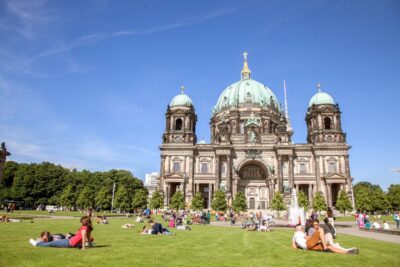
You’ll also get to see Berlin Cathedral and Lustgarten from the outside. Again, short stops—but they help you connect the government and cultural core with the political story of the last century.
A key advantage of a private route here is pacing. You’re not standing in line for ages or stuck in a crowded group shuffle. You see the highlights, learn what they mean, and keep moving.
Living in the In-between: Friedrichstraße and the Center of Power
As you head through the heart of Berlin, you’ll pass major central streets and landmarks that show how modern Berlin replaced the border logic with new city life. Friedrichstraße is one example—an artery where the city’s “then and now” overlap in plain sight.
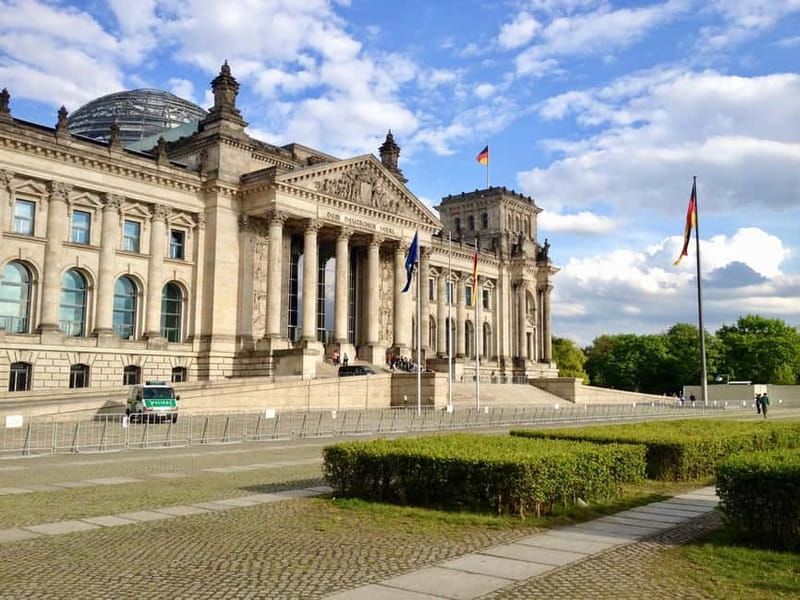
You’ll also stop near places that explain how politics reshaped the city physically: the Reichstag area, German Chancellery area, and the surrounding government zone. Even when you’re just riding past, the guide points out what changed and what stayed.
The tour also includes the Paul-Löbe-House and Berlin Hauptbahnhof area in the wider center mix, plus Tiergarten and the Landwehrkanal views toward the outskirts. These breaks matter. Without them, a history-heavy day can feel like facts only. Here, you get enough “breathing” space to process what you’ve learned.
East Side Gallery and the New Berlin Wall Memory
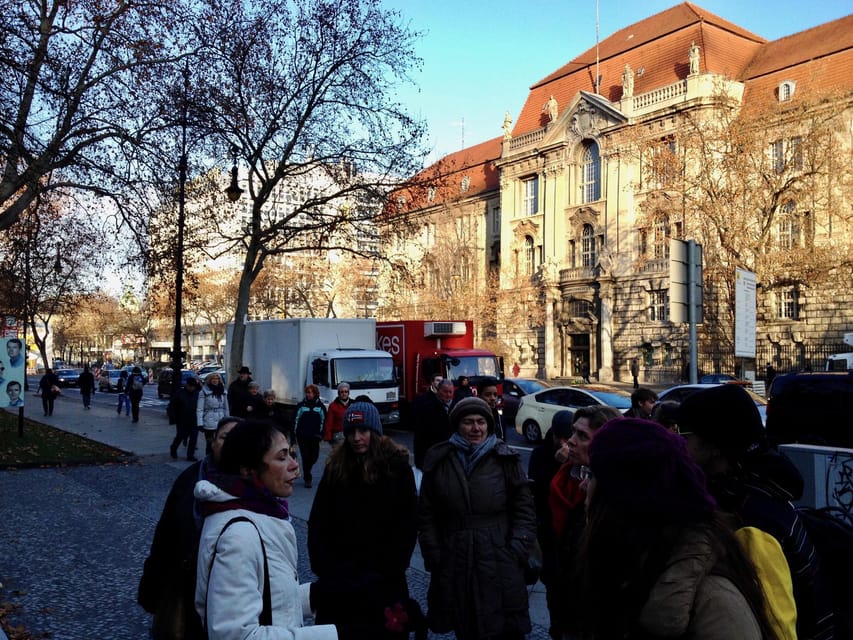
One of the most memorable parts comes toward the end: the East Side Gallery. You get a guided walk time (about 10 minutes) along the murals. It’s a popular place, but that’s not the point. The point is that you’re seeing the Wall as art and memory instead of a barrier system.
Standing near the murals, you get a different emotional temperature than you did at Checkpoint Charlie. This is the Wall after it stopped being a wall. The guide’s framing helps you connect that to the peaceful revolution in 1989 and the reunification that followed.
You’ll also see the Oberbaumbrücke area on the way, and then move onward through neighborhoods like Oranienstraße and the SO36 area. These aren’t just random stops. They help you see that Berlin didn’t turn into a single “museum city.” It rebuilt into a place where young culture, music, and daily life take over.
Other Stops That Build the Whole Picture
Even when stops are brief passes, they support the route’s storytelling logic. You’ll see:
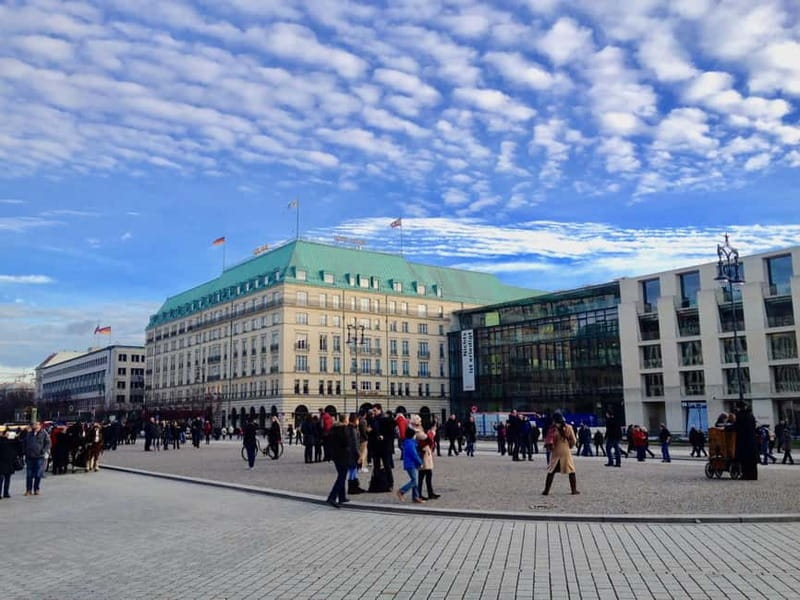
- Embassy and landmark areas like Pariser Platz and the U.S. Embassy region
- Cultural squares such as Gendarmenmarkt and Deutscher Dom
- Memorial-related moments including the Memorial to the 17 June 1953 Uprising and the Holocaust Memorial area stop
- Historic and restored buildings around the city center core, plus views toward areas like Alexanderplatz
There are also a couple of heavier moments included in the route, including a stop tied to Hitler’s Bunker (Führerbunker) as a photo stop. The guide’s job here is to keep the focus on historical meaning rather than sensational “atmosphere.”
Price and Value: Is $124 Per Person Worth It?
At $124 per person for a private SUV tour, value comes from three places.
First, you’re paying for speed plus a private guide. In Berlin, time costs money—between transit connections, walking distances, and how often you’ll backtrack. A taxi-style route reduces that friction.
Second, your tour includes the Humboldt Forum rooftop entry ticket. Many similar private experiences make rooftop views feel optional or extra-cost. Here, it’s baked in.
Third, your guide is actively doing two jobs at once—storyteller and driver. That’s part of why the day works as a connected narrative. You don’t just get facts; you get a route that helps you remember them.
Where it might not be worth it is if you only want one or two sites and you’re fine using the city’s excellent transit system. If that’s you, buying a transit day pass and doing self-guided stops could be cheaper. But if you want East and West in one coherent arc with minimal logistics stress, this price starts making sense fast.
Who This Tour Fits Best (and Who Might Prefer Something Else)
This tour is a strong match if you:
- Want East and West together, without spending a day jumping between unrelated neighborhoods
- Like history explained in a way that feels short, clear, and connected
- Prefer private pacing over group logistics
- Appreciate a mix of viewpoints, memorial context, and urban architecture
It’s also ideal for families that include different ages. The learning style here is geared toward understanding, not just sightseeing. If you’re traveling with grandparents, kids, or anyone who gets tired fast, the SUV time plus short walking stops can feel like the best compromise.
If you’re the type who loves long museum sessions and deep indoor time, you might find the pace too tight for your taste. This is not a slow “one museum per hour” plan.
Should You Book This Berlin East-West Taxi Tour?
If you want Berlin’s story in one day, with comfort and clear context, I think it’s a smart booking. The included Humboldt Forum rooftop ticket gives you a real payoff viewpoint, and the short walks at key border-related sites help the history land in a way a pure driving tour can’t.
I’d book it especially if:
- You want to understand why Berlin looks the way it does
- You’d rather pay for a coherent route than spend your day figuring out what to see next
- You appreciate a guide who can explain big events without making it feel like a lecture
Skip it if you only care about a small cluster of sites or you’re comfortable building your own East/West itinerary using transit and a guidebook.
FAQ
How long is the private taxi tour?
It runs for 2.5 to 5 hours, depending on the starting time available.
Where does pick-up happen?
Pick-up is included within the Berlin S-Bahn-Ring (city circle ring). Pick-up from outside that area is possible with an extra regular taxi fee. Airport pick-up is also possible for an extra fee.
Is airport pick-up included?
No. Airport pick-up is available for an additional fee of about 50 euros.
What vehicle and comfort level do you get?
You ride in a luxury SUV with air conditioning and leather seats. Wi‑Fi is included on board.
Is the Humboldt Forum rooftop ticket included?
Yes. Entry ticket to the Humboldt Forum rooftop is included.
What other entrance tickets are included?
Only the Humboldt Forum rooftop entry ticket is included. Other entry tickets are not included.
What languages are offered?
The live guide provides German and English.
What should I bring for the tour?
Plan for cool wind on the rooftop: bring a jacket. Also bring water and an umbrella if weather looks changeable.