REVIEW · BERLIN
Berlin: Historic Jewish walking tour through the city center
Book on GetYourGuide →Operated by Stitching The Past - Tour Berlin · Bookable on GetYourGuide
A street-level lesson in Berlin’s Jewish trade. This 1-hour walk follows Konfektion and the city’s shift from the Prussian Empire era to the Roaring Twenties, then out to life after the Wall fall. I like the focus on the lost Jewish tailoring industry and the way the guide connects politics to how an industry can change fast. One possible drawback: it’s a tight schedule, so you’ll get sharp stops and stories rather than a slow, deep lecture.
Logistics are simple if you show up ready to walk. The meeting point is Hausvogteiplatz, by the water fountain near the U2 station, and the guide carries a white side bag. It’s also wheelchair accessible and runs with a live English guide, so you’re not stuck with an audio app.
In This Review
- Key things you’ll notice on this walk
- Why this tour feels different from a typical Berlin walk
- Getting your bearings at Hausvogteiplatz (and why it matters)
- Stop-by-stop: how Hausvogteiplatz, Werderscher Markt, and Jägerstraße each do their job
- Hausvogteiplatz: the setup and the main guided segment
- Werderscher Markt: a focused 15-minute visit
- Jägerstraße: the tailoring-story street moment
- The bigger theme: political extremism and how industries get rewritten
- What you’ll be doing in real time (so you can plan smart)
- Price, donation option, and whether it’s good value
- Who should book this tour (and who might skip it)
- Should you book this Berlin historic Jewish walking tour?
- FAQ
- FAQ
- Where does the tour start?
- How long is the tour?
- What languages are available?
- Is the tour wheelchair accessible?
- What age is the tour not suitable for?
- Is free cancellation available?
Key things you’ll notice on this walk
- Konfektion (Jewish tailoring) at street level, not just in a classroom
- A route that tracks Berlin’s changing mood from old empires to the post–Wall fall city
- Stops chosen for historic feel: Hausvogteiplatz, Werderscher Markt, and Jägerstraße
- A guide-led story about how political extremism can reshape an industry
- A clear meeting point near U2, plus a white side bag to spot your guide
Why this tour feels different from a typical Berlin walk
Berlin has plenty of big, famous sights. This tour takes a smaller door into the city’s past and uses it to explain how daily life, fashion, work, and power connect.
The core idea is simple: the tour centers on Berlin’s former economic Jewish center district and the Konfektion industry (the tailoring trade). From there, it zooms out to show how eras changed the city—Prussian Empire, the Roaring Twenties—and then it zooms back in again after the Wall fall, when the area moved forward into the present.
You’ll also hear the blunt part of the story. Political extremism isn’t treated like background noise. It’s presented as a force that can break an economic system, disturb community life, and alter who gets to thrive, survive, or rebuild. The tour language is careful, but the theme lands.
And credit where it’s due: this isn’t only about tragedy. It’s about development and livelihood—how the Jewish population developed, thrived in some cases, and, in some lucky cases, even survived—before the city’s later transformation after the Wall fall.
You can also read our reviews of more walking tours in Berlin



Getting your bearings at Hausvogteiplatz (and why it matters)
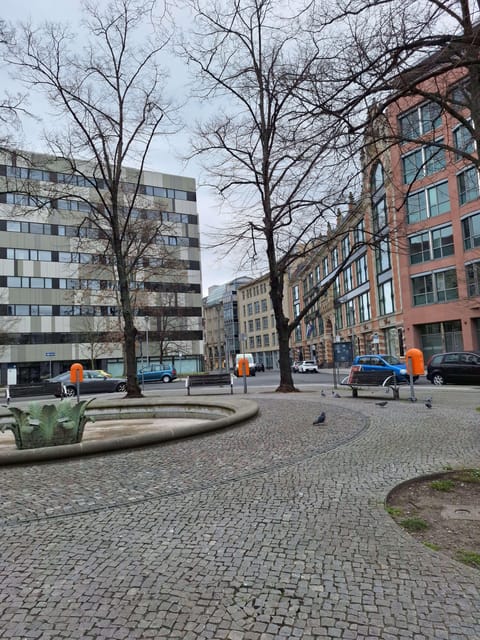
You start at Hausvogteiplatz, meeting in the square by the water fountain near the U2 train station. The guide will have a white side bag, so you can find them without playing detective for long.
The first chunk is also the orientation chunk: you spend about 30 minutes with guided storytelling in and around Hausvogteiplatz. This matters because it sets the tone and the framework for the rest of the walk. Without that setup, you’d just be passing buildings and street corners. With it, you start noticing what the guide wants you to notice: the economic and social layer beneath the scenery.
The tour also includes a map and a list of activities in order. That sounds basic, but it helps you keep up when the story shifts across time periods. Berlin history can feel like a pile of facts. This structure helps you connect dots while you’re standing in the place where the dots belong.
Practical tip: arrive a few minutes early and take a quick look around the square before the guide starts. The fountain area is your anchor point, and starting with calm beats starting with a sprint.
Stop-by-stop: how Hausvogteiplatz, Werderscher Markt, and Jägerstraße each do their job
This walk is built around three real stops inside an hour. That means each one has a purpose. Here’s what that purpose feels like as you move.
Hausvogteiplatz: the setup and the main guided segment
You’ll get roughly 30 minutes of guided tour at Hausvogteiplatz. This is where the story begins to click: Berlin’s former economic Jewish center district isn’t described as distant history. It’s framed as a working hub—fashion, tailoring, commerce, and the social rhythm around trade.
If you like your history connected to everyday industry, this part is the payoff. The guide mentions historic buildings and areas in Berlin and ties them back to the Konfektion world. You’re not just collecting names. You’re learning why this district mattered before the Second World War and how the industry’s fate connects to the broader political shocks Berlin faced.
The gentle drawback of a short tour: you’ll leave wanting more detail on individual streets. But that’s also why it works as a first exposure. It gives you a strong mental map fast.
Werderscher Markt: a focused 15-minute visit
Next is Werderscher Markt for about 15 minutes. This stop adds a different texture. If Hausvogteiplatz gives you the story foundation, Werderscher Markt helps you see the setting as more than a concept.
This is one of those stops where you’ll likely start paying attention to what makes a city feel “historic” even when it has been through major change. The tour highlights scenic and historic areas, and this is where that scenic feel supports the story rather than competing with it.
You’ll also hear how Berlin changed over time, including the period after the Wall fall and the area’s progression toward today. Even in 15 minutes, it’s enough time to understand that Berlin’s transformation isn’t a single event. It’s a sequence.
You can also read our reviews of more city tours in Berlin





Jägerstraße: the tailoring-story street moment
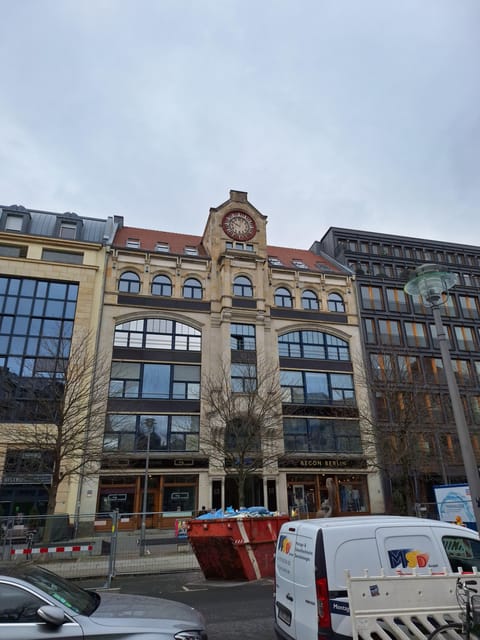
Then you head to Jägerstraße, another 15-minute visit. This is where the tailoring focus feels most grounded. The tour frames Berlin’s “lost Jewish tailoring industry” in the city center, and a street like Jägerstraße helps make the trade feel real—something with addresses and neighborhoods, not just a chapter in a book.
This is also where you’ll likely absorb the “fashion and glamour” angle mentioned in the highlights. Not as a costume party version of history, but as a way to show how style and craft sit next to economics and power.
And thematically, this is a good moment to connect the dots between the earlier eras and later changes. The tour story doesn’t treat time as separate boxes. It shows how Berlin’s shifts kept reshaping the same kinds of places: where people worked, lived, and tried to make a future.
The bigger theme: political extremism and how industries get rewritten
The tour’s hook is easy to understand: seeing firsthand how political extremism can transform an industry is a story people often overlook. That’s not a throwaway line. It’s the spine of the experience.
Here’s what I think you should take from it: industries don’t run on machines alone. They run on people, safety, legal life, markets, and social stability. When those collapse or get hijacked by extremism, businesses don’t just decline quietly. They can be dismantled, displaced, or forced into new realities—sometimes abruptly.
In this tour, the guide uses the tailoring trade as a case study. You hear about Berlin’s former Jewish community development and how it could reach thriving points, including cases of survival. Then the story tracks how the city’s broader upheavals changed what was possible in the years that followed, and how the area progressed after the Wall fall.
This isn’t written like doom-only history. It’s history with cause-and-effect. You leave with a clearer understanding of why Berlin looks the way it does today in the places where old work once happened.
What you’ll be doing in real time (so you can plan smart)
The duration is listed as 1 hour. The stops add up to 30 minutes at Hausvogteiplatz, plus 15 minutes at Werderscher Markt, plus 15 minutes at Jägerstraße, and then you return to Hausvogteiplatz.
So plan for:
- Comfortable walking shoes. You’re on your feet for the full hour.
- A “listen while you look” mindset. Each stop is short, so you’ll get the best value when you focus.
- Arriving on time. The start is a specific square near a fountain, and the guide’s white side bag is part of the identification.
Group size isn’t stated, so I won’t guess. But given the fixed timing, you can expect a guided format where the pace is steady and the schedule doesn’t slow down.
Also, the tour is in English and is live-guided, so you can get explanations as you go. If you’re someone who likes asking quick questions, this kind of set-up usually makes that easier than group audio tours.
Price, donation option, and whether it’s good value
The listed price is $1.70 per person. For a live English walking tour in central Berlin, that’s unusually low on the face of it. In practical terms, it makes this a low-risk way to try a story-focused tour without feeling like you need to choose the “perfect” first Berlin tour.
The provider also offers an option to book the tour working on a donation-basis if you contact them. That can be a good fit if you want to support the guide’s work more directly after you’ve seen what you’re getting.
So how do you judge value? For me, the value isn’t only the price tag. It’s the mix:
- A focused theme (Jewish tailoring/Konfektion)
- A short route that actually includes historic settings
- A live guide who can connect eras and explain the “why,” not only point out “what”
If you like your tours structured and story-driven rather than sightseeing-heavy, this is likely a strong match.
Who should book this tour (and who might skip it)
This tour is a great fit if:
- You want Berlin history that’s tied to work, fashion, and local economic life
- You’re interested in the Jewish community story in the city center and how it connects to the fate of an industry
- You like guided walks with a clear start/end and a schedule that ends where you began
You might consider skipping it if:
- You want a long, stop-and-stroll day with many landmarks. This is an hour and three visits.
- You’re looking for a tour focused mainly on major monuments rather than on one district’s industry and timeline.
Should you book this Berlin historic Jewish walking tour?
Yes, if you want a fast, meaningful walk that makes Berlin’s past feel relevant to what stands on the street today. The strongest reason to book is the tour’s focus on Konfektion and the way the guide explains how political extremism can reshape a whole industry—then ties that to what the city became after the Wall fall.
Also, the reviews’ big message matches the experience: people love the fresh city insights and the “I didn’t know that” feeling, especially around the lost Jewish tailoring industry in the city center. With a one-hour length, it’s easy to fit into a day even if you’re doing other Berlin hits.
If you’re on a tight schedule and you still want something real—not just photo stops—this is the kind of tour that earns its spot.
FAQ
FAQ
Where does the tour start?
The tour starts at Hausvogteiplatz square, near the water fountain by the U2 train station. The guide will have a white side bag.
How long is the tour?
It lasts about 1 hour.
What languages are available?
The tour is guided in English.
Is the tour wheelchair accessible?
Yes, it is listed as wheelchair accessible.
What age is the tour not suitable for?
It is not suitable for children under 6 years.
Is free cancellation available?
Yes. You can cancel up to 24 hours in advance for a full refund.