
REVIEW · BERLIN
Charité Hospital Walking Tour: Exploring Berlin’s Medical History
Book on Viator →Operated by Beyond and Beneath Tours · Bookable on Viator
Medical Berlin in two quick hours. This walk through Charité turns exterior monuments into a timeline of breakthroughs and medical ethics, with a guide who keeps the story moving as you go. You get just enough context to understand why these sites matter, without needing a medical degree.
I love the small-group pace and the way each stop stays tight and readable, so you spend your energy looking instead of waiting. I also liked how the tour links famous figures—Robert Koch, Rudolf Virchow, and Albrecht von Graefe—to what people faced when science and medicine were still finding their footing. One consideration: it is not designed for touring clinical or university operations inside the hospital.
In This Review
- Key highlights you will feel on this walk
- Charité Hospital Walking Tour: why this 2-hour format works
- Where you start and end near Berlin Central Station
- Stop-by-stop: what you will see and why each place matters
- Stop 1: Robert-Koch Denkmal and the 18th-century roots of Charité
- Stop 2: Tieranatomisches Theater and how veterinary disease was studied
- Stop 3: Rudolf Virchow’s monument and the idea of modern pathology
- Stop 4: Albrecht von Graefe and why Berlin put a scientist monument first
- Stop 5: Charité Campus Mitte and the WWII contrast you cannot ignore
- Stop 6: Design Offices Berlin Humboldthafen and the escape-by-canal story
- The guide and the small-group advantage
- Price and value: why $30.12 can be a smart use of time
- What is included—and what is not
- Practical expectations: pace, weather, and comfort
- Who should book this tour—and who should skip it
- Final call: should you book Charité Hospital Walking Tour?
- FAQ
- FAQ
- How long is the Charité Hospital walking tour?
- How many stops are included?
- Is the tour offered in English?
- Do I need to pay admission for the stops?
- Does the tour include entering active hospital or university areas?
- Where do I meet and where does the tour end?
- What happens if weather is bad or I need to cancel?
Key highlights you will feel on this walk
- Six major Charité-linked stops in about two hours, with a fast, efficient route
- Robert Koch’s monument and the surprising link to the first pharmaceutical scandal
- Tieranatomisches Theater, Berlin’s oldest surviving academic building with a veterinary disease angle
- Rudolf Virchow and social medicine, pathology with real-world consequences
- Charité Campus Mitte’s WWII contrasts, including how medicine was abused under the Third Reich
- Humboldthafen escape story, focused on how people tried leaving East Berlin by water
Charité Hospital Walking Tour: why this 2-hour format works
This is a short walk that hits the right balance: enough time to make connections, not so much time that you start zoning out. At about two hours, you can fit it into a tight Berlin schedule, including on days when you want history but still have energy for dinner plans.
The big win is that it is built around landmarks tied to names you will recognize. You are not just looking at pretty architecture or random plaques. You are learning why each site exists and what it represents in the evolution of medicine—science, public health, and the ethics that should come with all of it.
You can also read our reviews of more walking tours in Berlin



Where you start and end near Berlin Central Station
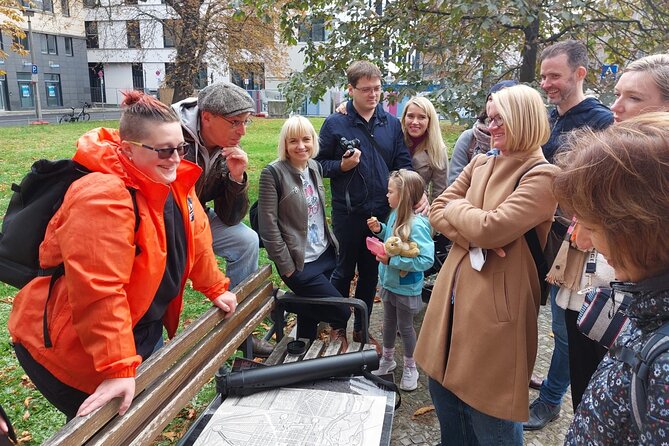
You meet at Robert-Koch-Platz (10115) and end on Alexanderufer (10117). The endpoint sits by the Humboldthafen canal, and it is about a 10-minute walk from Berlin Central Station.
That end point matters more than it sounds. Tours that finish deep in the city can leave you stuck when you want transit fast. Here, you are still close to major connections, so you can keep your day on track after the final stop.
Stop-by-stop: what you will see and why each place matters
Stop 1: Robert-Koch Denkmal and the 18th-century roots of Charité
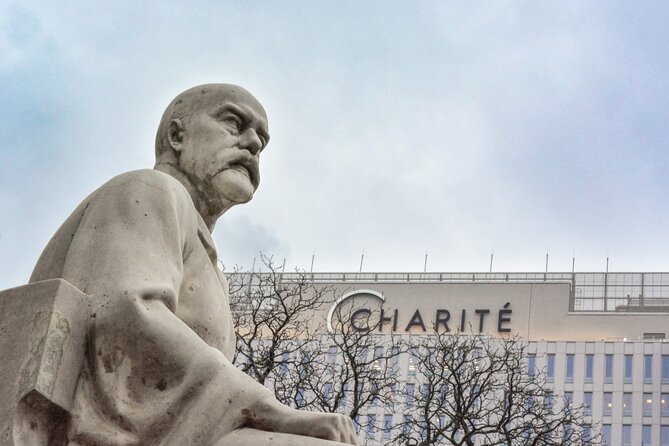
The tour kicks off at the Robert-Koch Denkmal, and it sets a strong tone right away. You learn why the Charité hospital is tied to Berlin’s medical story from the 18th century, and how one scientist’s work shaped public health thinking.
Robert Koch is the headline for a reason. The monument connects him to discoveries tied to diseases like tuberculosis, anthrax, and cholera. You will also hear a darker detail: Koch was responsible for what is described as the first pharmaceutical scandal in medical history.
That combination is not random. It gives you an early reminder that medical progress and medical wrongdoing can both exist in the same lifetime. It is an effective opening because it makes the rest of the walk feel less like trivia and more like cause-and-effect.
What I like most about starting here: it gives you a mental anchor. When you see later monuments, you understand the bigger theme—science moves forward, but people and institutions still make choices.
Stop 2: Tieranatomisches Theater and how veterinary disease was studied
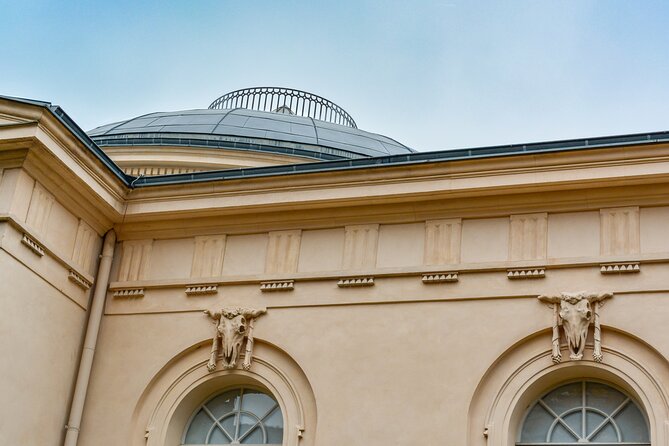
Next comes Tieranatomisches Theater, described as Berlin’s oldest surviving academic building. The setting is an 18th-century neoclassical structure, which helps the story land. You are seeing what “learning spaces” looked like before modern lab culture and before medicine had the tools we take for granted.
The content goes beyond architecture. You learn that veterinarians studied animal diseases here, and you get the sense of how medicine worked when the field was still trying to connect symptoms to causes.
You might find this stop especially eye-opening if you have ever assumed medical history is only about hospitals and doctors. Here it becomes a broader public-health story: animal disease, human disease, and how knowledge traveled between the two long before the word epidemiology became common at dinner parties.
You can also read our reviews of more historical tours in Berlin






Stop 3: Rudolf Virchow’s monument and the idea of modern pathology
At the Denkmal Rudolf Virchow, you meet another major figure in medical history: the father of modern pathology. Virchow’s name also links to social medicine, so this stop does not stay in the lab.
This is where the tour starts sounding more like the medicine you know today: how disease is studied, how organs and cells fit into the picture, and why public systems matter. Virchow is a reminder that medical progress is not just about microscopes. It is about who has access to care and how societies respond when illness spreads.
If you like connecting science to real life, this is one of the most satisfying stops.
Stop 4: Albrecht von Graefe and why Berlin put a scientist monument first
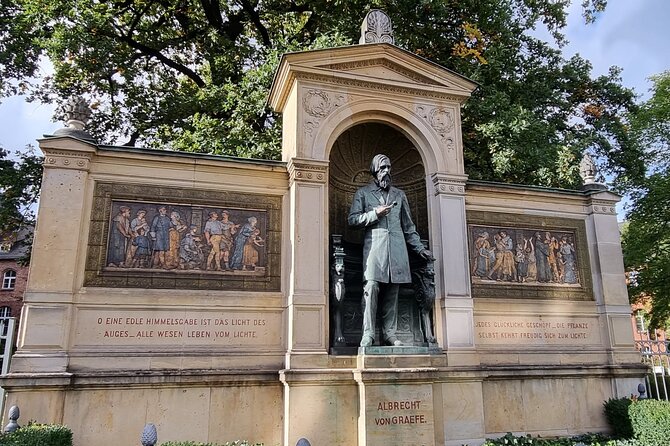
The Denkmal Albrecht von Graefe is a short stop with a big framing story. You learn about Albrecht von Graefe as a groundbreaking ophthalmologist, and you also hear why his monument is noted as the first in Berlin dedicated to a scientist.
That detail helps you read the city differently. You start noticing which histories people choose to put into public space. In this case, Berlin decided science deserved a visible place, not just a page in a book.
This stop works best if you pay attention to what the guide is doing: connecting an individual specialty—eyes—to the wider idea of medical advancement. It makes a specific field feel part of something bigger.
Stop 5: Charité Campus Mitte and the WWII contrast you cannot ignore
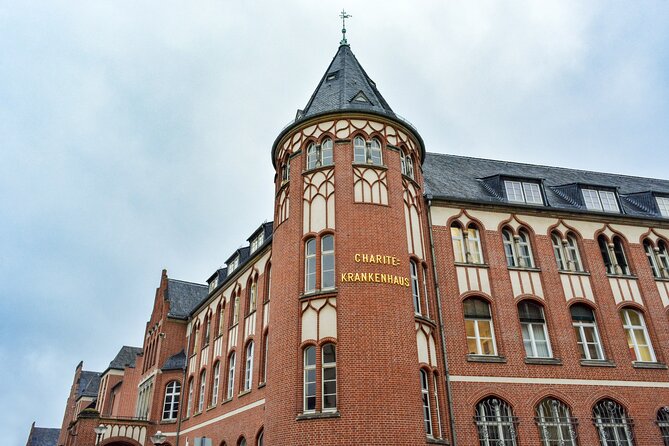
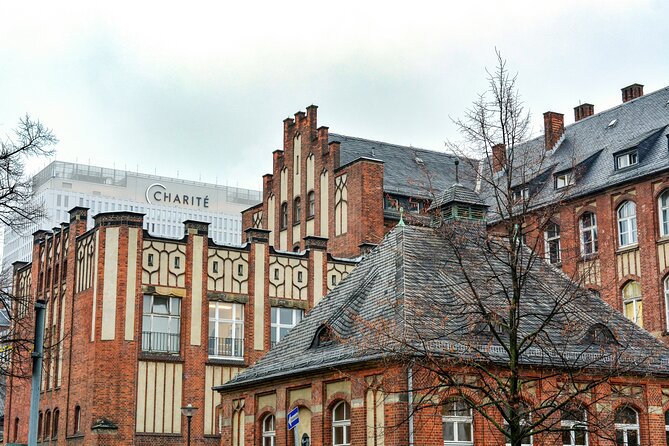
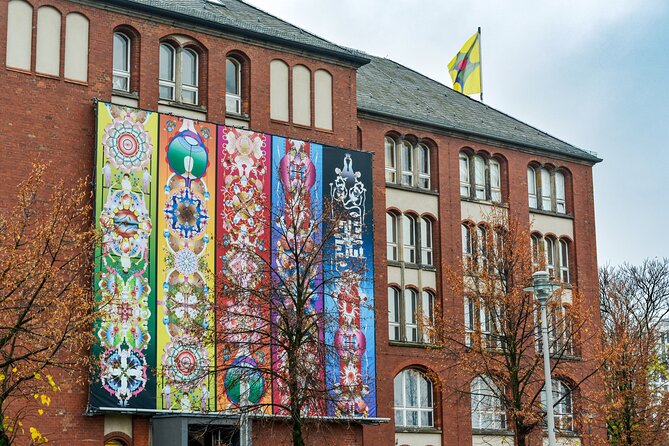
Then you reach Charité Campus Mitte, where you get the look of the campus as well as the moral weight. The buildings are described as neogothic red-brick, and the architecture gives you space to slow down and actually look.
But the story is not only about beauty. This stop covers a difficult fact: during the Third Reich, some doctors abused medicine. The tour balances that with a second truth too—others helped people indiscriminately and did so until the last days of WWII.
That contrast can feel heavy, but it is also the point. You leave with a more adult view of medical history: the same institution can serve different agendas depending on who holds power and what ethics leaders choose.
If you are visiting Berlin for WWII history anyway, this stop slots perfectly into what you already care about. If you are only interested in the science side, you may still appreciate it because it shows how medicine can be misused when ethics fail.
Stop 6: Design Offices Berlin Humboldthafen and the escape-by-canal story
The final stop sits near the Humboldthafen canal, at Design Offices Berlin Humboldthafen. This part shifts away from medicine-for-a-ward and toward life around the hospital under socialism and after the Berlin Wall fell.
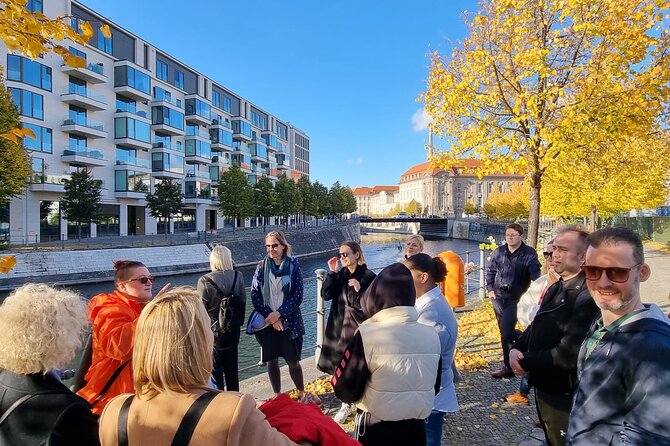
You hear about attempts by East Berliners to escape to the West by swimming across the city canal just outside the Charité campus. The guide ties it back to the hospital setting, which makes the story feel grounded rather than random.
This ending surprised me in a good way because it shows how a place becomes part of people’s day-to-day choices. You are reminded that even institutions built for medicine sit inside broader political life.
The guide and the small-group advantage
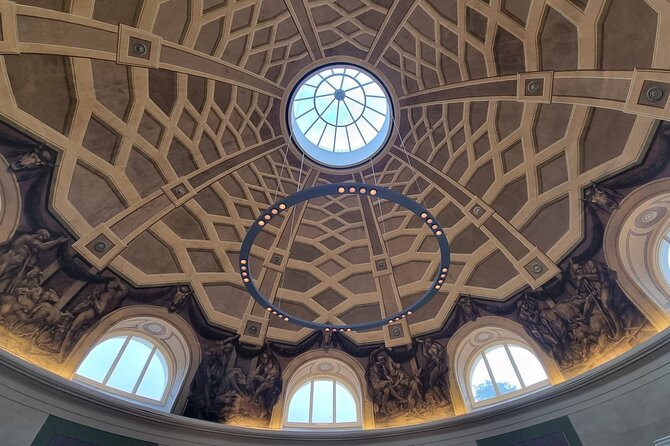
This is a small-group tour with a maximum of 15 travelers. That number is not just marketing math. It usually means you can ask questions and you are less likely to get lost in a loud knot of people.
The guide’s role is the difference between reading a plaque and understanding what it means. In the feedback tied to this experience, people praised the guide’s ability to tell stories and bring context to what you are seeing. You should expect the tour to connect medical history with current issues too—at least in the way it frames ethics and public health, which is exactly what the monuments are built to teach.
Price and value: why $30.12 can be a smart use of time
The price is listed as $30.12 per person, and the tour runs about two hours. You also get a guide and all fees and taxes, and the individual stops are marked as free to access at the listed points.
So where is the value? It is in concentration. You are paying for a structured walk that turns multiple sites into one coherent story. Without a guide, you could still wander the area and admire monuments. But you would miss the connective tissue: the names, the scientific themes, and the ethical contrasts.
I also think the short duration is part of the value equation. You do not have to block out half a day to get the key Charité story beats. Two hours can be exactly the right length when you want more education but also want to keep your trip flexible.
What is included—and what is not
The tour includes the guide and covers fees and taxes. What it does not include is visiting buildings where clinical or university operations take place.
That is good to know up front. If you show up expecting to tour wards or university rooms, you may feel like you did not get the full access you wanted. This experience is built around the exterior landmarks, campus setting, and the stories attached to them.
In other words: you are here for context and interpretation, not for a behind-the-scenes medical visit.
Practical expectations: pace, weather, and comfort
The tour is weather-dependent and requires good weather. Since it is a walking tour with multiple outdoor stops, plan for the basics: comfortable shoes and a layer you can adjust.
Most travelers can participate, and the tour allows service animals. If you have mobility concerns, the best move is to check with the provider directly before booking, since the data you have here does not spell out step-free details.
Also note the tour is offered in English, and you get a mobile ticket.
Who should book this tour—and who should skip it
Book it if you:
- Like science history that is tied to society and ethics, not just dates
- Want an efficient, two-hour introduction to Charité-linked landmarks
- Prefer small groups and a guide who keeps the story flowing between stops
- Are interested in figures like Robert Koch, Rudolf Virchow, and Albrecht von Graefe
Consider skipping it if you:
- Want to enter functioning hospital or university areas (this is not that kind of tour)
- Need a very light, non-ethical-history experience. WWII medicine abuse is part of the walk.
- Are only interested in architecture, not the medical story behind it
Final call: should you book Charité Hospital Walking Tour?
I’d book it if your goal is to understand why Charité is more than a building name. This tour gives you a compact route through major figures and themes—pathology, public health, ethics, and the uncomfortable reality that medicine can be twisted by power.
If you enjoy walking tours that teach you how to look at a city differently, this one is a strong fit. The short duration, small group size, and free access to the stops make it an efficient value.
FAQ
FAQ
How long is the Charité Hospital walking tour?
It lasts about 2 hours.
How many stops are included?
There are six stops, starting at Robert-Koch-Platz and ending near Alexanderufer.
Is the tour offered in English?
Yes, the tour is offered in English.
Do I need to pay admission for the stops?
The listed stops have free admission tickets.
Does the tour include entering active hospital or university areas?
No. Visiting buildings where clinical or university operations take place is not included.
Where do I meet and where does the tour end?
You start at Robert-Koch-Platz (10115 Berlin) and end at Alexanderufer (10117 Berlin) by the Humboldthafen canal.
What happens if weather is bad or I need to cancel?
The tour requires good weather. If it is canceled due to poor weather, you are offered a different date or a full refund. Free cancellation is available up to 24 hours in advance for a full refund.