REVIEW · BERLIN
Jewish Life in Berlin – Private Walking Tour
Book on Viator →Operated by Original Berlin Walks · Bookable on Viator
Berlin’s Jewish past is on foot. This private tour follows the story of Berlin’s Jewish community from 17th-century immigrants to the Otto Weidt workshop, ending at the New Synagogue’s Centrum Judaicum.
I like how the route connects big names and ideas to real street corners and specific institutions. You’ll also move from pre-WWII life to the Holocaust-era reality in a way that stays grounded in places you can actually see. One caution: the tour runs about three hours with nine short stops, so if you’re hoping to tick off a particular Holocaust memorial site, make sure your expectations match this route’s focus.
In This Review
- Key Points Worth Your Time
- Jewish Life in Berlin, Walked in Real Places
- Getting Oriented: Where to Meet and How the 3 Hours Works
- Stop 1: Hackescher Markt to Start the Story with Context
- Stop 2: Die Hackeschen Höfe and the Memorial of a Protest
- Stop 3: Museum Blindenwerkstatt Otto Weidt and Resistance in a Factory Setting
- Stop 4: Scheunenviertel, the Former Jewish Quarter
- Stop 5: Sophienstraße and the Street-Level Texture of Berlin Mitte
- Stop 6: Grosse Hamburger Straße, Cemeteries, Schools, and Deportation
- Stop 7: Sophia Church and the Unexpected Link to Martin Luther King
- Stop 8: Auguststraße and the Mix of Art Galleries and Old Community Spaces
- Stop 9: The New Synagogue and Centrum Judaicum at Oranienburger Straße
- Price and Value: Is $355.25 per Group a Good Deal?
- Who This Tour Fits Best (and Who Might Want Another Option)
- Should You Book Jewish Life in Berlin with Otto Weidt and the New Synagogue?
- FAQ
- Where does the tour start and end?
- How long is the tour?
- What is included in the price?
- Is this a private tour, and how many people are in a group?
- Does the tour run in bad weather?
- What if I need to cancel?
Key Points Worth Your Time
- Private group experience (up to 15): You get a calmer pace and more room for questions than big group tours.
- Otto Weidt’s Blindenwerkstatt: A WWII-era workshop story centered on blind and deaf Jewish workers and resistance to Nazi persecution.
- Neat 17th-century to today storyline: From early Jewish settlement through 1938 events connected to the New Synagogue.
- Neighborhood walking, not just monuments: You’ll see street-level history around places like Scheunenviertel and Sophienstraße.
- A proper ending at Centrum Judaicum: The New Synagogue stop includes the building’s history and how its story is interpreted today.
Jewish Life in Berlin, Walked in Real Places
Berlin has a talent for making history feel close—if you know where to look. This tour does that with a straightforward idea: Jewish life here isn’t only about one era or one building. It’s about communities, streets, schools, workplaces, and the institutions that shaped daily routines.
I also like that the tour uses strong anchors. The story moves from early Jewish immigrants in the 1600s through the figures you’ll recognize—like Albert Einstein and Moses Mendelssohn—to the institutions and neighborhoods tied to them. Then the tour shifts toward WWII, including the collapse of Jewish life in Berlin under Nazi persecution.
You should also know what kind of experience this is. It’s not a museum-only day. It’s a walking route with short, focused stops where your guide explains what you’re seeing and why it matters. That works well if you like a clear path and an easy-to-follow narrative.
You can also read our reviews of more walking tours in Berlin


Getting Oriented: Where to Meet and How the 3 Hours Works
You meet your guide near Hackescher Markt—your meetup is outside Starbucks by the Hackescher Markt S-Bahn station area. The listed start address is Neue Promenade 3, 10178 Berlin, and the start time sits within the tour’s scheduled window.
The tour ends at the New Synagogue Berlin – Centrum Judaicum, Oranienburger Str. 28-30, 10117 Berlin. If you’re planning onward transit or a meal, give yourself a little buffer at the end, since you’ll be finishing right where the modern interpretation of the synagogue’s story is housed.
As for length, the walking tour runs about 3 hours. The itinerary has nine stops, with each stop around 10 minutes, which is short by design. Translation: you’ll get the core story at each place, but you won’t linger like you would inside a long exhibition.
One more practical note: the tour operates in all weather conditions. Dress for rain if it’s in the forecast. Berlin walking in wet weather is doable, but only if you’re dressed for it and you don’t mind being a bit brisk.
Stop 1: Hackescher Markt to Start the Story with Context
Hackescher Markt is a good launching pad. It’s busy, easy to reach, and it gives you quick orientation before you start moving into the older layers of Berlin’s Jewish geography.
At the first stop, the guide meets you outside Starbucks and gives an introduction. This matters because the rest of the route depends on understanding what you’re about to see: neighborhoods, institutions, and how Berlin’s Jewish life changed over centuries. If you’re the type who likes a roadmap before walking, this opening helps.
Also, the tour begins right at a transit hub. That’s a small thing, but it reduces stress when you’re trying to time your day. You’re not scrambling across town to find a hard-to-reach meeting point.
Finally, this is a private tour, so you’ll stay with your group only. No waiting for other people to trickle in and slow the start down.
Stop 2: Die Hackeschen Höfe and the Memorial of a Protest
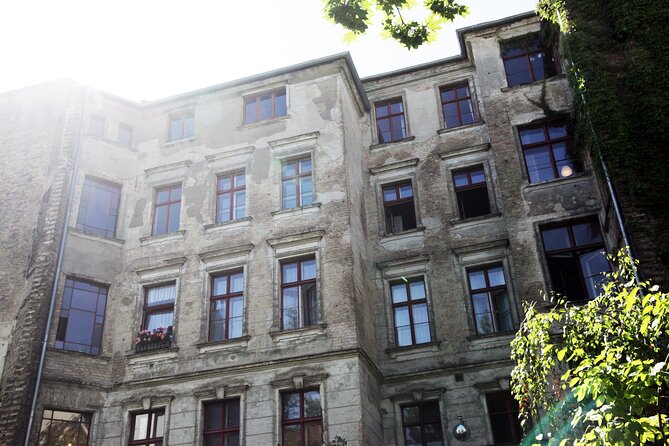
Die Hackeschen Höfe are a reminder that history isn’t only found in grand landmarks. It often hides in courtyards and passageways that feel ordinary until you learn what happened in or around them.
Here, the guide explains the history of the site and shares the story connected to the memorial of the woman protest. I like this stop because it nudges you beyond the usual synagogue-and-cemetery focus. It’s also a good moment to think about agency—about people speaking up, not only surviving.
One reason this is worth keeping on your route is that Berlin’s Jewish story isn’t only tragedy and loss. There are also moments tied to civic life, public memory, and protest. This stop gives you a different angle without turning the tour fluffy.
Stop 3: Museum Blindenwerkstatt Otto Weidt and Resistance in a Factory Setting
If you remember one moment from this tour, make it Otto Weidt’s workshop. The Museum Blindenwerkstatt Otto Weidt is a 1940s-era factory tied to real resistance and real harm avoided.
In this stop, your guide explains the history of Otto Weidt and the resistance against Nazis—centered on how Weidt protected his blind and deaf Jewish workers from persecution during the Holocaust. This is one of the tour’s emotional core points, and it’s also one of its most educational.
What I find powerful here is the “workplace” framing. It’s not an abstract battle story. It’s about labor, people with disabilities, and how practical human decisions could change who lived and who didn’t.
You’ll also likely feel the care your guide brings to sensitive topics. The goal is to make it clear what happened, without turning it into shock value. That tone matters on a tour like this, and it shows up in how the story is handled.
You can also read our reviews of more private tours in Berlin


Stop 4: Scheunenviertel, the Former Jewish Quarter
Scheunenviertel is where the tour shifts from single institutions to a broader community map. This stop is about the former Jewish Quarter and what it meant for Jewish life in old Berlin.
Your guide explains the neighborhood’s history and the story of the Jewish community there. Even if only fragments remain today, walking through the area helps you understand how communities clustered—where they lived, where they gathered, and how the city’s shape mirrored social life.
This is also a good stop for anyone who wants geography to stick in their brain. Instead of memorizing names, you connect names to streets and the “why” behind community concentrations.
One practical drawback to know: the tour time here is brief. If you love neighborhoods and could spend hours on them, you’ll want to come back later on your own. Think of this stop as a strong orientation, not the final word.
Stop 5: Sophienstraße and the Street-Level Texture of Berlin Mitte
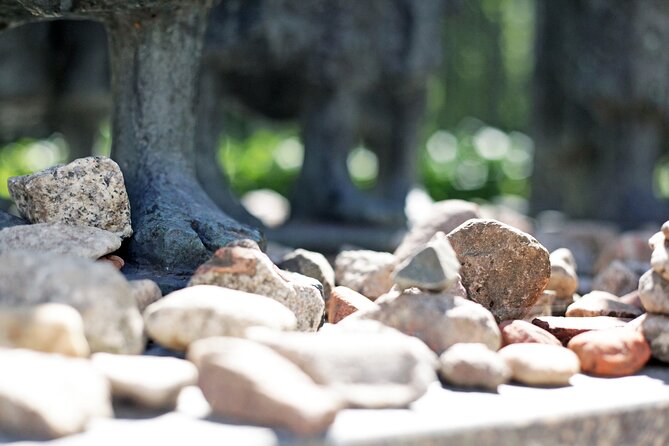
Sophienstraße is one of those streets where Berlin’s history hides in plain sight. The guide explains the history of the street and notes it’s named after Queen Sophie.
I like street stops like this for a simple reason: they prevent history from becoming a list of buildings. A street name is a clue. It tells you the city was organized, planned, and branded over time—while Jewish residents built their own lives within that framework.
This is also a breather stop. You’re still learning, but the story often feels more “walkable” and human. The tour keeps moving, so you get a rhythm: learn, walk, look closer, keep going.
If you’re taking photos, this is a solid place to do it because streets and facades can translate well to memory later.
Stop 6: Grosse Hamburger Straße, Cemeteries, Schools, and Deportation
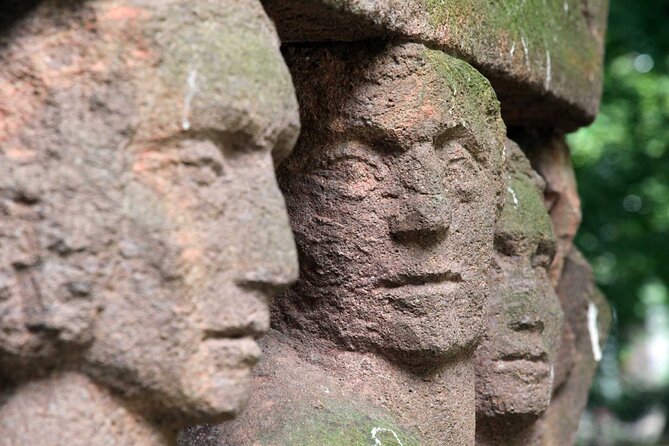
This stop packs in painful themes, and the tour treats them with focus. Your guide explains the history tied to the Jewish cemetery, a Jewish school, and the deportation of Jews in the Nazi era.
Cemeteries and schools are especially important because they represent continuity. People think persecution started with imprisonment and camps, but the destruction began earlier—through targeting community institutions and ripping families away from daily life.
The deportation element is where the tour’s past-to-present arc gets brutally clear. Even without extra dramatics, the guide’s framing helps you understand the sequence: community life was built, and then it was dismantled.
If you want to be emotionally prepared, this is the stop to be ready for. Wear something comfortable, keep water with you when possible, and don’t feel rushed to “move on” right away after the story lands.
Stop 7: Sophia Church and the Unexpected Link to Martin Luther King
Sophia Church adds a surprising cross-reference to the larger world. The guide explains the church’s history and how it connects to Martin Luther King.
This stop is valuable even if you’re not usually the church-history type. It shows how Berlin’s religious landmarks and international figures can be connected through later memory, references, and the way stories get carried across borders.
Just keep it simple: you’re not going to get a full standalone lesson here. You’ll get the connection explained and then move on.
I also like this stop because it signals that Jewish life in Berlin exists within a wider Berlin story. People lived among other communities, politics, and cultural influences—even when the darkest forces later tried to erase specific groups.
Stop 8: Auguststraße and the Mix of Art Galleries and Old Community Spaces
Auguststraße is known today for art galleries and notable buildings. In this stop, your guide ties modern Auguststraße to important buildings of the old Jewish community.
This is one of the most satisfying “then and now” moments on the route. Berlin’s city layers are visible if you know where to look, and this part of the walk teaches you how to spot those layers quickly.
If you’re visiting with someone who thinks history is boring, this is where you can often win them over. The street looks lively, and the guide makes the connection between what’s here now and what used to be here before.
The short stop time helps you keep momentum, but again, you may want to revisit later if you get curious. Auguststraße’s art scene can be a nice follow-up after the heavier stops.
Stop 9: The New Synagogue and Centrum Judaicum at Oranienburger Straße
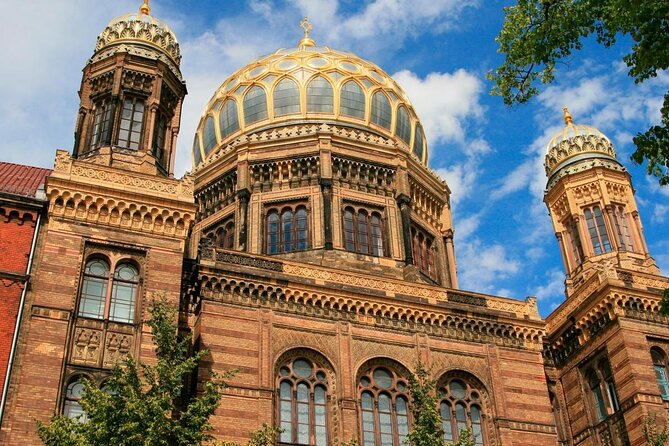
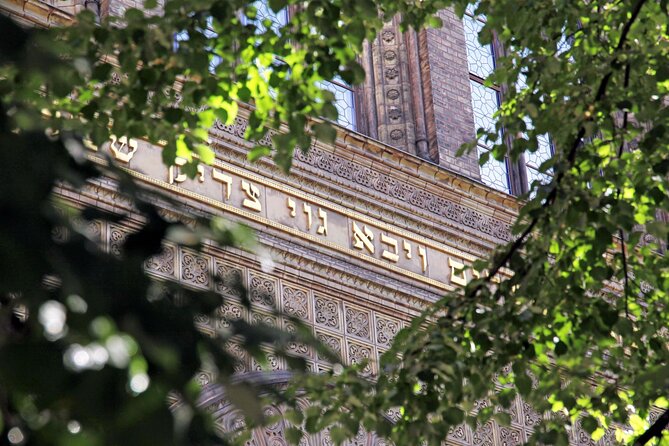
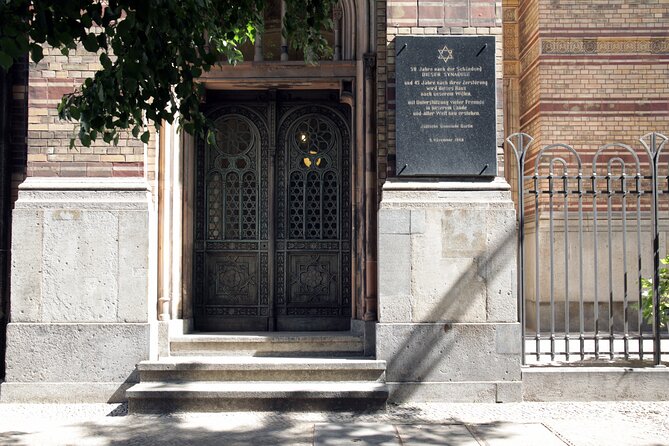
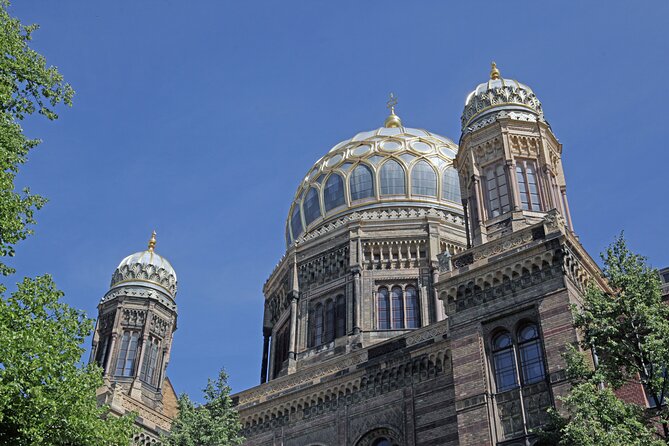
The tour ends with one of Berlin’s signature Jewish landmarks: the New Synagogue. Today it’s home to the Centrum Judaicum, which traces the building’s history and the life associated with it.
This stop includes the key events around the synagogue, including the Night of Broken Glass in 1938 and the people who helped Jewish people during that time. Your guide also explains the significance of the synagogue itself as an important architectural monument of late 19th-century Berlin.
I like the way this ending works. You don’t finish with an abstract lecture. You finish at a place where you can keep reading and exploring after the walk. If you want to go deeper on your own, the Centrum Judaicum is there waiting.
One practical point: because the tour ends here, check the time you arrive if you’re hoping to do extra museum reading. The listing shows opening hours Monday through Sunday from 9:00 AM to 3:00 PM.
Price and Value: Is $355.25 per Group a Good Deal?
The price is $355.25 per group, for a private tour up to 15 people, with a mobile ticket. On paper, that’s a chunk. In practice, it depends on how many people you split it with.
If you take the maximum of 15 people, you’re looking at about $24 per person. If you’re a smaller group—say 4 to 6 people—the per-person cost jumps, but you still get something many people don’t: private pacing, a direct Q&A style, and a route that’s designed to connect stories across time.
Here’s what justifies the price for me: the guide isn’t only reciting facts. The tour uses a place-based storyline—Otto Weidt’s workshop, Scheunenviertel, and the New Synagogue—so you’re not just learning names. You’re learning how Berlin’s Jewish community existed in geography, institutions, and daily routines.
You also get professionalism built in. The tour includes a professional guide, and the private format matters if your group has mixed ages or different comfort levels with heavy topics. A sensitive topic needs a steady hand, and the best guides on this route keep the tone careful.
Who This Tour Fits Best (and Who Might Want Another Option)
This tour fits you if you want a guided walk that connects Jewish history in Berlin from the 1600s to today. It also fits well if you like structure: meet, walk, stop, learn, move on—without having to build your own route.
It’s especially good for people who want both big landmark stops and “smaller” places like courtyards, streets, and institutional sites. That blend is what makes the story feel less like a one-note history lesson.
You might consider another tour if you’re specifically hunting for a set of expected Holocaust memorial landmarks and want them as part of the itinerary. This route focuses on Jewish life sites and key story points, including the Holocaust reality through the places tied to it, rather than trying to cover every major memorial you might be picturing in your head.
Finally, if you prefer museum time over walking, you may want to pair this tour with independent time at the Centrum Judaicum afterward. The walk gives the map; the museum can give the depth.
Should You Book Jewish Life in Berlin with Otto Weidt and the New Synagogue?
Book it if you want a private, guided way to understand Berlin’s Jewish community through real spaces—from early settlement and major names, to WWII-era survival stories like Otto Weidt’s workshop, and ending at the New Synagogue’s Centrum Judaicum.
I’d skip it only if your goal is mostly to check off specific Holocaust memorial sites and you don’t want the route to focus on neighborhoods and institutions. Also, if your group hates walking, remember this is about three hours outdoors with multiple short stops.
If you do book, go in with the right mindset: this is a history route where the story changes tone as the walk progresses. Bring comfortable shoes, dress for weather, and don’t feel you need to rush the emotional stops. You’ll come away with Berlin mapped in your head.
FAQ
Where does the tour start and end?
The tour meets at Hackescher Markt by the S-Bahn station, outside Starbucks. It ends at the New Synagogue Berlin – Centrum Judaicum at Oranienburger Str. 28-30, 10117 Berlin.
How long is the tour?
The tour is about 3 hours.
What is included in the price?
The tour includes a professional guide, and it uses a mobile ticket. The itinerary lists each stop as admission ticket free.
Is this a private tour, and how many people are in a group?
Yes, it’s private. The group size is up to 15 people.
Does the tour run in bad weather?
Yes. It operates in all weather conditions, so you should dress appropriately.
What if I need to cancel?
You can cancel up to 24 hours in advance for a full refund. If you cancel less than 24 hours before the experience starts, you don’t receive a refund.