REVIEW · BERLIN
Private Berlin In a Day History Tour With Expert Guide
Book on GetYourGuide →Operated by Birchy's Berlin Tours · Bookable on GetYourGuide
Berlin history hits hard in six hours. This private walk covers the landmarks most people try to squeeze across several days, with an expert guide who ties the big events together into stories you can actually picture. I especially like that you start right from your hotel area (or the meeting point at Ebertstraße 24), and that the route balances famous sights with the meaning behind them—so Berlin feels less like random monuments and more like a timeline you can follow.
I also like the human pacing. The tour is designed for an easy walking tempo, with frequent chances to stop for basics like water, snacks, and bathrooms, plus a lunch break at a local partner. One thing to think about: it’s still a lot of walking and a lot of stops in one day, so comfortable shoes matter.
In This Review
- Key things I’d circle before you book
- Why this 6-hour Berlin “in a day” plan actually works
- Start point and the walking style: easy pace, real distances
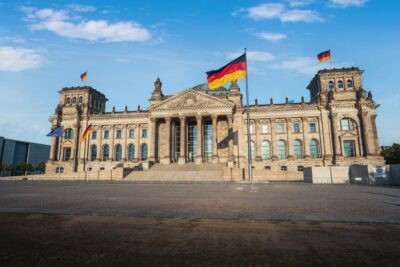
- Brandenburg Gate: the photo everyone knows, the story most people miss
- The Reichstag and nearby viewpoints: power, planning, and survival
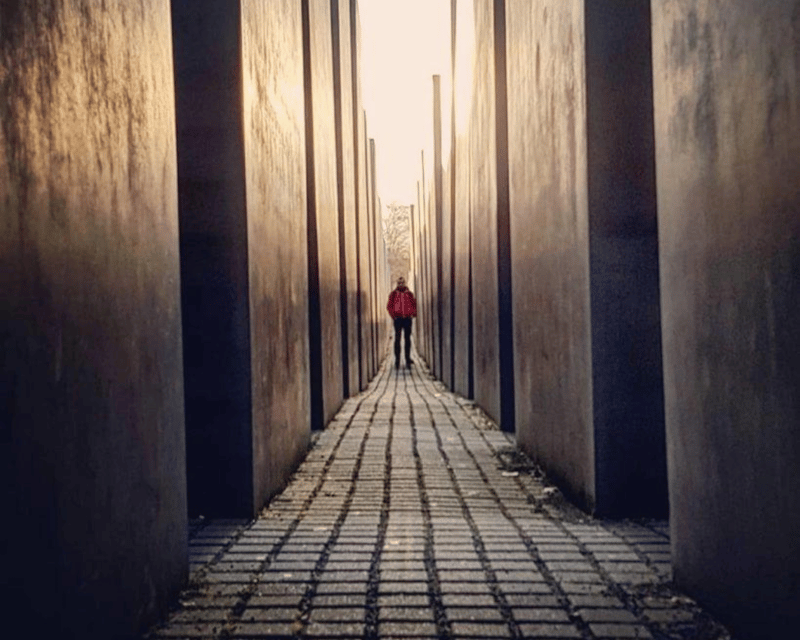
- Holocaust Memorial: seeing how remembrance is designed
- Hitler’s Bunker and the Johann Georg Elser Memorial: two very different kinds of intent
- Detlev-Rohwedder-Haus and Topography of Terror: when documents matter
- The Cold War wall story: Berlin Wall Memorial and Checkpoint Charlie
- Deutscher Dom to Humboldt University: Berlin as a changing brain
- German Historical Museum, Museum Island, and Humboldt Forum: where the city puts its past
- Marienkirche, TV Tower, and Alexanderplatz: finishing with modern Berlin orientation
- Lunch mid-tour: a break that keeps the day humane
- Guide experience: the difference between dates and meaning
- Price and value: what $247 buys you on a one-day schedule
- Who should book this tour (and who might not)
- Should you book it?
- FAQ
- How long is the tour?
- Is this tour private?
- Where does the pickup happen?
- Is there food included?
- What languages are the guides?
- Is the tour wheelchair accessible?
- What should I bring?
- What’s the tour type and pickup method?
Key things I’d circle before you book
- Private, small-group feel: you’ll get the guide’s attention and the freedom to ask questions as you go.
- A timed hit list of landmarks: quick stops at major points so you see more than a slow museum day.
- A real lunch break: you reset mid-tour instead of getting swallowed by sightseeing all day.
- Cold War storytelling on foot: guard towers, wall sites, and border memories explained in plain language.
- History across eras: from World War I/II-era sites to modern-day Berlin institutions and squares.
- Two guide languages: English or Polish, depending on your guide.
Why this 6-hour Berlin “in a day” plan actually works
If Berlin is your first big stop, you can feel the city’s history in layers: empires, war, division, reinvention. The problem is that Berlin’s history isn’t lined up in one clean street. This tour is built to fix that, using a focused walking route that links major eras as you move.
You get a practical advantage right away: a private guide keeps the day from turning into a self-guided scavenger hunt. The guide doesn’t just point at buildings; they connect monuments to the people and decisions behind them. That matters because Berlin’s landmarks can look like “cool architecture” until someone explains what happened there, who used the space, and what changed afterward.
Also, you’re not doing this with a huge crowd. The format is private, so the pace stays group-friendly and you can pause when a stop needs a little extra time. One common complaint in busy cities is getting rushed from photo spot to photo spot. Here, the tour is designed to feel paced, not sprinted.
You can also read our reviews of more guided tours in Berlin



Start point and the walking style: easy pace, real distances
You’ll meet either at your accommodation (pickup on foot) or at Ebertstraße 24, 10117 Berlin, in front of the Hopfingerbräu restaurant by the Brandenburg Gate. That matters because you’re not wasting time figuring out trains or guessing the best pickup corner.
The tour is a walking tour, so you should treat the day like a long active outing. It includes chances for snacks, bathrooms, and water, but you still want to wear shoes you trust. If your feet are already tired from travel, plan a low-key evening after this tour and keep your backpack light.
One more practical note: food and drinks aren’t included. Lunch is part of the day as a stop for a local partner, but you’ll still want to budget for whatever you order.
Brandenburg Gate: the photo everyone knows, the story most people miss
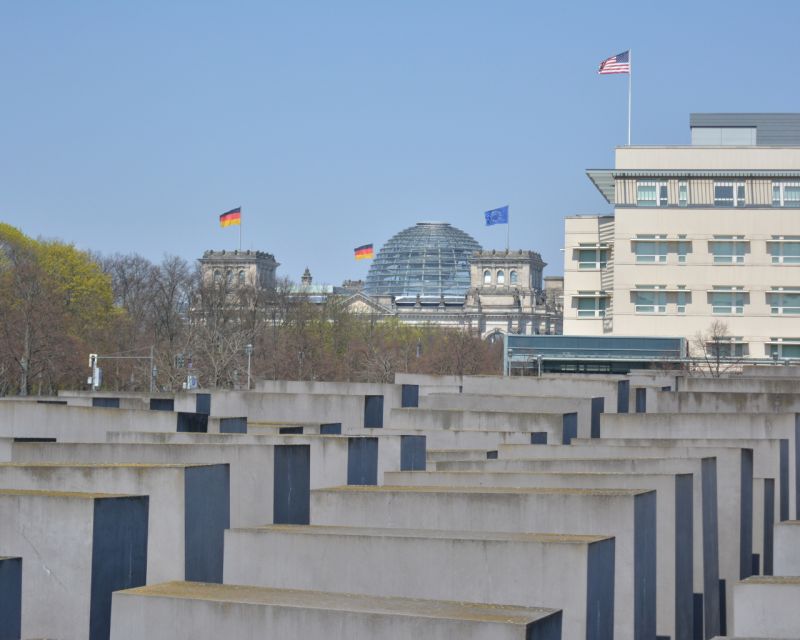
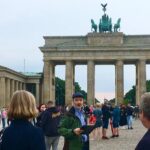
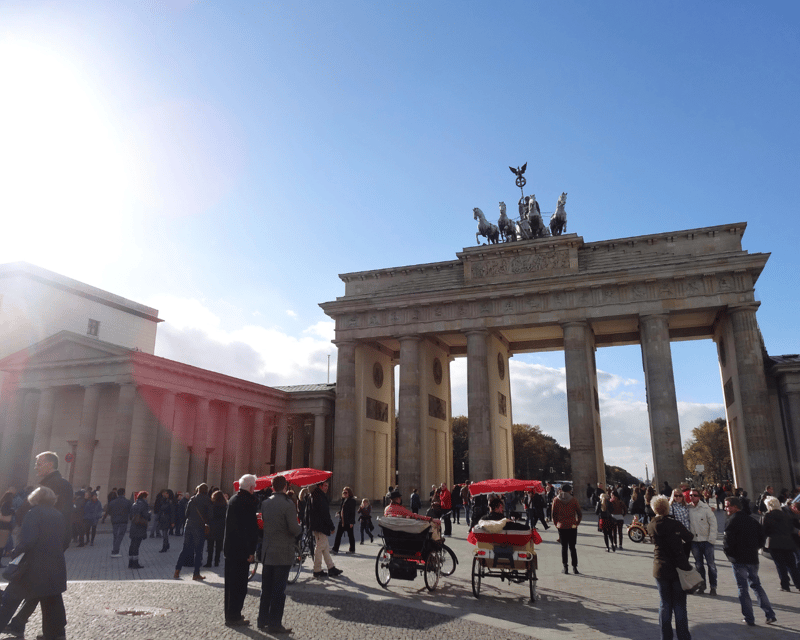
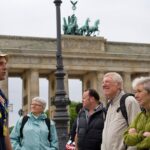
You start at the Brandenburg Gate, one of Berlin’s most famous symbols—and also one of the most useful anchor points for understanding the city. It sits at the crossroads of power, nation-building, and later division. On this tour, the guide uses it as a “turning point” in your mental map of the city.
You’ll likely spend a short window there, just enough time to orient yourself and hear how the gate’s symbolism shifted over the decades. The goal isn’t a long linger; it’s to set the context so the rest of the day lands with meaning.
After that, the tour quickly moves you toward the government landscape and the political heartbeat of Berlin.
The Reichstag and nearby viewpoints: power, planning, and survival
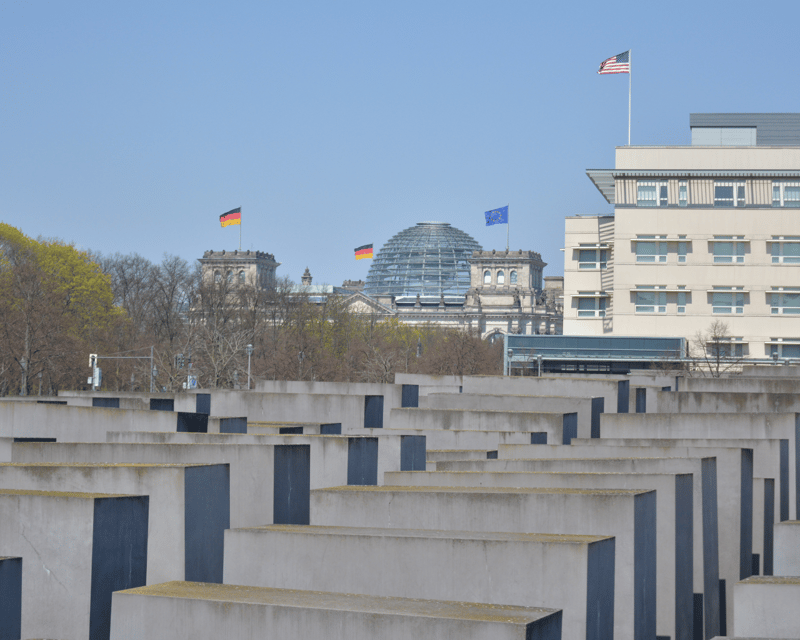
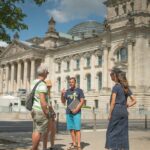
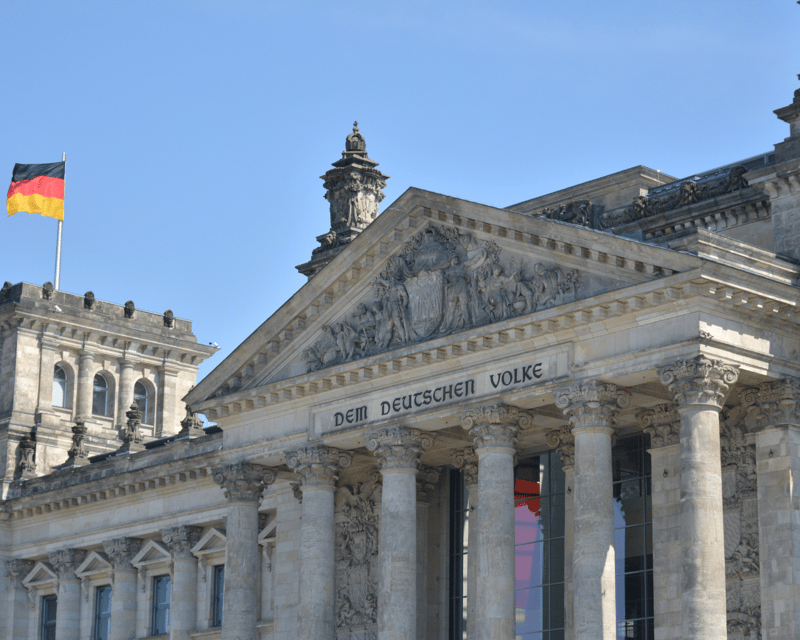
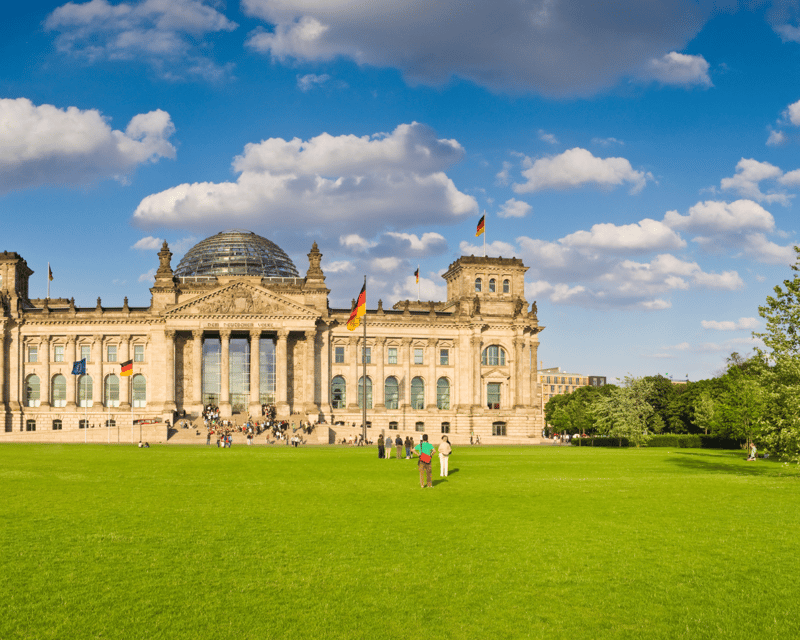
Next up is the Reichstag. Even if you’ve seen pictures, the guide’s job is to make the building feel like a real stage for real events. Berlin’s modern politics can look abstract until you hear how war, ideology, and rebuilding played out around these structures.
You’ll pass through an in-between stop listed in the route, then head toward Tiergartenviertel for a short look at the area’s role in Berlin life and planning. This is one of those segments where you get orientation as much as details—think of it as learning where you are before the day gets darker.
Then comes the Berlin Victory Column. A victory monument can seem like just another tall landmark, but the guide can frame it as a statement from its era—what it celebrated, what it ignored, and why Berlin later chose different symbols for different moments.
This segment is where the day starts to build momentum: each stop adds a piece to the political story.
Holocaust Memorial: seeing how remembrance is designed
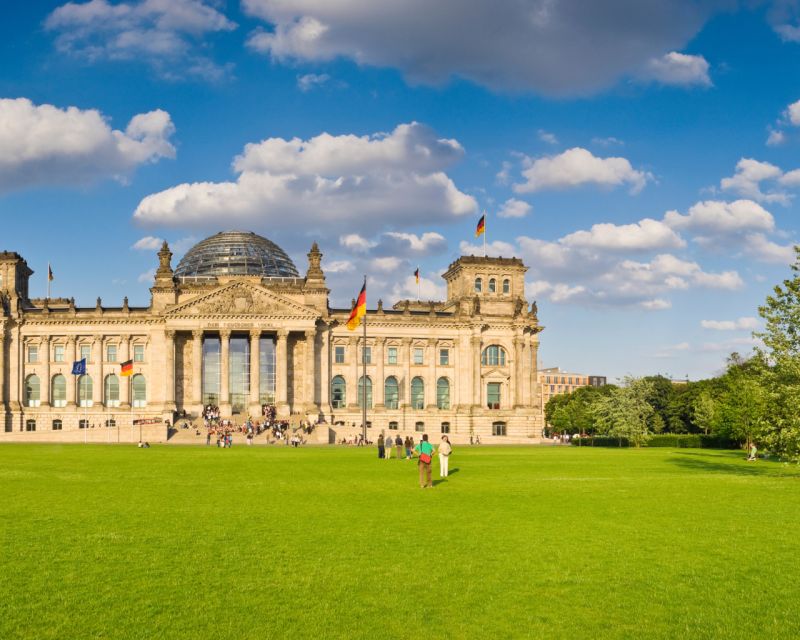
At the Holocaust Memorial, the guide’s focus shifts from empire and politics to forced history and memory. This is not the kind of stop you “speed through” mentally, even if the timeline is short.
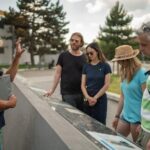
The value here is interpretation. The memorial’s design encourages you to slow down inside your own head—space can make you feel small, and that’s exactly the point. A guide helps you understand the intention without turning the moment into a lecture.
Right after, the tour moves into one of the hardest stretches of the day.
You can also read our reviews of more private tours in Berlin


Hitler’s Bunker and the Johann Georg Elser Memorial: two very different kinds of intent
Next on the route is Hitler’s Bunker, framed as part of the battle of Berlin story. The day doesn’t treat it like a movie set. It’s explained as a place tied to the collapse of a regime and the human consequences around it.
Then you’ll see the Johann Georg Elser Memorial. Elser’s name often gets less airtime than the bigger figures, but on this tour the guide connects him to the theme of resistance and the long chain of what people tried to stop.
If you’re worried the day might become only about the most infamous names, this is an important balance point. It broadens the story beyond one timeline of villains and victims to show how different choices and attempts shaped the last chapters.
Detlev-Rohwedder-Haus and Topography of Terror: when documents matter
The tour includes Detlev-Rohwedder-Haus next, then heads to Topography of Terror. Topography of Terror is one of those places where the details don’t feel optional. The guide helps you connect what you see to how the terror machine operated—who used it, how it was supported, and how the built environment reflects that.
This is also where the tour’s history style shines. Instead of dumping dates, the guide explains cause and effect: the ideology, the institutions, and how policy became action.
That sets you up perfectly for the next big theme shift: division and the Cold War.
The Cold War wall story: Berlin Wall Memorial and Checkpoint Charlie
After the WWII-centered stops, you move into the Berlin Wall and Cold War stretch with Berlin Wall Memorial, then Checkpoint Charlie. These stops are valuable because they show you division as something physical.
At the Berlin Wall Memorial, the guide talks about guard towers and wall-era realities, including how Berlin East vs. West lived with constant tension. The tour also uses the area to share the human scale—plans, escape attempts, and the everyday fear that came from being trapped in a divided city.
Then Checkpoint Charlie gives you the border-memory perspective: the famous crossing point that became a symbol of the East-West face-off. It’s a short stop, but the guide’s storytelling usually does the heavy lifting.
If you’re more of a visuals person, this is still a strong section even with limited time—because the wall and checkpoint create a clear line of sight from history to the modern city.
Deutscher Dom to Humboldt University: Berlin as a changing brain
Next you’ll head to Deutscher Dom, then to another listed stop in the route, and onward to Humboldt University of Berlin. This part of the day helps you see that Berlin wasn’t only war and borders—it was also education, ideas, and rebuilding.
Humboldt University, in particular, helps anchor the modern-day Berlin identity. It’s easier to appreciate Berlin’s post-war evolution when you connect it back to institutions that shaped how the city thought.
The tour then includes Neue Wache, a memorial space tied to remembrance. The guide keeps it grounded in what Berlin chooses to remember and how it chooses to frame those memories in public space.
German Historical Museum, Museum Island, and Humboldt Forum: where the city puts its past
The tour includes the German Historical Museum, then goes to Museum Island, and also features Humboldt Forum. This trio is useful because it shows Berlin’s curatorial style: different institutions, different angles, and different ways of turning history into public learning.
Museum Island is a practical win for the day. It’s compact, landmark-heavy, and makes it easy to understand why people spend dedicated time here. The guide helps you connect what you’re seeing to why the island mattered historically—and why it still matters.
Humboldt Forum adds another layer: it’s about how Berlin presents the story of culture and heritage. Even if your interests lean more toward war and borders, this section gives you the “after” view—how Berlin tries to live forward while still carrying what it endured.
Marienkirche, TV Tower, and Alexanderplatz: finishing with modern Berlin orientation
Next comes Marienkirche, then the TV Tower, and finally Alexanderplatz. This closing stretch is not random. It’s your “present-day Berlin” orientation after the intense history stops.
Marienkirche gives a older-city touch, a reminder that Berlin’s story doesn’t start in the 20th century. The TV Tower and Alexanderplatz help you understand the scale and layout of modern Berlin—useful if you plan to explore on your own afterward.
Even with short stops, the guide typically gives you enough context to know what you’re looking at from street level. That’s how you avoid leaving Berlin with a camera full of photos but no map in your head.
Lunch mid-tour: a break that keeps the day humane
You’ll stop for lunch about halfway through the tour at one of the tour’s local partners. Food and drinks aren’t included, but the point is that you’re not forced to choose between eating and learning. The guide uses the break to keep the day moving while also giving you a chance to reset.
This matters because Berlin’s history day can feel heavy. A lunch stop reduces the mental fatigue and helps you enjoy the last third of the route instead of dragging through it.
Guide experience: the difference between dates and meaning
The biggest value in this tour is the guide’s ability to turn landmarks into stories. Names that show up in the tour experience include Toby and Steve, and both are described as fun and engaging, with humour that keeps the mood from getting stuck.
That kind of guide doesn’t mean jokes replace seriousness. It means you get pacing and clarity. When the day covers WWII, the Holocaust Memorial, the Berlin Wall, and Cold War border memories, the “tone management” is part of what you’re paying for.
You’re also not locked into one style. Because it’s private, you can ask questions if something catches your attention—especially if you want more detail on the battle of Berlin, resistance stories, or how division changed daily life.
Price and value: what $247 buys you on a one-day schedule
At $247 per person for a 6-hour private walking tour, the price isn’t cheap. But it often makes sense when you think about two things.
First, time. A day that covers major WWII and Cold War sites, plus central landmarks like the Reichstag and Museum Island, is the kind of itinerary that usually takes multiple trips on your own. Hiring a guide is basically paying to compress that learning curve.
Second, attention. A private guide is not just a voice; it’s interpretation—why each place matters, what to notice in the environment, and how the whole city ties together. For people who only have one day for big Berlin history, that value tends to land.
If you’re the type who loves reading on your own and you already know the timeline, you could self-tour. But if you want the day to feel structured and meaningful without doing extra homework, this price starts to feel reasonable.
Who should book this tour (and who might not)
This tour is a great fit if:
- you have limited time and want a strong overview of Berlin’s biggest history landmarks
- you prefer walking with a guide instead of hopping between museums solo
- you want WWII and Cold War stories tied to specific spots you can see
It may not be ideal if:
- you hate long walks or want a more relaxed pace
- you only want deep museum time instead of many short landmark stops
- you’re hoping for food/drinks to be included beyond lunch
Should you book it?
I’d book this tour if you want a single-day plan that actually teaches Berlin, not just shows Berlin. The route is tight, the guide-led interpretation is the core value, and the built-in lunch break helps keep the day enjoyable.
I would not book it if you want a low-effort sightseeing stroll. This is active, and it’s history-heavy. If that sounds like your kind of day, you’ll leave with a much better mental map than you started with.
FAQ
How long is the tour?
It lasts 6 hours.
Is this tour private?
Yes, it’s a private group tour.
Where does the pickup happen?
Hotel pickup by the guide on foot is available. If you use the meeting point, it is Ebertstraße 24, 10117 Berlin, in front of the Hopfingerbräu restaurant by the Brandenburg Gate.
Is there food included?
Food and drinks are not included. The tour includes a lunch stop at a local partner, but you’ll handle what you order.
What languages are the guides?
The live tour guide is available in English and Polish.
Is the tour wheelchair accessible?
Yes, the tour is wheelchair accessible.
What should I bring?
Bring comfortable shoes, since it’s a walking tour.
What’s the tour type and pickup method?
It’s a walking tour with pickup on foot available from your accommodation.