REVIEW · BERLIN
Private Guide Up to Group 6 – ONE Rickshaw, (E)Bikes, E-Scooters
Book on Viator →Operated by Berlin-Rickshaw / Berlin-Excursions · Bookable on Viator
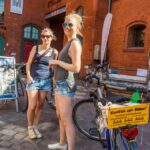
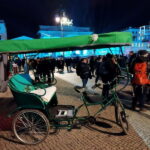
Roll through Berlin in a rickshaw. This is a private 3-hour sightseeing loop where you pick the ride (rickshaw, e-bikes, regular bikes, or e-scooters) and your guide keeps the history moving with real stories. I like that you pause often and get right up to major monuments in a way that feels relaxed, not rushed.
I especially love the personal, funny guiding style. On past rides with Levi, the tone stayed light while the facts still landed. I also like the practical setup: WiFi, bottled water, and an air-conditioned vehicle keep you comfortable while you bounce between the big-hitters of Mitte.
One thing to consider: it’s a fast, highlights-focused route. You’ll spend about 10–20 minutes at many stops, so if you want long museum time or deep reading, this tour may feel too short.
In This Review
- Key highlights before you go
- How the private ride works in Berlin Mitte (and why it feels different)
- The 3-hour route: expect frequent stops, short walks, and lots of photo moments
- Starting at Fernsehturm: Berlin’s skyline symbol with easy landmark context
- Rotes Rathaus: politics and power, seen from street level
- Stadtschloss Berlin and the Humboldt Forum: a palace rebuilt with a modern purpose
- Museum Island and free time to reset your brain
- Unter den Linden: a grand boulevard for names you’ll keep hearing
- Bebelplatz: book burning memorial and the price of censorship
- Gendarmenmarkt: French and German influences in one elegant square
- Checkpoint Charlie: a Cold War icon with staged encounters
- Topography of Terror: when the ground gets heavy
- Führerbunker site: the missing bunker under a modern parking lot
- Holocaust Memorial: 2,711 slabs that slow you down for a reason
- Brandenburg Gate: finish at Berlin’s peace symbol and modern anchor
- Price and value for up to 6: what you’re really paying for
- Who should book this Berlin Rickshaw tour (and who might want a different pace)
- Should you book? My practical take
- FAQ
- How long is the tour?
- Is this tour private?
- What vehicles are available for your group?
- Where do we meet?
- Are tickets or admissions included for the main sights?
- Is lunch included?
- What’s included besides the guide?
- Can I cancel for a full refund?
- Do I get confirmation after booking?
Key highlights before you go
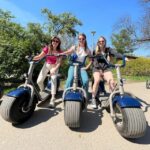
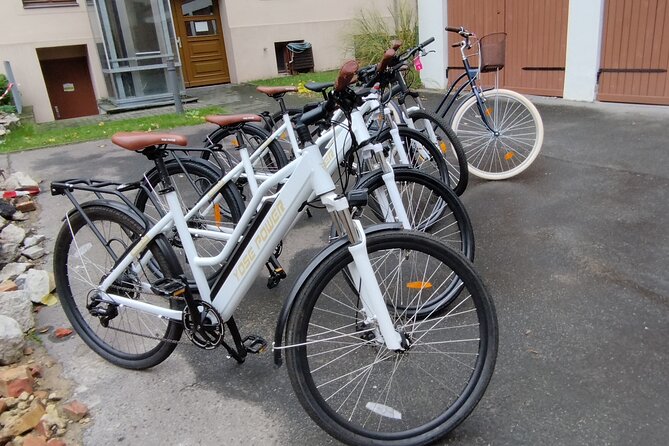
- Pick your wheels: e-bikes, regular bikes, e-scooters, or a rickshaw for the group
- Private group pace: only your party, with stops planned to fit together
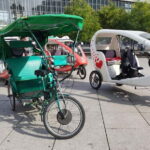
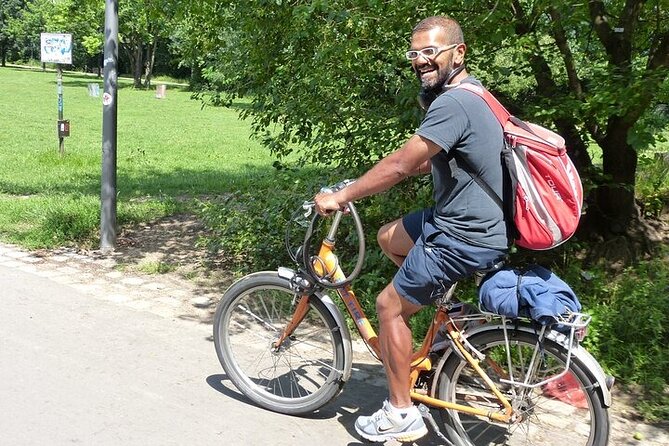
- Rickshaw-friendly for less mobile riders: get in with just a few steps, and stay seated during many photo moments
- Mitte’s top landmarks in one circuit: from the TV Tower to Brandenburg Gate
- Freedom to take photos: you can stop where you want for pictures, and often stay very close to sights
- Comfort included: air-conditioned ride, onboard WiFi, and bottled water
How the private ride works in Berlin Mitte (and why it feels different)
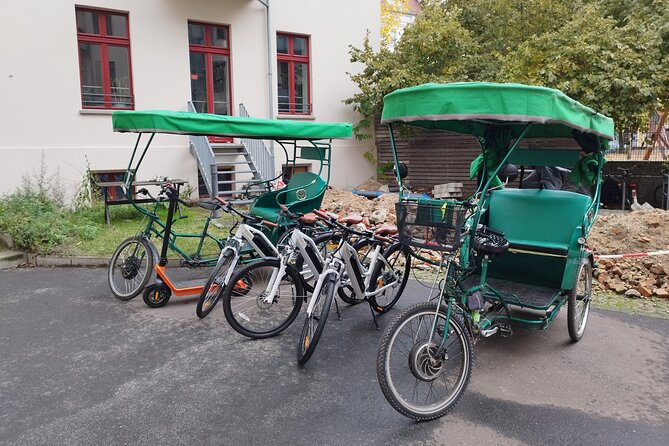
This tour is built for groups up to 6 people, with the vehicle choice doing a lot of the work for you. You don’t just “walk a route.” You stay mobile, change position often, and still hear the same guide-led stories at each stop.
That matters in Berlin. Mitte is dense with big landmarks, wide boulevards, and memorial sites that can make you want to pause more often than you planned. Here, you can keep the flow without feeling glued to your feet.
You also get onboard basics that make the ride more pleasant: air conditioning, WiFi on board, and bottled water. It’s a small thing, but it changes the vibe on a warm day—or on a cloudy one when you still feel like you’re constantly outside.
And yes, it’s a private tour/activity, so your guide can tailor the pace around your group. If someone needs a moment, it’s easier to slow down when you aren’t matching a larger crowd.
You can also read our reviews of more guided tours in Berlin


The 3-hour route: expect frequent stops, short walks, and lots of photo moments
Plan for about 3 hours total. Most of the time is moving between major sites, plus short breaks—often around 10 to 20 minutes—to get oriented and take in what you’re seeing.
A key detail I like: the guide can stop anywhere you want for pictures. You’ll come very close to monuments, and the rickshaw option is designed so you don’t have to step out to get the shot.
If you choose the rickshaw, it’s especially handy for visitors with limited mobility. The setup is meant for easier boarding with just a few steps, and you can stay seated for many of the viewing points.
For planning your shoes and energy: pack for short stretches. Even though you’re not doing a long hike, you will still walk a bit around squares and memorial grounds.
Starting at Fernsehturm: Berlin’s skyline symbol with easy landmark context
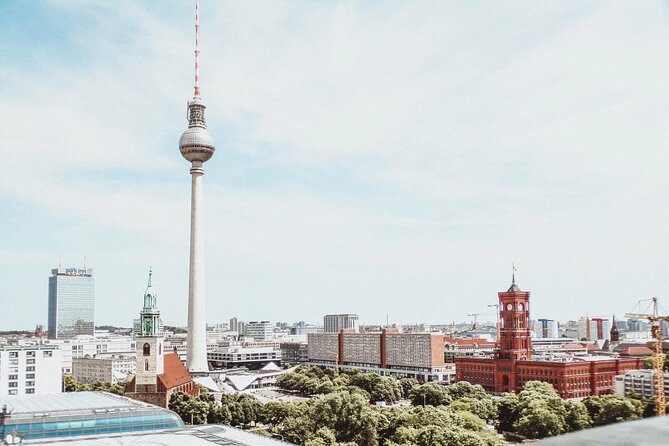
You’ll kick things off near the Fernsehturm Berlin, the famous TV Tower above Alexanderplatz. It’s about 368 meters tall, with that distinctive spherical top that makes it easy to spot from many directions.
The guide focuses on what the tower represents, not just what it looks like. It’s both a modern communication hub and a visual symbol of Berlin’s resilience.
Also, it’s worth understanding the tower’s observation deck level—around 203 meters—because even if you don’t go inside, it helps you picture what you’re seeing. When you’re rolling through Mitte, this tower becomes your “north star” for understanding the scale of the area.
Rotes Rathaus: politics and power, seen from street level
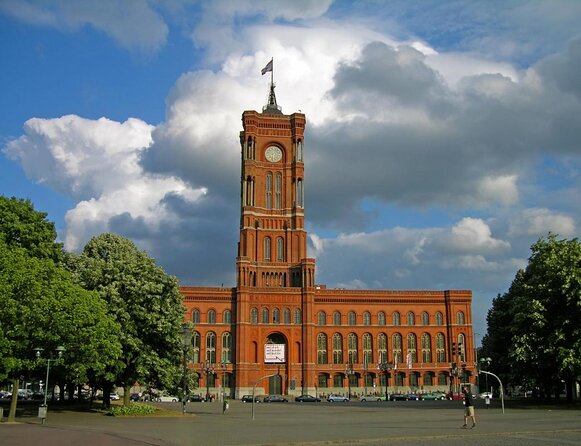
Next up is Berlin’s City Hall area, the Rotes Rathaus. The big idea here is how central it is to the city’s administration, and how its architecture fits into Berlin’s broader story of governance and public life.
This stop works well on a ride because you’re not trying to turn it into a museum visit. You’re getting the context: why this building sits where it does, and how that history shows up in the city’s layout.
If you like architecture and want to connect buildings to the people who ran the city, you’ll appreciate this quick, guided approach.
Stadtschloss Berlin and the Humboldt Forum: a palace rebuilt with a modern purpose
Then you’ll reach Stadtschloss Berlin, also called the Berlin City Palace. The palace story is complicated, and that’s the point. It was built in the 15th century as a royal residence, tied to the Hohenzollern dynasty, and later destroyed during World War II.
After the Berlin Wall fell, there was debate about whether to rebuild it. The final outcome was the Humboldt Forum project, restoring the palace with a Baroque façade while using modern interiors for cultural purposes.
You get about 15 minutes here, and it’s listed with free admission. That means you can treat this stop as a “big context moment”: a chance to understand how Berlin handles memory—some sites mourn, others rebuild, and the result is a city that keeps changing.
You can also read our reviews of more private tours in Berlin


Museum Island and free time to reset your brain
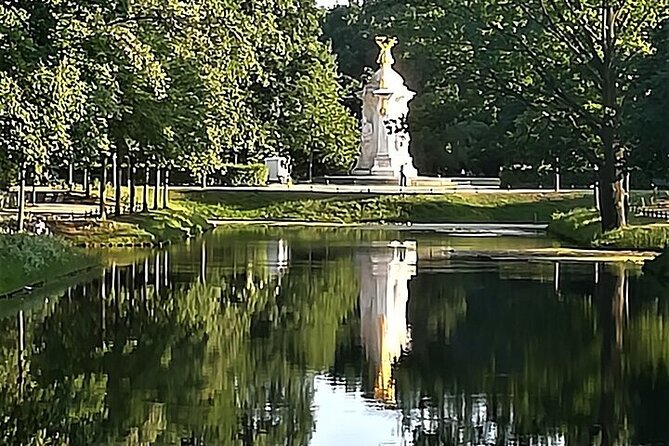
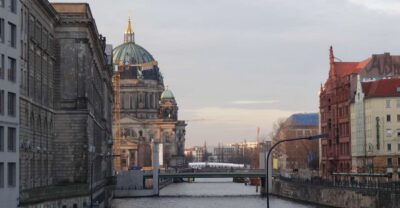
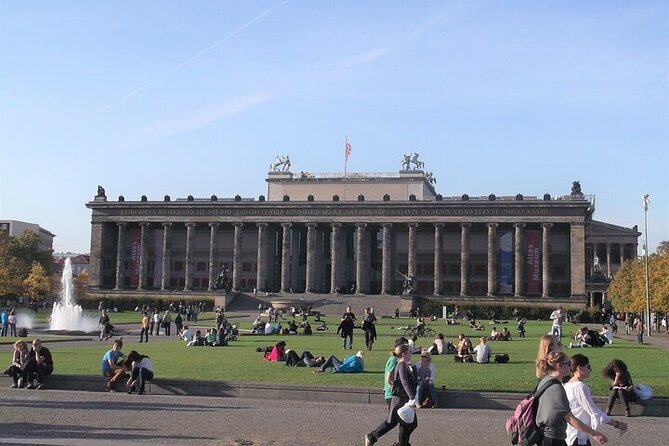
You’ll also roll through Museum Island, a UNESCO World Heritage site. The focus here is on why this small slice of riverfront matters: it’s one of Berlin’s biggest concentrations of museums and historic artifacts.
You’ll have about 20 minutes at this stop, and it’s listed as free. That’s enough time to orient yourself, spot key buildings from outside, and understand why this location became such a cultural magnet.
This stop is a good break in the route. After the heavier memory sites later on, Museum Island gives your mind a breather.
Unter den Linden: a grand boulevard for names you’ll keep hearing
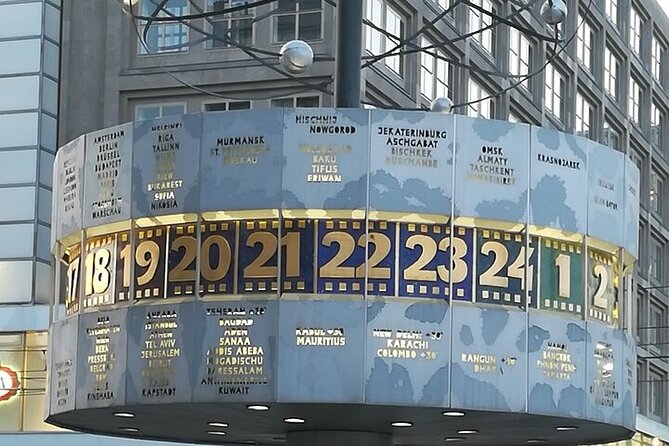
Next comes Unter den Linden, the boulevard where you’ll see the mix of architectural styles that shape central Berlin. It’s the kind of street where the names matter, because many of the city’s most famous landmarks sit along—or connect to—this axis.
The guide calls out major sights along the way, including:
- Brandenburg Gate
- the Berlin State Library
- Kronprinzenpalais (Crown Prince’s Palace)
You’ll spend about 10 minutes here, with no admission listed. This is mostly about orientation and storytelling: why the avenue feels ceremonial, and how it links historic power to the city’s present layout.
If you’ve ever wondered why Berlin feels both grand and a little strange—in a good way—this part is a big clue.
Bebelplatz: book burning memorial and the price of censorship
Bebelplatz hits harder than it looks on a quick tour. Historically, it was known as Opernplatz, and in May 1933 people gathered here to incinerate books labeled un-German.
Today, the memorial designed by Micha Ullman sits in the square. A glass plate on the ground reveals empty bookshelves below—an eerie reminder of what gets lost when ideas are treated as enemies.
You get about 10 minutes here. It’s listed as free, which is good, because this isn’t a site you should feel rushed through.
Practical tip: when you stop, take one slow scan around the square first. Then read the memorial detail. The location works like a small stage, and the meaning lands faster when you see it in context.
Gendarmenmarkt: French and German influences in one elegant square
Next is Gendarmenmarkt, one of Berlin’s most photogenic squares, known for its neoclassical look and three landmark buildings facing into the space.
The guide highlights the trio:
- Konzerthaus (concert hall)
- the French Cathedral
- the German Cathedral
The French Cathedral’s dome matters because it connects to Berlin’s multicultural story. It was built by Huguenot refugees in the 18th century and symbolizes tolerance and diversity. Across the way, the German Cathedral adds more about German history and includes a museum inside.
You’ll have about 10 minutes here, and it’s listed as free. This is a lighter stop after Bebelplatz, but it still feels meaningful. It’s a reminder that Berlin didn’t only grow through conflict—people also built community through art, worship, and public life.
Checkpoint Charlie: a Cold War icon with staged encounters
Then you’ll reach Checkpoint Charlie, the famous crossing point tied to the division of East and West Berlin during the Cold War.
The guide explains why the name became so well-known, and why the area mattered during tense standoffs between American and Soviet personnel. Today, you’ll see a replica guardhouse, and actors in U.S. military police-style uniforms often run a show for visitors.
There’s also a museum nearby now known as the Mauermuseum.
This stop is about 15 minutes, listed as free. It’s a good place to get your bearings because you can connect the physical street-level experience to the larger political story the city lives with.
Topography of Terror: when the ground gets heavy
After that comes Topography of Terror, built on the site of the former Nazi Gestapo and SS headquarters. This museum focuses on Nazi crimes and the impact on victims, using exhibits, documents, and remnants tied to the buildings that once stood here.
You’ll have about 20 minutes. It’s listed as free admission, which helps you stay focused on the content rather than thinking about ticket decisions mid-route.
This stop can be emotionally intense. I recommend you let it be. Don’t try to “speed read” your way through. Give yourself time to absorb a few key panels and artifacts instead of trying to cover everything.
Führerbunker site: the missing bunker under a modern parking lot
Then you’ll hear about the Führerbunker area, the underground bunker complex where Adolf Hitler spent the last months of WWII.
Here’s the detail that makes it feel unreal: the site is beneath a parking lot in modern Berlin, near the intersection of In den Ministergärten and Gertrud-Kolmar-Straße. There’s no visible trace today because the bunker complex was removed after the war to prevent it from becoming a destination for neo-Nazis.
You get about 10 minutes at this stop, listed as free. I like this part because it shows you how cities erase parts of their past, but never fully.
You’ll feel the contrast between the ordinary city surface and the extreme events below it. That contrast is the point.
Holocaust Memorial: 2,711 slabs that slow you down for a reason
Next is the Memorial to the Murdered Jews of Europe, also called the Holocaust Memorial. It consists of 2,711 concrete slabs of varying heights arranged on a sloping field.
Designed by Peter Eisenman and inaugurated in 2005, the layout creates a maze-like experience. As you move deeper, the ground drops, and you feel more disoriented and separated from the outside world.
You’ll have about 10 minutes, listed as free. This isn’t a checklist stop. It’s a space that works by changing your physical experience, so give it the time it asks for, even if it feels like you should rush.
If you’re visiting with kids, this is the spot where your guide’s tone matters most—someone like Levi can help keep the moment age-appropriate without removing the seriousness.
Brandenburg Gate: finish at Berlin’s peace symbol and modern anchor
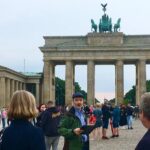
To end, you’ll roll to the Brandenburg Gate, Berlin’s best-known landmark and a symbol tied to the city’s turbulent history and reunification.
The guide explains its backstory: completed in 1791, designed by Carl Gotthard Langhans, and commissioned by King Frederick William II of Prussia as a symbol of peace. It also marks the start of the grand boulevard Unter den Linden.
You’ll spend about 10 minutes here, listed as free. This is the kind of ending that makes sense because the gate is both a literal landmark and a mental one. After stops about politics, oppression, and remembrance, the gate feels like a place where the city re-states its identity.
Price and value for up to 6: what you’re really paying for
The price is $465.43 per group for up to 6 people, with the tour running about 3 hours. For private sightseeing, that price becomes easier to judge when you look at what’s included.
You’re getting:
- a private guide
- a choice of vehicles (including rickshaw, e-bikes, regular bikes, or e-scooters)
- air-conditioned transport
- WiFi on board
- bottled water
- a ride schedule that hits major Mitte sights in short, efficient bursts
Also, many stops are listed with free admission. That doesn’t mean you’ll always skip fees in every city, but for this route it helps keep the tour cost predictable.
If you’re comparing this to renting bikes plus hiring a guide separately, the math often favors the guided private plan. Especially when you value the comfort and the ability to pause often for photos and questions.
Who should book this Berlin Rickshaw tour (and who might want a different pace)
This tour is a great match if you want:
- a small-group private experience
- a fun transportation twist (rickshaw or e-bike style)
- a guided story through key Mitte landmarks
- a plan that works for less mobile guests thanks to the rickshaw setup and close monument access
It can be less ideal if you want:
- deep time inside specific museums
- long, unhurried walking across neighborhoods well outside Mitte
- a slow schedule that turns every stop into a full lesson
For most people, though, it hits a sweet spot: you get big-name landmarks plus heavier memorial sites, without needing to plan everything yourself.
Should you book? My practical take
If you’re traveling with a mixed group—some who walk a lot and some who need a calmer pace—this is an easy yes. The vehicle choices let you keep everyone together, and the short stops keep the day moving without feeling like a sprint.
I’d book it if you care about Berlin’s story across eras, from royal palaces to Cold War edges to Holocaust remembrance. And I’d skip it only if you’re expecting a long museum day or a slower neighborhood crawl.
FAQ
How long is the tour?
It runs about 3 hours.
Is this tour private?
Yes. It’s a private tour/activity, with only your group participating.
What vehicles are available for your group?
You can choose from e-bikes, regular bikes, e-scooters, or a rickshaw (the tour notes a rickshaw option designed to help guests who have trouble getting around).
Where do we meet?
The start point is listed as Weinbergsweg 6, 10119 Berlin, Germany, and the tour ends back at the meeting point.
Are tickets or admissions included for the main sights?
Many of the listed stops are marked with free admission tickets, and the tour uses a mobile ticket. Lunch is not included.
Is lunch included?
No, lunch is not included.
What’s included besides the guide?
The tour includes an air-conditioned vehicle, WiFi on board, bottled water, and an informative friendly tour guide.
Can I cancel for a full refund?
Yes. You can cancel up to 24 hours in advance for a full refund.
Do I get confirmation after booking?
Confirmation is received at the time of booking.