REVIEW · BERLIN
Half-Day Guided Bike Tour of Central Berlin’s Highlights
Book on Viator →Operated by Berlin Bike Tour · Bookable on Viator
Two wheels make Berlin feel personal fast. This small-group bike tour turns big sights into a clear, human story, with your guide talking through key WWII and Cold War landmarks as you roll past them. I like the way the route links major monuments with real neighborhoods, and I also like that you get an insider’s perspective on what you’re seeing, from former Prussian power to the elegant New Synagogue area. One thing to consider: the tour needs a minimum number of riders, so it can be canceled if enough people do not book.
You meet at Bornholmer Str. 75A and spend about 3 hours 30 minutes moving at a comfortable pace on bike paths and secondary roads. I also appreciate the simple setup: a bike is included, the group is capped at 8, and key sights are listed as free-entry stops. The only drawback for some people is that it is an active outing, so you’ll want to dress for the weather and be ready to ride.
In This Review
- Key Highlights You’ll Feel on the Ride
- Bornholmer Street to a 3.5-Hour Loop That Actually Works
- Why This Bike Route Makes Central Berlin Feel Coherent
- Reichstag Stop: City Power, Clear Views, and a Quick Reset
- Brandenburg Gate and the Holocaust Memorial: Two Stops, One Moral Geography
- Friedrichstadt-Palast: Why a 19th-Century Theater Stop Belongs
- The Ride Between Stops: The Parts You’ll Appreciate Most Later
- Bikes, Weather, and a Maximum of 8 Riders
- Price and Value: Is $40.29 Worth It?
- A Note on Guides: Personal Connection Can Matter
- Who Should Book This Tour (and Who Might Not)
- Should You Book This Half-Day Central Berlin Bike Highlights Tour?
- FAQ
- How long is the Half-Day Guided Bike Tour of Central Berlin?
- Where do I meet the guide?
- What time does the tour start?
- Is the bicycle included?
- Are there admission fees for the listed stops?
- What group size should I expect?
- What is the cancellation/refund policy if I need to change plans?
Key Highlights You’ll Feel on the Ride
- A tight route with big meaning: Reichstag area to Brandenburg Gate and the Holocaust Memorial, with context you can actually use.
- Bornholmer Street as a smart starting point: it keeps the story grounded in Berlin neighborhoods, not just postcard stops.
- Cold War and WWII landmarks in one flow: you don’t just see monuments; you learn how the city’s roles changed over time.
- Free-entry listed stops: the schedule calls out free admission at the main landmark pauses.
- Small-group pace (max 8): enough guidance to ask questions without feeling rushed.
- Bike travel across Berlin’s “in-between” streets: you cover more ground than walking, with fewer stress points than transit hopping.
Bornholmer Street to a 3.5-Hour Loop That Actually Works
The first reason I like this tour is that it’s built for real sightseeing, not a long slog. You start at Bornholmer Str. 75A (10439 Berlin) at 10:00 am, and you end back at the same point. That round-trip rhythm matters in Berlin, where crossing the city can eat up time.
This is also a guide-led experience focused on movement. You’ll ride on bike paths and secondary roads, which is exactly what you want for Berlin’s spread-out layout. The route keeps you from bouncing between distant monuments and instead helps you understand how different areas connect. If you’re the kind of traveler who likes to keep your mornings efficient, the half-day format is a win.
The tour’s scale is another practical bonus. The group maximum is 8 travelers, and reviews show it lands well with couples and families when the group size is right. It’s not a huge crowd scene, so you can hear your guide and get your bearings fast.
You can also read our reviews of more cycling tours in Berlin
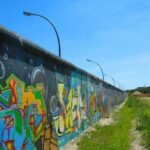

Why This Bike Route Makes Central Berlin Feel Coherent
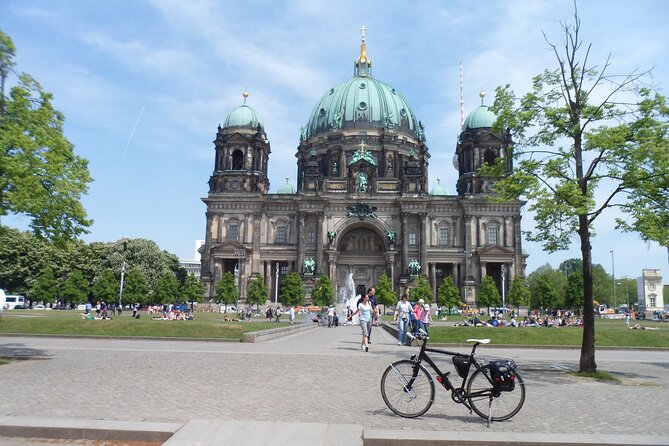
Berlin can feel like a pile of eras stacked on top of each other. That’s not wrong, but it can be confusing if you arrive with only a map and a few photos.
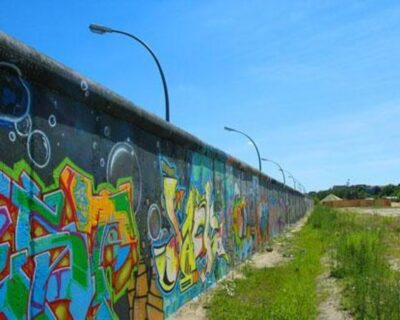
What you’re getting here is a guided thread. As you move through central areas, your guide ties landmarks to the bigger story lines: Prussian-era power, 20th-century catastrophes, and the Cold War divide. You’ll also hear about key sights you pass, including the former Prussian headquarters, the 17th-century plague hospital, and the New Synagogue area. You might not notice these details on your own, because the city’s architecture and streets don’t always announce their past.
One more thing I value: the tour isn’t only about the biggest monuments. It also calls out atmospheric neighborhoods. That helps you grasp Berlin as a living city, not just a museum with traffic.
Reichstag Stop: City Power, Clear Views, and a Quick Reset
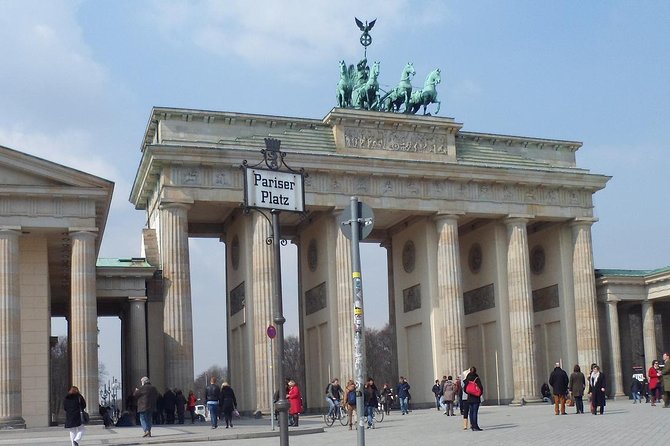
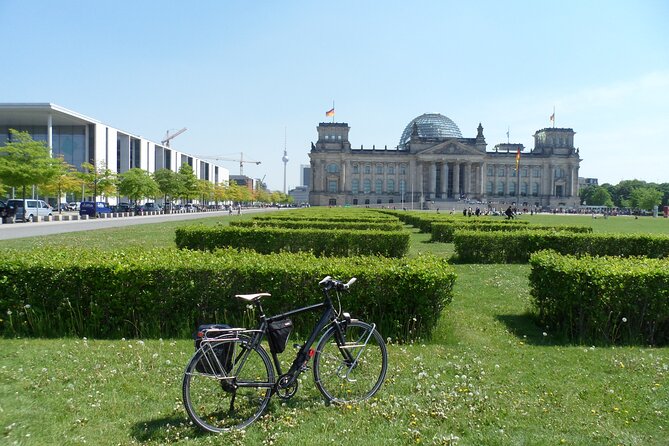
The itinerary starts with the Reichstag Building (Reichstaggebäude), with about 15 minutes there. The good news: it’s listed as a free-entry stop. Even if you don’t go deep into interior plans (your schedule is limited), you can still do something useful in that time—you get the building in your sightline and you connect the location to the political weight of the place.
What makes this stop work on a bike tour is that you’re not arriving hours after your day starts. You see it early, when your brain is fresh enough to hold context. Then your guide can connect it to what comes next—how Berlin’s power shifted from empire to republic to dictatorship to reunified Germany.
If you’re sensitive to crowds, this is still a public landmark in a major city. But with a guided group and a set timeframe, you’ll have a predictable window without wandering.
Brandenburg Gate and the Holocaust Memorial: Two Stops, One Moral Geography
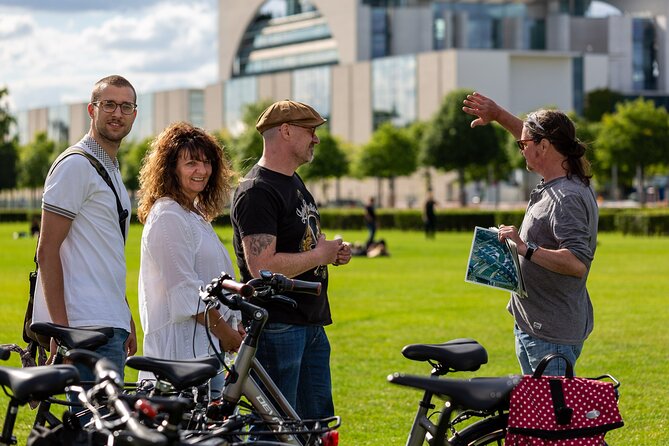
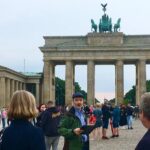
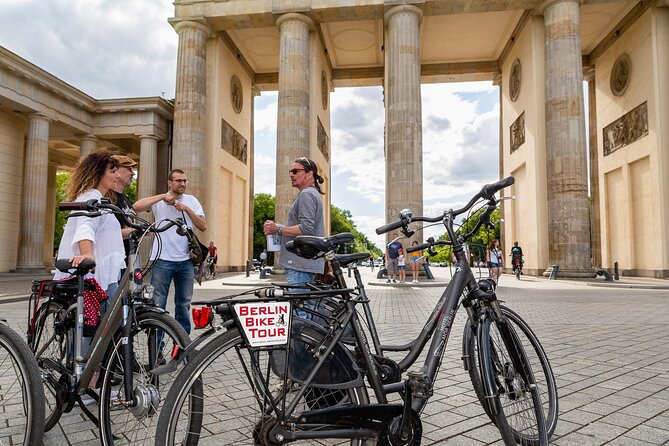
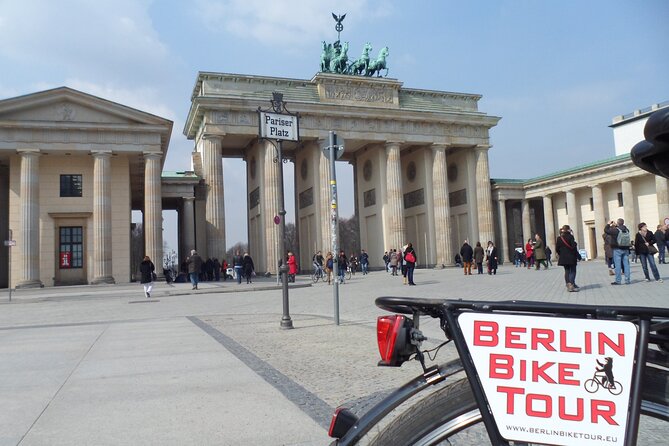
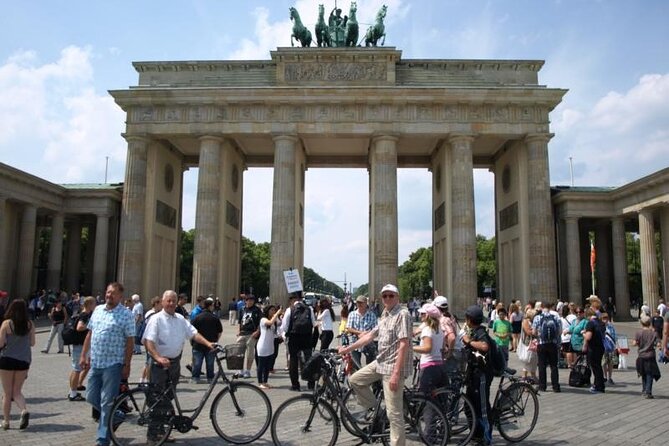
Next up is the Brandenburg Gate (10 minutes). It’s also listed as free, and that matters because Berlin’s best-known sites can eat budgets quickly when you add attractions one by one.
Brandenburg Gate is a simple shape in your photos, but it becomes more complicated the moment your guide explains what it meant across different political eras. From the gate, the route transitions into the memorial area with a different tone—one that requires a slower mental pace.
Then you’ll spend about 15 minutes at the Memorial to the Murdered Jews of Europe (Holocaust-Mahnmal). This is one of those places where you want guidance that helps you read the space without overexplaining it. In a short stop, your goal isn’t a full study session. It’s to understand the purpose, notice the design choices, and leave with a clearer sense of why this memorial sits where it does in central Berlin.
A bike tour timing works here, too. You’re not stuck on foot for long stretches. You also aren’t rushing through in a big vehicle. You get enough presence at the stops to take them seriously, while still keeping the whole tour from turning into a marathon.
Friedrichstadt-Palast: Why a 19th-Century Theater Stop Belongs
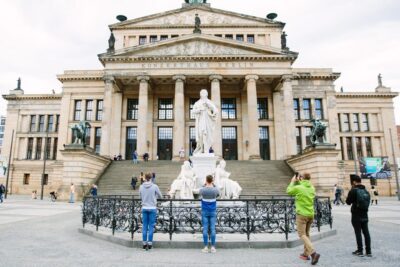
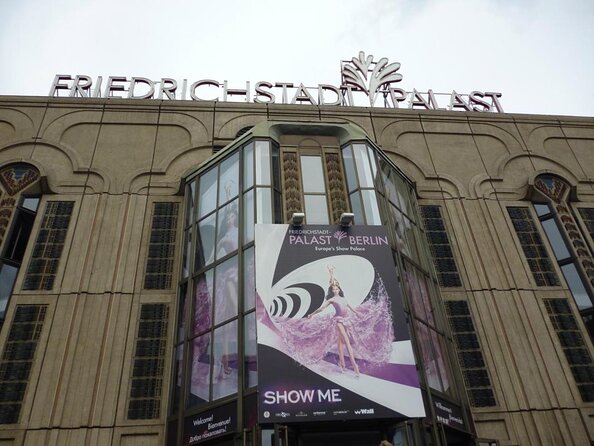
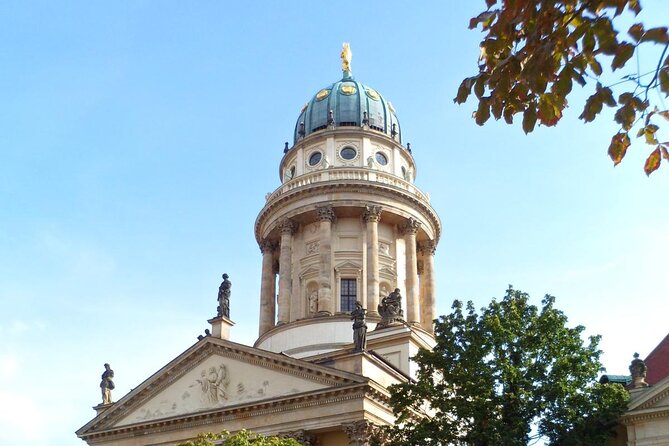
At Friedrichstadt-Palast (10 minutes), you get a different kind of Berlin. It’s not a war site, not a government building, and not a memorial. It’s a reminder that Berlin also grew through performance, culture, and public life.
This matters because the rest of the tour leans heavy: imperial power, WWII aftershocks, and Cold War memory. A cultural landmark gives your day emotional balance. It also helps you remember that cities aren’t defined only by their worst chapters.
In practical terms, the short stop length is good for pacing. You’ll see it, take a few photos, and then move on while your feet are still comfortable.
You can also read our reviews of more guided tours in Berlin


The Ride Between Stops: The Parts You’ll Appreciate Most Later
The schedule lists main landmark stops, but the real value often lives in what happens between them. The tour is designed to show you sights along the way, including:
- a famous train station area
- a 17th-century plague hospital
- the former Prussian headquarters
- the New Synagogue
Even when you don’t stop for long, you’ll learn what to look for. That’s where guided bike tours can beat a hop-on hop-off bus: the guide can point out transitions in architecture and street layout as you pass, so you start seeing Berlin like a connected system instead of separate postcards.
If you’re paying attention, you’ll also pick up a sense of how Berlin’s neighborhoods have changed roles over time. That’s especially true when the guide is talking through the WWII and Cold War angle you’re moving through.
Bikes, Weather, and a Maximum of 8 Riders
This is an outdoors activity. It runs in all weather conditions, so you should dress for rain, wind, or cold. That doesn’t sound romantic, but it’s practical. If you’re in Berlin in shoulder season or winter, a tour that still operates is a big advantage.
The tour provides use of bicycle, and your group size is capped at 8. For most people, that’s a comfortable balance: you get guidance and you don’t feel like you’re biking through a moving crowd.
Also, the tour is described as suitable for most travelers. That’s helpful, but you still need basic comfort on a bike. If you have knee or back issues, you’ll want to think carefully before committing—this is active by design.
Price and Value: Is $40.29 Worth It?
At $40.29 per person, this isn’t a budget-breaking add-on. It becomes a strong value when you compare what’s bundled: a professional guide and bicycle use for about 3 hours 30 minutes, with multiple major landmarks included in the time plan.
You also get a useful money-saver angle: key stops are listed as free-entry, which helps you avoid surprise ticket costs for the biggest names. Even if you don’t spend extra time inside any specific building, you’re still paying for direction, pacing, and context—three things you can’t easily buy with a ticket to one attraction.
The best value usually shows up when you do this early in your trip. It helps you build mental order before you start exploring on your own.
A Note on Guides: Personal Connection Can Matter
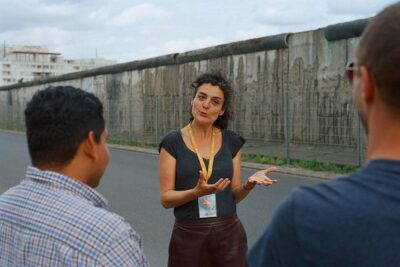
One of the strongest signals from the experience is the emphasis on story. A rider described a private bicycle tour with Katerina, saying her personal connection to the era when the Berlin Wall came down made the history feel real and immediate.
I can’t promise which guide you’ll get. But I can say what you should look for in practice: this tour’s value depends on the guide’s ability to connect facts to place. When the guide’s connection and communication click, the ride becomes more than a checklist.
If you’re the type who loves history but hates dry lectures, this style can fit you well.
Who Should Book This Tour (and Who Might Not)
This tour is a great match if you:
- want to see central Berlin with a clear order and guided context
- prefer active sightseeing over museum-only days
- like WWII and Cold War themes but still want a fun, moving format
- want a small group experience (max 8)
You might pause before booking if you:
- dislike cycling or aren’t comfortable riding in city conditions
- need long, seated breaks throughout the outing
- are traveling on a date where you’re not sure enough people will book (minimums matter here)
Should You Book This Half-Day Central Berlin Bike Highlights Tour?
I think this is a smart booking when you want an efficient, meaningful overview of Berlin’s center. The route hits the heavyweights—Reichstag, Brandenburg Gate, and the Holocaust Memorial—while also keeping the day grounded with culture and neighborhood context. You’ll come away with a better sense of how the city’s different chapters connect.
If you’ve got limited time, this kind of guided bike tour can be a fast way to get oriented without turning your trip into a rushed ticket line. Just do yourself a favor and book with confidence in your dates. And if you’re planning around a tight schedule, be aware that the operator requires a minimum number of riders, so check availability before you lock everything else.
FAQ
How long is the Half-Day Guided Bike Tour of Central Berlin?
It lasts about 3 hours 30 minutes.
Where do I meet the guide?
You meet at Bornholmer Str. 75A, 10439 Berlin, Germany.
What time does the tour start?
The start time is 10:00 am.
Is the bicycle included?
Yes. Bicycle use is included.
Are there admission fees for the listed stops?
The itinerary lists free admission for the Reichstag Building, Brandenburg Gate, Friedrichstadt-Palast, and the Holocaust Memorial.
What group size should I expect?
The tour has a maximum of 8 travelers.
What is the cancellation/refund policy if I need to change plans?
You can cancel for a full refund up to 24 hours before the experience’s start time.