REVIEW · BERLIN
Private walking Tour: Berlin Architecture Tour
Book on Viator →Operated by Insider Tour Berlin · Bookable on Viator
Berlin buildings tell a political story in 4 hours. This private architecture walk in Berlin turns big history into clear street-level sights, with a guide who can tailor what you focus on. I like the East vs West contrast as you move through the city, and I especially like how the route includes major photo stops without wasting time.
I also like that it keeps Berlin’s story grounded in real places you can actually stand in front of. Stops around Gendarmenmarkt and the Reichstag make the architecture feel personal, not like a textbook.
One caution: this is still a lot of walking and standing for one afternoon. If you’re tight on energy, plan comfy shoes and talk early about going on foot vs by bike so the pace fits you.
In This Review
- Quick hits: what makes this tour different
- Why Berlin’s buildings make more sense with a guide
- Pick-up, timing, and going on foot vs by bike
- Museum Island: neoclassicism, domes, and a rebuilt museum story
- Gendarmenmarkt: the German-French cathedral trio and Schinkel’s music hall
- Berliner Philharmonie and the Kulturforum rebuild
- Reichstag: Norman Foster’s glass dome and the democracy symbolism
- Potsdamer Platz: the Cold War scar and the rebuilt Berlin
- Berliner Dom: a massive dome that makes the skyline feel official
- Kreuzberg and Friedrichshain: where historic apartments meet Berlin Wall memory
- Pariser Platz and Hackescher Markt: classical squares meet Art Nouveau courtyards
- Price and value: is $191.87 per person worth it?
- Who this tour suits best
- Should you book this Berlin Architecture Tour?
- FAQ
- How long is the Berlin Architecture tour?
- Is this a private tour?
- What language is the tour offered in?
- Is hotel pickup and drop-off included?
- Can I choose to tour on foot or by bike?
- Is food included?
- Where does the tour start and end?
- Is there free cancellation?
Quick hits: what makes this tour different
- Private guide, customized flow: you can steer the focus toward what interests you most.
- East-West architecture story: communist-era apartment blocks meet modern postwar design.
- Photo-ready landmarks: Gendarmenmarkt’s three-building set and the Reichstag dome view are big crowd magnets for a reason.
- Kulturforum area included: you’ll pause at the Berliner Philharmonie complex tied to West Berlin’s cultural rebuild.
- Urban renewal on Friedrichstraße: you get the shopping-and-culture street layer, not just monuments.
- Hotel pickup and drop-off: it removes the logistics headache for a 4-hour day.
Why Berlin’s buildings make more sense with a guide
Berlin’s architecture can look like a style buffet—neoclassical here, communist housing blocks there, then glass-and-steel everywhere you turn. The trick is understanding why those buildings exist in that exact mix. With a private guide, you’re not just collecting photos. You’re learning how politics, rebuilding after war, and city planning shaped what you see today.
I like tours like this because they keep the story concrete. You’re not floating between eras; you’re watching them change block by block. And because this is private, you can ask for the pace and emphasis that match your interests—more on the power-and-democracy symbolism, more on urban renewal, or more on design details.
You can also read our reviews of more walking tours in Berlin


Pick-up, timing, and going on foot vs by bike
This experience runs about 4 hours, starting with a meet-and-greet at a central hotel lobby and ending with hotel drop-off. That matters, because it lets you spend energy on looking closely, not decoding transit or dragging a schedule around the city.
You’ll also want to think about the route style. The tour offers a choice of walking or biking, and that can change the feel of the day:
- If you walk, you’ll likely enjoy the slow look at facades and courtyards.
- If you bike, you can cover more ground with less physical strain.
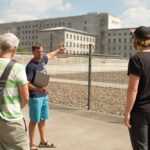
The tour is listed in English, and it’s described as private, meaning only your group is along for the ride. If you have teenagers, interior-design friends, or anyone who likes seeing how form follows function, this format is a strong fit. You can also bring specific requests. The guide is set up to customize.
Museum Island: neoclassicism, domes, and a rebuilt museum story
You start at Museum Island, one of Berlin’s easiest places to fall in love with architecture fast. The area is a concentrated set of landmark buildings, so even short photo stops feel meaningful instead of random.
Here’s what you’ll likely focus on:
- Altes Museum: a neoclassical look with grand columns and a strong sense of order. It’s the kind of building that frames the camera instantly.
- Pergamon Museum: famous for monumental classical facades and sculpture drama. Even when you’re outside, the scale hits.
- Bode Museum: this is where you see a more elegant, curved silhouette line in the island skyline.
- Neues Museum: a reminder that some buildings in Berlin are not just old—they’re also repaired, restored, and reintroduced.
Museum Island is also a practical early stop. You get big architectural payoffs before the afternoon turns into real walking and decision-making. If you’re the type who likes to compare styles side by side, this start sets you up for everything after.
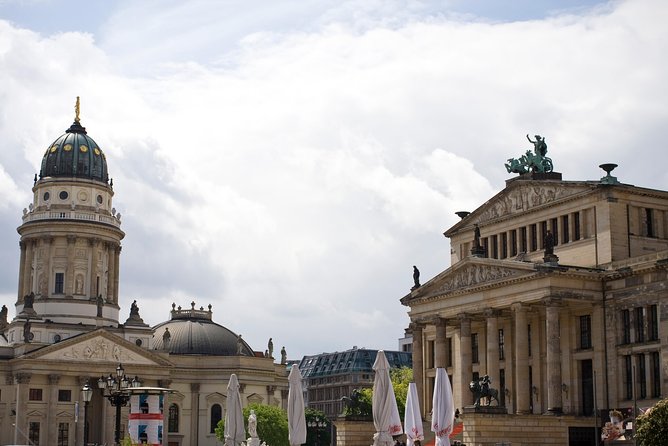
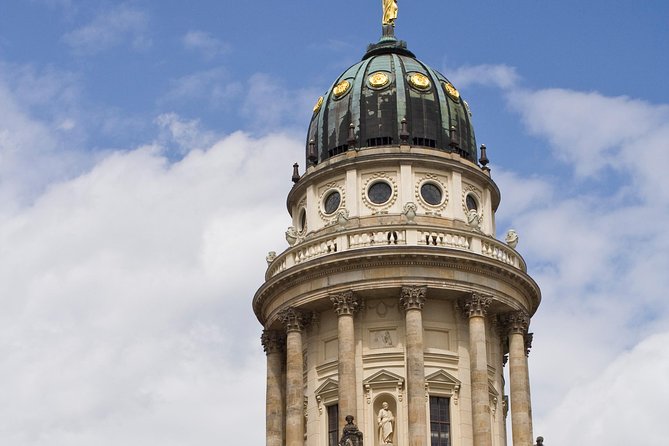
Gendarmenmarkt: the German-French cathedral trio and Schinkel’s music hall
Next comes Gendarmenmarkt, a square that’s often called Berlin’s most beautiful for a reason. The wow-factor isn’t just one building—it’s the whole ensemble.
The core set is an architectural trio:
- Deutscher Dom (German Cathedral)
- Französischer Dom (French Cathedral)
- Schinkel’s Konzerthaus (concert hall)
What I like here is the balance. You can stand in the open square and see how the forms play off each other—domes, facades, and classical lines aligned like a designed stage. It’s also a great time to talk about what “European” means in architecture when Berlin is trying to position itself culturally across different political periods.
This stop is listed as free and short, so don’t rush it like a checkbox. Give yourself a minute to rotate your position. The square photographs best when you let the buildings frame each other rather than only shooting straight-on.
Berliner Philharmonie and the Kulturforum rebuild
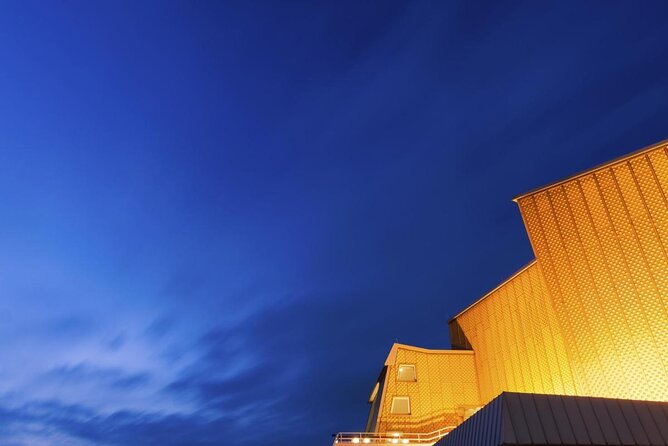
At the Berliner Philharmonie, you’ll see a different kind of power: modern form built to serve sound. The building is known for its distinctive, tent-like exterior and its bold modernist logic.
This is also tied to the bigger Kulturforum story—an area rebuilt as a cultural center in the 1950s and 60s at the edge of West Berlin, after many cultural assets had been cut off behind the Wall. In other words, this isn’t just design trivia. It’s a statement about what a city chooses to rebuild when it wants credibility and cultural strength.
If you’re into architecture that feels like it’s doing a job (not just looking impressive), this is one of the strongest stops on the plan. Even if you’re not a concert person, the exterior and the layout make sense once you understand what the architects were solving.
You can also read our reviews of more private tours in Berlin


Reichstag: Norman Foster’s glass dome and the democracy symbolism
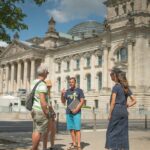
Then it’s on to the Reichstag Building, where the story becomes very visual. The structure has its classical roots, but the headline feature for this modern era is the glass dome designed by Norman Foster.
The contrast is the point. You get old-style monumentality outside, then a modern, transparency-focused dome experience that’s often read as a symbol of openness and accountability. It’s the kind of architecture that tries to teach through atmosphere and light.
Practically, this stop is short on the schedule. So if you care about viewpoints, it helps to plan your photo angles quickly: get one wide shot first, then one closer detail shot, then step back and let the building frame the city.
Potsdamer Platz: the Cold War scar and the rebuilt Berlin
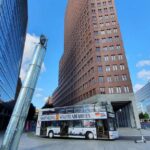
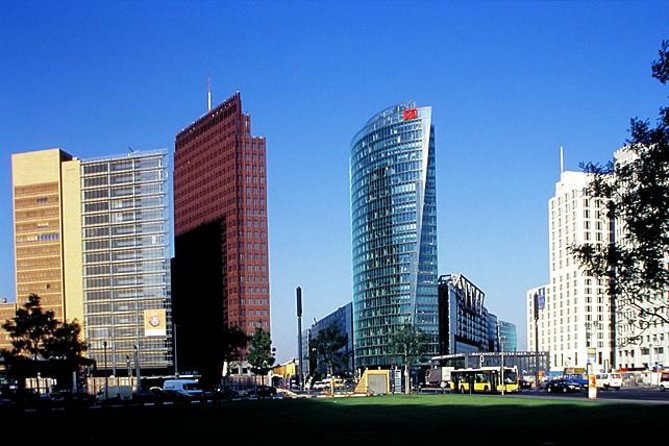
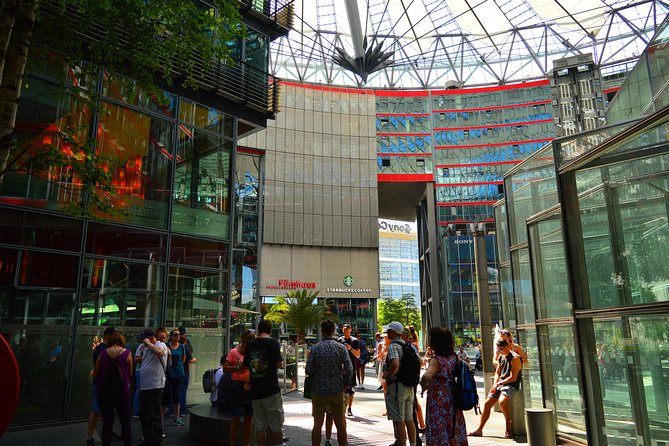
After Reichstag, you head to Potsdamer Platz, which is one of the cleanest ways to see Berlin’s transformation. This area was heavily damaged, then divided for decades. Today, it reads like the city’s post-reunification confidence in glass, steel, and office towers.
Two landmarks anchor what you’ll notice:
- Sony Center, with its iconic glass roof and flowing design
- DB Tower, a sleek, glass-clad vertical presence
You may also hear about the panoramic viewpoint concept at the Panoramapunkt area. Even without going up, the square itself teaches a design lesson: Berlin didn’t just rebuild—it reprogrammed how public space works.
I like this stop because it breaks the “old vs new” argument. It shows the city mixing eras on purpose, not by accident.
Berliner Dom: a massive dome that makes the skyline feel official
Next is Berliner Dom, a grand cathedral completed in 1905 with Baroque and Renaissance Revival influences. The main visual feature is the huge central dome that dominates the skyline.
If you like ornament, this is where you’ll see it—symmetry on the outside, then an interior described as richly decorated, with soaring arches, marble columns, and elaborate mosaics. The building works both as architecture and as a kind of landmark compass. Once you’ve seen it, you understand why people use it for orientation.
This is a good stop if your day needs one “big scale” moment after modern business architecture. It also provides contrast to the lighter feel of open squares like Gendarmenmarkt.
Kreuzberg and Friedrichshain: where historic apartments meet Berlin Wall memory
The tour then shifts into neighborhood architecture, including stops in Kreuzberg and Friedrichshain—two areas where you can still sense Berlin’s layered life.
In Kreuzberg, you’ll see:
- older Altbau apartment buildings with ornate facades and classic streetscape rhythm
- industrial-style conversions and modern developments mixed in
- Oberbaum Bridge, with its red-brick towers and Gothic-inspired arches that connect across the Spree
In Friedrichshain, the look stays human-scaled, with more pre-war Altbau buildings that have been restored and reused as apartments, cafes, and shops. This is also where East Side Gallery comes into the picture—an open-air stretch of the Berlin Wall with colorful murals painted by artists from around the world.
I like these neighborhood stops because they prevent the day from becoming museum-only. Architecture isn’t only what architects built for headlines. It’s also housing and everyday streets where politics left physical marks, and people kept living.
Pariser Platz and Hackescher Markt: classical squares meet Art Nouveau courtyards
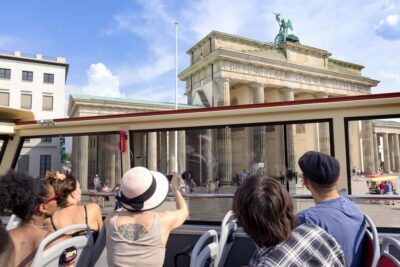
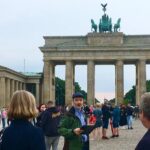
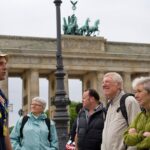
You wrap the central big-sight area with Pariser Platz, a square that blends Brandenburg Gate grandeur with neighboring embassies and offices. You can also spot architectural contrast right in the open:
- the French Embassy and the American Embassy building references
- the DZ Bank building designed by Frank Gehry, completed in 1999, with flowing sculptural glass and steel
- the Academy of Arts
Then you finish at Hackescher Markt, specifically the Hackescher Höfe complex, known for Art Nouveau design by architect August Endell. The standout here is architectural detail in a human scale: interconnected courtyards, ceramic tiles, and ironwork—places where you can slow down and really look.
This ending works well. After a day of heavy landmarks, you get something intimate and tactile. If you like design details—the way buildings manage space for people—Hackescher Höfe is a strong closer.
Price and value: is $191.87 per person worth it?
At $191.87 per person for roughly 4 hours, the value depends on what you’re trying to get out of Berlin.
Here’s what you’re paying for beyond basic sightseeing:
- Private guide (so you’re not stuck with a mass-group pace)
- Hotel pickup and drop-off (saves time and mental energy)
- Mobile ticket and a tour designed for moving between key areas
- A route that mixes major landmarks with neighborhood architecture
- Multiple stops that are listed with free admission time
In plain terms: if you care about architecture as more than decoration—if you want the why behind East-West contrasts, rebuild choices, and political symbolism—this price can feel fair. If you only want quick exterior photos and don’t want guided context, you could spend less on other formats.
One more thought: because the tour is private and customizable, it can save money indirectly. If you’re choosing between paying for a general tour and then adding “architecture fixes” later, this one afternoon can do the job in a single plan.
Who this tour suits best
This experience is a great match if you:
- want an architecture-focused day that also explains the political story behind the buildings
- like photo stops with strong visual payoff
- want a private guide who can adjust timing and requests
- enjoy design details, city planning, and how neighborhoods change over time
It’s also a good pick for first-time visitors who want a fast orientation through the city’s architecture eras. And if you have mobility concerns, talk to the guide early about whether bike mode can help you stay comfortable.
If you want a hint for choosing a guide: people have highlighted guides like Ariel for clear communication and flexibility, Sara for design and architecture depth, and Thomas and Daniel for making both the design and the historical context click.
Should you book this Berlin Architecture Tour?
I’d book it if you want your Berlin buildings explained in a way that’s easy to remember—and you like mixing the famous landmarks with the neighborhood texture that makes Berlin feel real. The combination of private guide, major architecture stops, and the East-West story arc is a smart use of one afternoon.
Skip it only if you’re mostly after casual sightseeing with zero interest in the political and design context, or if you already have a very light schedule where 4 hours of structured walking feels too heavy.
FAQ
How long is the Berlin Architecture tour?
It runs for about 4 hours.
Is this a private tour?
Yes. It’s a private experience with only your group.
What language is the tour offered in?
The tour is offered in English.
Is hotel pickup and drop-off included?
Yes. Hotel pickup and drop-off are included.
Can I choose to tour on foot or by bike?
Yes. The tour offers the option to do it on foot or by bike.
Is food included?
No. Food and drinks aren’t included.
Where does the tour start and end?
It starts with a meet-and-greet in a central Berlin hotel lobby and ends with hotel drop-off.
Is there free cancellation?
Yes. You can cancel up to 24 hours in advance for a full refund.