REVIEW · BERLIN
An Introduction to Berlin Private Walking Tour
Book on Viator →Operated by Insight Cities · Bookable on Viator
Berlin history clicks into focus fast. I like the scholar-guide style and how you pause at major landmarks like the Reichstag and the Holocaust Memorial. The only real drawback is you will use public transport a few times, so you need to plan for tickets and short hops.
This is a true private setup (your group only, up to 10 people) with a 3-hour timeline that feels tight but not rushed. You get a mobile ticket, English-speaking guide support, and the option of pickup, with a start point at Unter den Linden 42 near Cafe Einstein.
In This Review
- Key things to know before you go
- A 3-hour Berlin route built around the big questions
- Price for a private historian: what you really pay for
- Meeting at Unter den Linden and getting around without stress
- Reichstag Building: glass dome meets modern democratic theater
- Brandenburg Gate: one monument, many eras
- Museum Island: five museums in one concentrated history zone
- Potsdamer Platz: a square rebuilt into entertainment life
- Unter den Linden and Tiergarten: grand boulevard to park reset
- Holocaust Memorial: a reflective labyrinth built from 2711 slabs
- Hackescher Markt: preserved Art Nouveau courtyards in the middle of the city
- Where the Wall and Checkpoint Charlie fit into the story
- Scholar-guide pacing, and why private time matters
- What this tour is best for
- Should you book this Berlin private walking tour?
- FAQ
- How long is the Berlin private walking tour?
- How many people are in a group?
- Is the tour offered in English?
- Where do I meet the guide if I don’t get pickup?
- What’s included, and what’s not included?
- Do I need public transport tickets?
Key things to know before you go
- A historian at your pace: You get a guide who can answer questions on the spot, not just point-and-go.
- Landmarks that explain turning points: Reichstag, Brandenburg Gate, Museum Island, Wall-era sites, Checkpoint Charlie, plus more.
- Meaningful stops, not just photos: The Holocaust Memorial is treated as a reflective experience, not a quick glance.
- Walks plus short public transport legs: The route mixes strolling with a few transit connections to keep it workable.
- Private-group attention: With up to 10 people, you are not fighting for time with the guide.
A 3-hour Berlin route built around the big questions
Berlin can feel like three cities stacked on top of each other: old empire, Nazi era, Cold War, then reunified modern Germany. What I like about this tour is that it does not just name sites. It uses key places so you start to see connections between government, conflict, memory, and everyday life.
The timing is about right for first-time visitors. You spend enough minutes at each stop to get oriented, but the schedule still leaves you with energy to explore on your own after.
You can also read our reviews of more walking tours in Berlin


Price for a private historian: what you really pay for
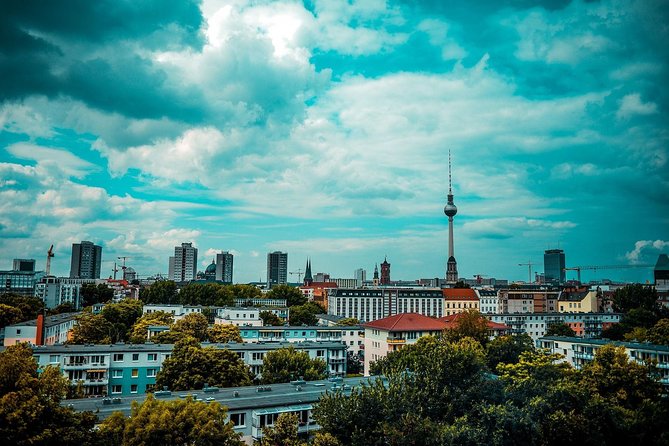
This tour costs $520.73 per group up to 10 people, which is where the value math gets interesting. If you come as two or three people, it can feel pricey per person. If you come as a fuller group, the cost per head drops a lot, and suddenly it is one of the most practical ways to get serious context without booking multiple tours.
You are paying for one main thing: a 3-hour walk with a historian-guide in English. That matters in Berlin, where landmarks are surrounded by layers of meaning and politics. Having someone who can connect the dots is often the difference between seeing buildings and understanding why they matter.
Meeting at Unter den Linden and getting around without stress
Your default meeting spot is Cafe Einstein, Unter den Linden 42. The guidance is to show up about 15 minutes early unless hotel pickup is arranged.
The tour includes a mobile ticket, and it is offered in English. Also, public transport is part of the plan since some key sites are too spread out for a simple all-walking loop. If you do not already have a multi-day transit pass, you can grab a day metro pass on arrival. The tour info suggests either the Berlin Transit One Way AB ticket (2.8 euro) or a day ticket (7 euro for one person), with senior discounts listed too.
If you hate transit logistics, this tour is still doable. Just make sure you have cash or a card that works for ticket machines, and give yourself a little buffer time when you switch lines or stations.
Reichstag Building: glass dome meets modern democratic theater
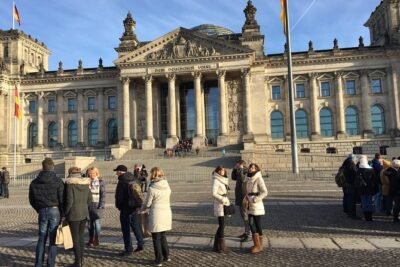
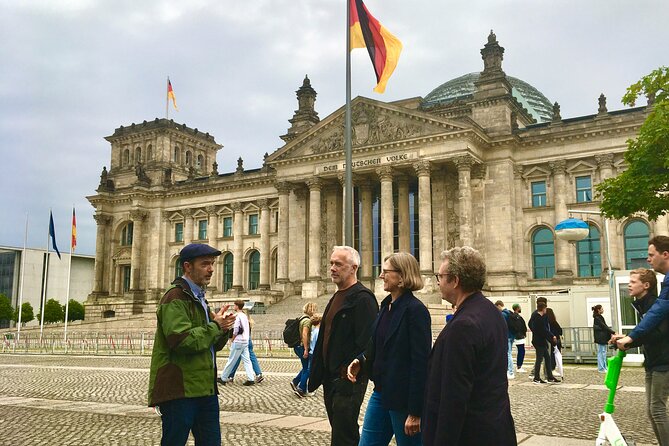
The tour starts at the Reichstag Building area, with a stop duration of about 20 minutes. This is Germany’s famous parliament building, and it is identified here as the meeting place of the Bundestag, Germany’s lower house of the national legislature.
The highlight for many people is the glass, transparent dome added by Norman Foster in the 1990s. Even if you only admire it from nearby, it is a strong symbol: transparency built into the architecture of government. For history-minded visitors, it also gives you a “then and now” feeling fast, without needing a long museum detour.
A small practical note: because this stop is focused and timed, do not plan to linger for long photo sessions unless your group is running ahead. Use your time for the big picture questions with the guide.
Brandenburg Gate: one monument, many eras
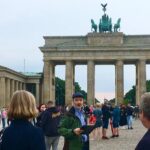
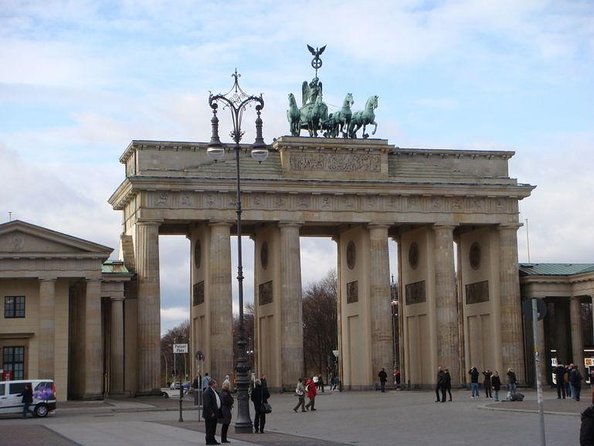
Next up is the Brandenburg Gate, also about 20 minutes. You are told it is an 18th-century neoclassical monument ordered by Prussian king Frederick William II.
What makes this stop click is the list of historical moments attached to it, including Napoleon’s entrance and Ronald Reagan’s Cold War speech. You start seeing the Gate as more than an 18th-century landmark. It becomes a stage where world politics showed up in public.
The drawback to keep in mind is that this is a famous photo site. Expect crowds around the immediate area, so if you want quieter time, lean on the guide for timing and phrasing when you ask for context.
You can also read our reviews of more private tours in Berlin


Museum Island: five museums in one concentrated history zone
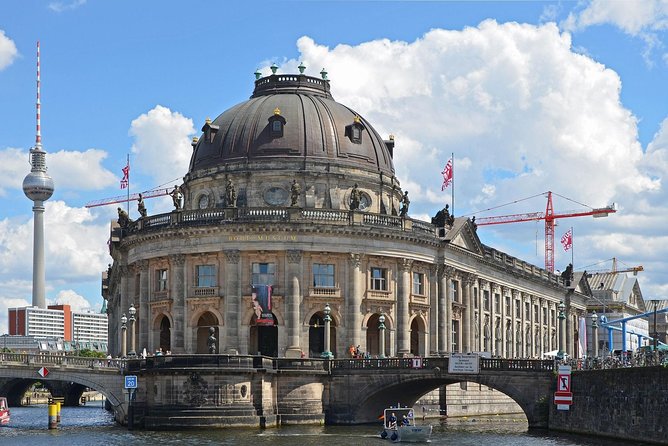
Your third stop is Museum Island (Spreeinsel) for about 20 minutes. Here you get a useful bird’s-eye understanding of why Berlin’s museum culture is so central: the island holds five major museums built under Prussian rulers, including the Pergamon, Neues Museum, and Alte Nationalgalerie.
This is a stop that works well even if you do not plan to enter museums during your trip. You learn how the set of buildings relates to power and prestige, and you get an easy mental map for what you might visit later.
One consideration: 20 minutes at a museum cluster is not for full touring. Treat it as orientation and context, then decide later if you want to come back for a particular museum.
Potsdamer Platz: a square rebuilt into entertainment life
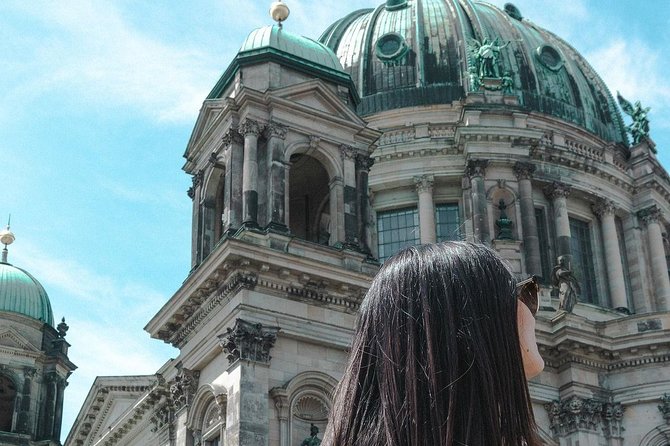
Potsdamer Platz is next, about 15 minutes. The key idea you are given is that the square was reborn since the fall of the Berlin Wall and now functions as a hub for entertainment, restaurants, and shops.
That framing helps because it anchors the modern city back to a specific historical shift. You are not just walking past a commercial district. You are seeing how Berlin changed when the Wall’s divisions stopped shaping daily movement in the same way.
If you prefer quiet neighborhoods over shopping zones, you may want to treat this stop as a short “history-to-today” transition rather than your main highlight. The guide’s commentary is what makes the minutes count.
Unter den Linden and Tiergarten: grand boulevard to park reset
You get time at Unter den Linden for about 30 minutes. This grand boulevard runs from the City Palace to Brandenburg Gate and is named for the linden trees lined along it. It is described as Berlin’s answer to Paris’s Champs-Élysées, which is a fun way to understand its role as a centerpiece promenade.
Then you have a shorter stop at Tiergarten, about 10 minutes. The park is presented as Berlin’s most famous inner-city green space, with gardens and grand statuary. Even if you do not spend long here, it is a good mental reset from architecture and monuments.
This pairing is smart: a wide city axis followed by a park pause. It helps you process what you just learned rather than stacking too many heavy stops back-to-back.
Holocaust Memorial: a reflective labyrinth built from 2711 slabs
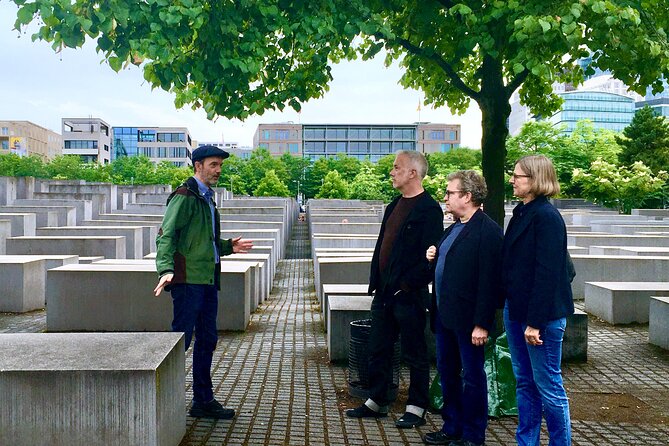
The Holocaust Memorial is scheduled for about 15 minutes. The description includes major design facts: it was designed by Peter Eisenman and opened in 2005, with 2711 concrete slabs of different heights.
That detail matters because the memorial is not explained as a single object you quickly look at. It is framed as a somber labyrinth and a space for reflection, which changes how you experience the place even during a short stop.
One practical consideration: the symbolism here can be emotionally heavy. Give yourself permission to pause, look down, and simply take in the atmosphere rather than rushing for a photo.
Hackescher Markt: preserved Art Nouveau courtyards in the middle of the city
Hackescher Markt Square is your final listed stop, with about 10 minutes. The focus is on the preserved Art Nouveau courtyards of pre-war Berlin.
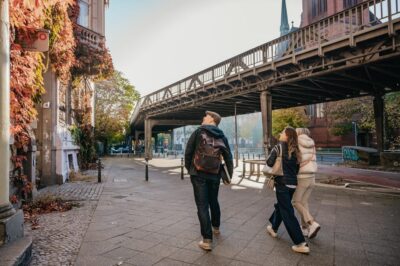
This is a good “last mile” stop because it adds texture. After major politics and memory, you end up in a lively area where the pre-war city still shows through in architecture and street layout.
If you want a smoother landing after the tour, this is a decent place to keep walking. You already have a sense of what you are looking at and why it survived.
Where the Wall and Checkpoint Charlie fit into the story
The tour highlights include Berlin Wall sites and Checkpoint Charlie, even though the detailed stop-by-stop list emphasizes specific landmarks like the Brandenburg Gate and the Holocaust Memorial. What I like about this structure is that it keeps the Wall and Cold War material in the same narrative line as government, public space, and memory.
You will likely hear these topics connected as you move through the city: how borders shaped daily life, how media and speeches turned places into symbols, and how the city learned to live with the past in the open air.
If you are especially focused on Cold War history, I would ask the guide at the start how they plan to allocate time to the Wall-era material during the 3 hours.
Scholar-guide pacing, and why private time matters
The big win here is not the list of famous names. It is the scholar-guide format paired with a private group size up to 10.
In a private setting, you can ask follow-up questions when something hits you. And you do not have to wait until a scheduled Q&A moment. That matters at places where visitors often have a lot of questions about meaning, not just dates or facts.
One guide you might meet is Jakob, who shared a personal family perspective tied to the Holocaust. He also offered restaurant recommendations, and he was happy to answer individual questions. That kind of guide energy is exactly what makes a walking tour feel like learning, not just moving.
Also, the guide is described as an enthusiastic host who loves helping travelers explore Berlin. That is more useful than it sounds. When you finish the tour, you want practical next steps, not just a folder of landmarks.
What this tour is best for
This works well if you want your first Berlin history overview without doing it all via museums. You will see major political and memory sites, plus central city landmarks you can recognize later when you wander on your own.
It also fits groups who want to compare notes. If one person is more curious about government and architecture, and another is focused on 20th-century tragedy and public memory, the tour format can flex because it is private.
If you are traveling with very young kids or someone with limited mobility, you should be cautious because you will use public transport a few times and you will be outside most of the day.
Should you book this Berlin private walking tour?
Book it if you want a guided, history-focused path through Berlin’s most meaningful public sites, with the value of private time to ask questions. I especially like it for first-timers who want context at places like the Reichstag dome, Brandenburg Gate symbolism, Museum Island’s museum cluster, and the Holocaust Memorial’s design-focused experience.
Skip it or compare alternatives if you hate public transport planning or you prefer long, slow museum entries. This tour is built for walking plus short transit legs, and it is time-boxed to about 3 hours.
If you do book, go in with one goal: ask your guide for the connections you care about. Then use the route to build your own Berlin itinerary afterward, with smarter picks because you will understand what you are actually looking at.
FAQ
How long is the Berlin private walking tour?
The tour duration is about 3 hours.
How many people are in a group?
This is a private tour/activity, and the group size is up to 10 people.
Is the tour offered in English?
Yes, it is offered in English.
Where do I meet the guide if I don’t get pickup?
If hotel pickup is not arranged, meet your guide 15 minutes before the start time at Cafe Einstein, Unter den Linden 42, 10117 Berlin.
What’s included, and what’s not included?
Included is a 3-hour tour of Berlin in the company of a historian. Not included are food and drinks, and transportation to/from attractions (you use public transport a few times).
Do I need public transport tickets?
Yes, you will need public transport a few times because some distances are too far to walk. If you do not already have a visitor transit pass, the tour suggests buying a day metro pass, or using the listed one-way fare if needed.