REVIEW · BERLIN
Berlin (E)Bike Tour Historical Highlights in Small groups
Book on GetYourGuide →Operated by Berlin Excursions · Bookable on GetYourGuide
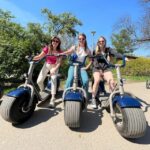
Berlin’s key sights roll by fast when you’re on wheels. This Berlin (E)Bike Tour mixes e-bikes with traditional rickshaws, so you can cover big landmarks without the long walk-and-wait routine. You’ll hit the German parliament area, Cold War checkpoints, and the Berlin Wall corridor, with frequent photo stops built into the ride.
I love two things right away: the guide’s photo-stop focus (it’s not just history talk, it’s also getting you positioned for good shots), and the small-group format capped at 6. You also get free bottled water, and the whole pace is designed for comfort, not sprinting.
One consideration: the experience relies on the e-bikes working correctly. One report mentioned an e-bike losing power mid-tour, and another hinted the bike handoff process can feel a bit chaotic. If you go with an e-bike, bring patience—and if you’re sensitive to delays, consider choosing the rickshaw.
In This Review
- Key things I’d plan around
- Berlin Mitte moves faster on two wheels (and a rickshaw)
- What $82 buys you in real terms
- Where you meet: Weinbergsweg 6 near Rosenthaler Platz
- How the guide experience works: English + lots of positioning
- Stop 1: TV Tower photo stop and skyline views
- Stops 2–3: Museum Island and the “walkable between monuments” rhythm
- Stop 4: May 10, 1933 Nazi book burning memorial
- Stops 5–6: Checkpoint Charlie and Hitler’s Bunker
- Stops 7–8: Holocaust Memorial and the Berlin Wall
- Stop 9: Topography of Terror
- Stops 10–11: Brandenburg Gate and the Reichstag finale
- E-bike vs rickshaw: how to choose for your group
- How to get the most out of it (without overdoing expectations)
- Should you book this Berlin (E)Bike Tour?
- FAQ
- How long is the tour?
- What’s the group size?
- Do I need to ride an e-bike?
- Where does the tour start?
- Is the tour guided in English?
- What kinds of photo stops should I expect?
- Is water included?
- What should I bring?
- Is there free cancellation?
- Can I reserve now and pay later?
Key things I’d plan around
- Max 6 people means more attention and fewer long waits at each stop
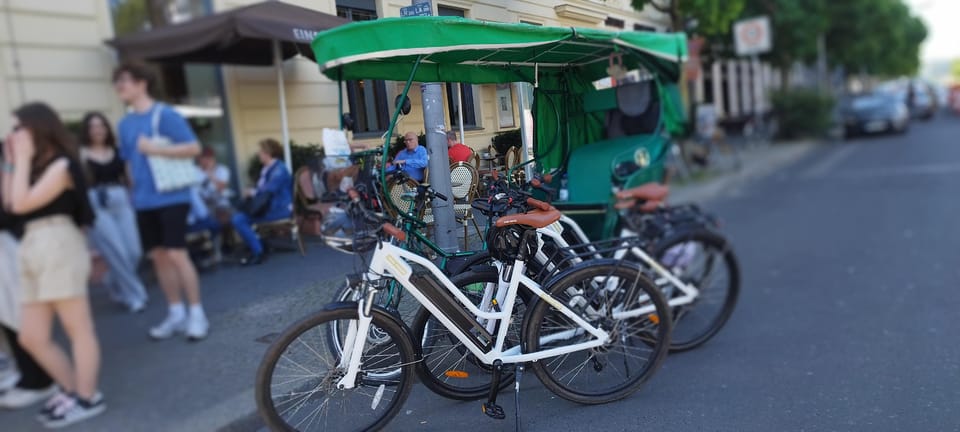
- E-bike plus rickshaw flexibility keeps families and mixed mobility groups together
- Photo stops happen often, and the guides lean into good angles and positioning
- A tight 3.5-hour route helps you see a lot of Berlin Mitte without wasting hours on buses
- Major landmarks are grouped logically, from TV Tower down through Brandenburg Gate and the Reichstag
Berlin Mitte moves faster on two wheels (and a rickshaw)
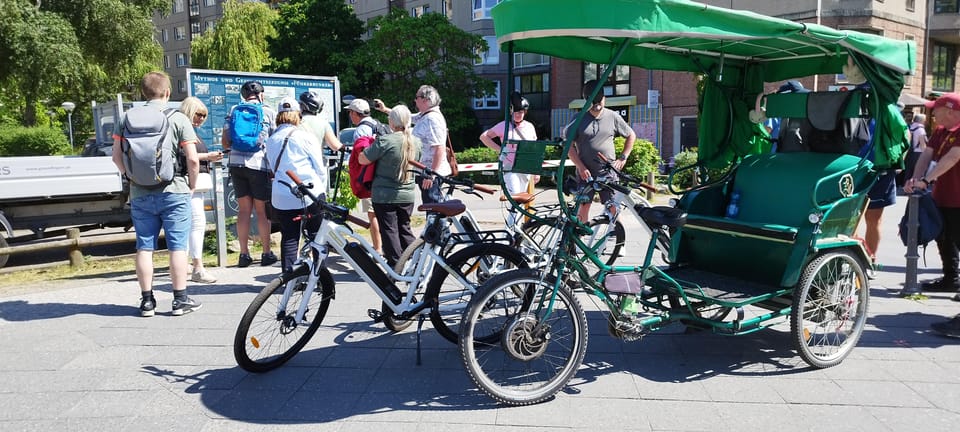
Berlin Mitte’s top sights are spread out enough that walking can eat your day. This tour’s whole premise is smart: use e-bikes for momentum and rickshaws when the group needs a slower, seated option. In 210 minutes, you’re set up to see the big-name highlights without turning the trip into a transit scavenger hunt.
You also get a guided structure, which matters here. The difference between just riding around and getting the “what am I looking at” context is huge—especially at places tied to Germany’s 20th-century story. The tour is built to cover iconic landmarks that are simply too far for a leisurely stroll, and too time-consuming by bus when you only have a few hours.
You can also read our reviews of more cycling tours in Berlin

What $82 buys you in real terms
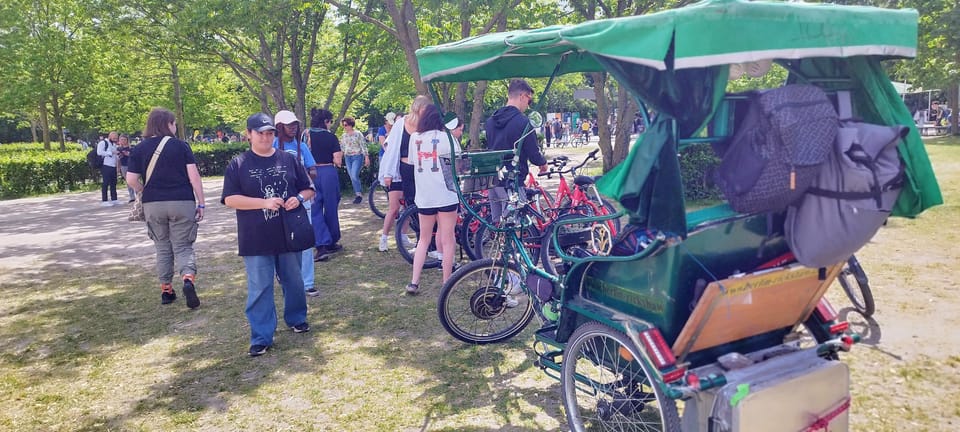
At $82 per person for 3.5 hours, you’re paying for four practical things: a live English-speaking guide, small-group time (not a giant pack), guided touring plus photo stops, and the vehicle itself—either an e-bike or a rickshaw.
That can be good value if your goal is concentration: you want a lot of “Berlin important” in one morning or afternoon. It’s less of a deal if you’re the type who wants to linger for hours at one monument and disappear into museums on your own. This tour is about efficient sight coverage and keeping the group moving.
I also like that water is included. It’s a small line item, but in Berlin heat or cool wind, it helps you stay comfortable and not spend your energy hunting for a bottle.
Where you meet: Weinbergsweg 6 near Rosenthaler Platz
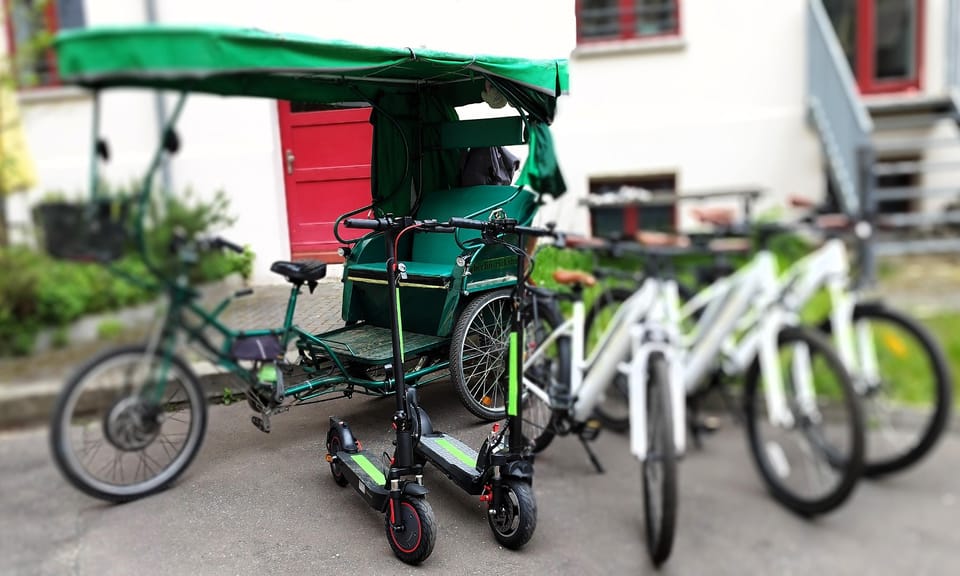
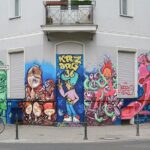
You’ll start at Weinbergsweg 6, in the Rosenthaler Platz area (U-Bahn: Rosentahler Platz). This is a practical meeting point because it’s central and easy to reach from within Mitte. The neighborhood has that mixed city feeling: cafes and bars nearby, plus shops and street art around you.
If you arrive early, you can take a breather near Weinbergspark, a small green space a few steps away. It’s a simple way to calm down before you hop onto the e-bike or step into the rickshaw. Comfortable shoes matter, too—there are a few steps involved in boarding the rickshaw.
How the guide experience works: English + lots of positioning
This is a guided tour in English, and the “touring” part is meant to be active. You won’t just be parked at one plaque; you’ll be guided through multiple locations, with short stops and photo moments along the way.
The photo-stop style is a major strength. The tour is described as having guides who are almost professional photographers, and that shows up in how often you’ll stop for photos. It’s great if you want pictures that don’t look like you grabbed them from across the street.
The tour also includes safety measures during the experience. That’s a big deal with e-bikes in a city with traffic and crossing points, and it’s one reason the structured route feels more reassuring than a DIY loop.
Stop 1: TV Tower photo stop and skyline views
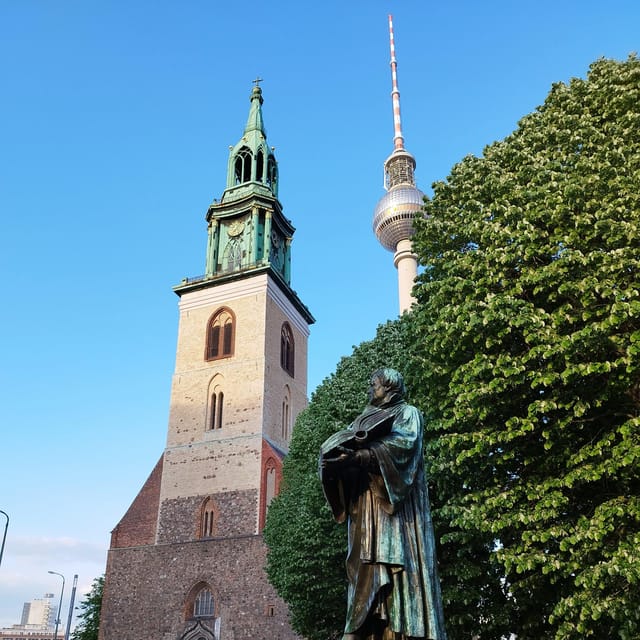
You begin with a TV Tower stop that includes a photo stop plus guided context and scenic views on the way. Even if you’re not going inside, this is a smart kickoff. It gives you an orientation to Berlin’s scale and helps you get your bearings before you head into the “very historical, very specific” part of the route.
The main benefit here is pacing. Starting with a viewpoint-style moment turns the tour into a guided flow rather than a straight sequence of solemn monuments.
You can also read our reviews of more historical tours in Berlin
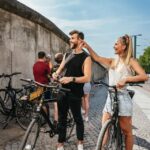

Stops 2–3: Museum Island and the “walkable between monuments” rhythm
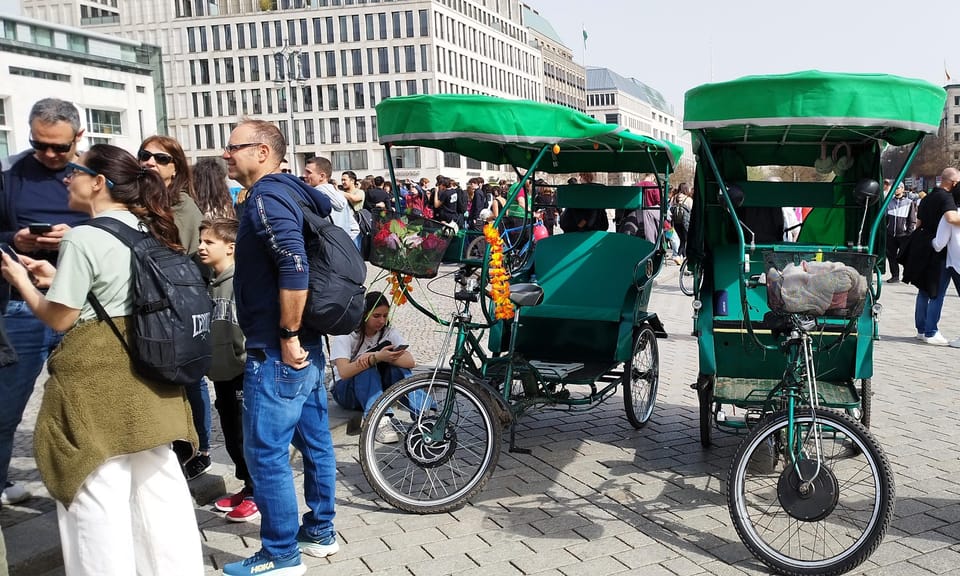
Next is Museum Island, again with a photo stop and guided touring. This stop works well early on because it’s visually strong and pairs nicely with the route’s momentum: you’re not yet tired from constant stopping, and the group energy stays up.
After that comes Unter den Linden, where you’ll have another photo stop and sightseeing time. This boulevard-style segment helps break up the emotional weight of later stops. It also gives you a sense of Berlin’s layout—big corridors, prominent architecture, and streets that feel built for long views.
A small downside: since these stops include photo moments, you’ll want to be ready to move fairly quickly when the guide calls it. If you’re hoping for slow wandering, keep expectations flexible.
Stop 4: May 10, 1933 Nazi book burning memorial
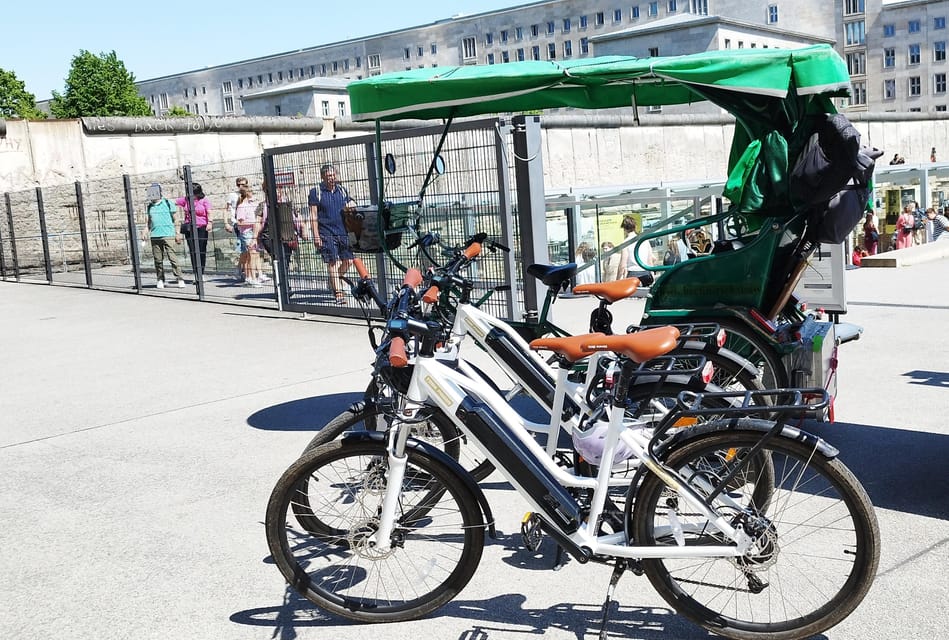
Then you reach the Memorial to May 10, 1933 Nazi Book Burning. This is one of those stops where the guide’s narration matters because you’re not just looking at a pretty landmark; you’re looking at a real piece of cultural violence and propaganda history.
The practical advantage on a bike tour: you can get context without spending time hunting for the right angle or reading everything at ground level. You’ll pause, hear what you need, and then roll to the next location while the group stays together.
Stops 5–6: Checkpoint Charlie and Hitler’s Bunker
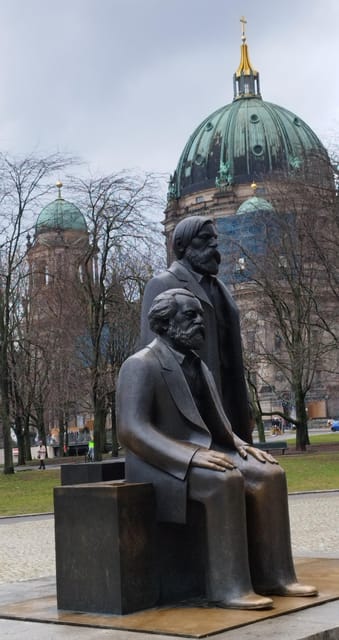
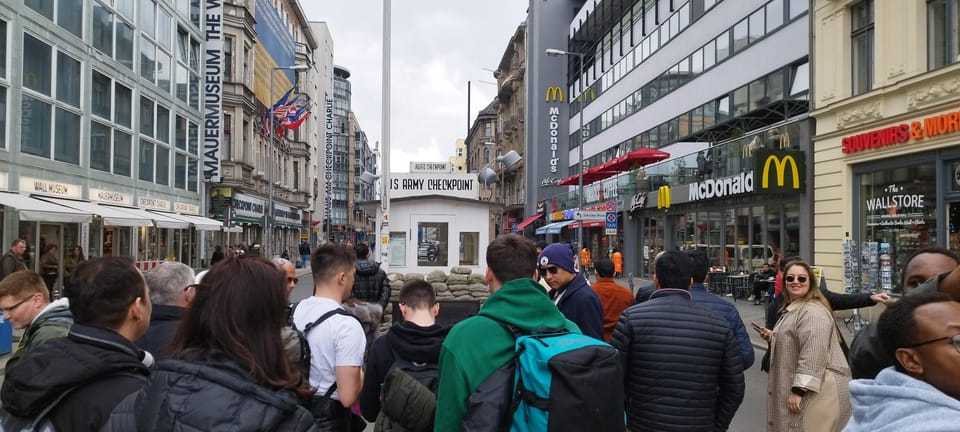
After the book-burning memorial, you’ll go to Checkpoint Charlie for a photo stop and guided sightseeing. This is built for understanding the Cold War storyline in a short span. It’s also visually clear, which helps with photo timing and keeps the group from feeling lost.
Next is Hitler’s Bunker. The tour describes it as where Hitler spent his last months, and that context turns the stop serious fast. This section is a good example of how the tour handles pacing: you don’t linger for hours, but you do get a guided explanation before moving on.
If you’re traveling with kids or grandparents, this is also where the mixed-vehicle setup shines. People who don’t want to ride can stay seated in the rickshaw and still keep up without forcing the whole group to slow down.
Stops 7–8: Holocaust Memorial and the Berlin Wall
The route continues to the Holocaust Memorial, with guided tour plus photo and sightseeing time. This is a heavy stop, and the value of a guide here is focus. You’ll get a structure for understanding what you’re seeing, rather than treating it like a quick photo moment.
Then it’s on to the Berlin Wall section. You’ll get a guided tour here too, which helps connect the Wall to the broader story of separation and state power. The bike/rickshaw format is useful because you can position the group for views without spending extra time walking along edges.
One practical tip for your mindset: treat these as “listen and notice” stops more than “browse” stops. If you’re the type who likes to read every sign, you might feel the time is tight. That’s normal on a 3.5-hour highlight tour.
Stop 9: Topography of Terror
After the Wall, you’ll visit Topography of Terror, with a photo stop. The tour notes this as the former SS and Gestapo headquarters, which means you’re stepping into a location tied directly to terror and repression.
This stop can feel like an information overload point if you’re not mentally prepared. The guide’s job becomes even more important here—sorting what to look at, what to remember, and what to ignore so the experience stays coherent.
Stops 10–11: Brandenburg Gate and the Reichstag finale
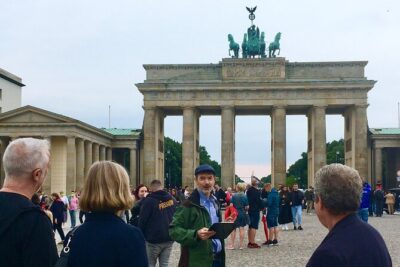
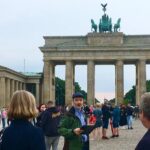
Next is Brandenburg Gate, another photo stop with guided sightseeing. It’s iconic on sight alone, but the tour framing helps you understand why it matters beyond being a postcard.
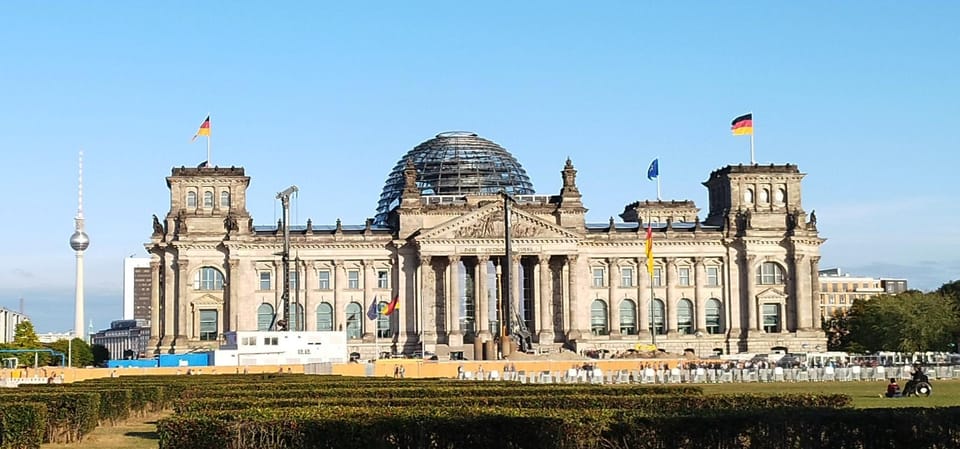
Finally, you reach the Reichstag area for a photo stop and guided touring before you head back. This ending works for two reasons. First, it’s a dramatic wrap-up: big political architecture and a clear sense of place. Second, by the time you’re here, you’ve already built the Berlin story in your head through the earlier stops.
You’ll arrive back at the starting point at Weinbergsweg 6.
E-bike vs rickshaw: how to choose for your group
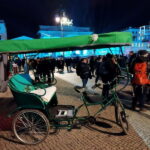
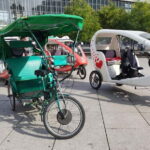
This tour is designed for mixed groups—people on e-bikes and people on rickshaws sharing the same route. Rickshaws accommodate up to two people, which is great for couples or parents traveling with a child.
If you’re less mobile, tired easily, or traveling with grandparents, the rickshaw option is clearly a core part of the product—not an afterthought. The boarding is described as involving only a few steps, and you can still reach close to monuments for intimate views.
If you choose the e-bike, you’ll be self-driving, which is fun if you like control and motion. Just keep the earlier caution in mind: one account mentioned an e-bike power issue. Not common in the overall rating picture, but worth knowing.
How to get the most out of it (without overdoing expectations)
Bring comfortable shoes, even though most of your time is seated or riding. You’ll still do some steps, and you’ll want your feet to feel good for quick photo-stop transitions.
Also, come ready to move. This tour is about hitting a lot of ground in a fixed 210 minutes. If you’re craving slow, museum-deep Berlin, this isn’t that day. If you want a strong orientation and key landmarks handled with a guide, it’s a smart way to start.
The best moment is often mid-tour—when you realize you’re not just checking boxes. You’re watching Berlin’s layers stack: propaganda-era memory, Cold War geography, and the Wall’s long shadow—all in one route.
Should you book this Berlin (E)Bike Tour?
I’d book it if you want an efficient Berlin Mitte highlight run that works for mixed mobility. The small-group cap (max 6) plus the e-bike/rickshaw pairing is a real advantage for families, older travelers, and people who don’t want to split up.
I’d think twice if you strongly prefer ultra-slow sightseeing or if e-bike reliability would cause you real stress. One negative report includes an e-bike power loss and awkward communication during bike issues, and another points to some chaos around bike responsibility. If you’re sensitive to equipment hiccups, choose the rickshaw option and focus on the guide’s narration and photo stops.
Overall, with a strong rating and clear strengths in guided stops and photo-focused touring, this is a solid value when you match it to your goals: see a lot, understand the landmarks, and keep the day moving.
FAQ
How long is the tour?
The duration is 210 minutes, or about 3.5 hours.
What’s the group size?
It’s a small group limited to 6 participants.
Do I need to ride an e-bike?
No. The experience includes an e-bike option and a traditional rickshaw option for non-(E)bikers or those with less mobility.
Where does the tour start?
The meeting point is Weinbergsweg 6, near U-Bahn Rosentahler Platz.
Is the tour guided in English?
Yes. The live tour guide speaks English.
What kinds of photo stops should I expect?
There are many photo stops throughout the route, and the guide is described as being strong at photography and positioning.
Is water included?
Yes. Bottled water is included for free.
What should I bring?
Comfortable shoes are recommended.
Is there free cancellation?
Yes. You can cancel up to 24 hours in advance for a full refund.
Can I reserve now and pay later?
Yes, there’s a reserve now & pay later option listed.