REVIEW · BERLIN
Berlin: Private Bike Tour of the Berlin Wall and Third Reich
Book on Viator →Operated by FREE BERLIN Bike Tours · Bookable on Viator
The Wall changes your view when you ride it. This private bike tour threads together Berlin Wall remnants and Third Reich-era landmarks in about three hours, using quick stops so you see more than you could on foot. You get a route shaped to your group, plus a guide who keeps the story clear while you cover ground fast.
What I like most is the private feel. It’s truly just your group, and you can steer the stops toward what you care about most. I also love the built-in rhythm: short, timed viewpoints that make big themes easier to track, from deportation and Holocaust remembrance to the mechanics of dictatorship.
One thing to consider: it is a lot to pack into 3 hours. If you want long museum time, more walking, or lots of photo stops, you may feel rushed on the bike and will likely want to pair it with extra time afterward.
In This Review
- Key highlights to know before you go
- Why this Wall-and-Third-Reich bike tour makes sense
- The ride details that affect your comfort
- A quick word on timing and pacing
- Your start: Nikolaiviertel and the feeling of old Berlin
- Stiftung Neue Synagoge Berlin (Centrum Judaicum): courage in a single scene
- A memorial that doesn’t sit near the usual postcard spots
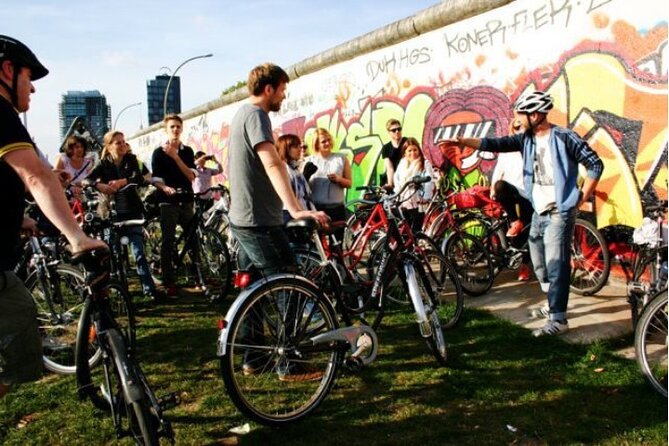
- Memorial of the Berlin Wall: where the Wall is still “alive”
- Mauerpark: the flea market above the border mindset
- Humboldthain Flak Tower: Nazi architecture and a panoramic view
- Gunter Litfin Memorial: the first name in your Wall story
- Invalidenfriedhof: a cemetery cut by the Wall
- Spreebogenpark and the big-scale dream of Albert Speer
- Reichstag Building: democracy in the same frame as dictatorship
- Holocaust Memorial: the scale hits harder than you expect
- Fuhrerbunker: what you can’t see, and why that’s the point
- Checkpoint Charlie: Cold War tension in a few minutes
- How “private” changes the experience
- Value check: is it worth $107.42 per person?
- Who this tour fits best
- Should you book it?
- FAQ
- How long is the Berlin Wall and Third Reich private bike tour?
- Is this tour private?
- What’s included in the price?
- What language options are available?
- Is it family-friendly for kids?
- Does the tour include Checkpoint Charlie in every language?
Key highlights to know before you go
- Private group tour: only your group rides together, with a professional guide.
- Quick-hit stops: short visits at major sites so you can connect themes without getting worn out.
- Helmets and bikes included: you ride comfortably without hunting gear.
- Free-Berlin route design: each guide designs their own route, so your experience can feel different.
- Wall and Nazi-era viewpoints: you’ll see both the physical barriers and the political architecture behind them.
- Checkpoint Charlie depends on language: it’s part of the English version.
Why this Wall-and-Third-Reich bike tour makes sense
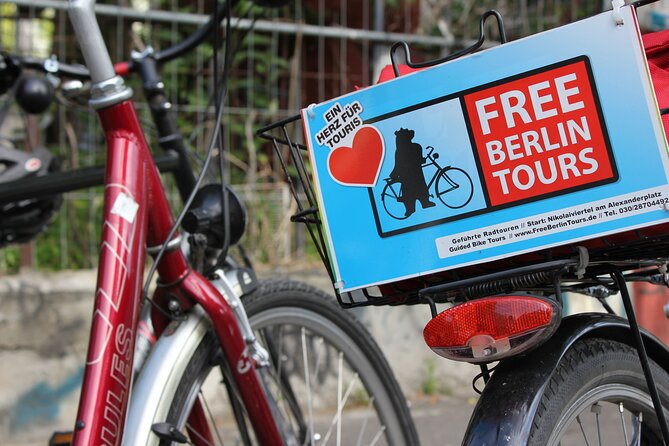
Berlin can be heavy. The city’s 20th-century story is all over the place, spread across neighborhoods that look normal today. A bike tour helps because you’re not trying to sprint from one landmark to the next on foot. You cover distance with less friction, and you can keep your mental map straight while you learn.
This tour is built around a simple idea: show you the places where the past becomes visible again. You’ll stop at Wall remains where you can actually understand what the barrier did to daily life. You’ll also hit Nazi-era sites and Cold War flashpoints, without turning the day into a school lecture.
At $107.42 per person for about 3 hours, the value comes from the format. You’re paying for private guiding, bikes and helmets, and a route designed around meaningful outdoor stops that don’t require paid museum tickets. It’s not “cheap” in the casual sense, but it’s a fair rate when you compare it to the cost of multiple separate tours plus bike rental.
You can also read our reviews of more cycling tours in Berlin

The ride details that affect your comfort
You meet back at Free Berlin Bike Tours & Rental, Poststraße 11, 10178 Berlin. There’s no hotel pickup or drop-off, so you’ll want to plan an easy arrival by transit or on foot.
Bikes and helmets are included, which matters in Berlin because you’re mixing with regular city traffic. The tour runs in all weather conditions, so bring a rain layer if the forecast looks iffy. Since the schedule is stop-and-go, you don’t want to spend 20 minutes hunting for a jacket once you’re already late.
It’s also offered in English and German, with other languages possible on request. One specific heads-up: Checkpoint Charlie is included only in the English version. If that’s a must-see for you, pick the English departure.
A quick word on timing and pacing
The tour lasts about 3 hours and uses short stops—often 5 to 15 minutes—at each site. That pacing is intentional. It keeps the ride moving, but it also forces you to look quickly and learn the point of each place.
From a practical perspective, this is where biking wins. On foot, you’d lose time to cross streets and transfers between far-apart locations. On a bike, you get the benefit of speed while still spending enough time at each landmark to understand what you’re looking at.
Your start: Nikolaiviertel and the feeling of old Berlin
You begin in Nikolaiviertel, described as Berlin’s only real “old town.” That’s a fun opener because it gives you a contrast right away: even in a city that’s constantly reshaped, you can still sense older layers.
And yes, the question here is a serious one: just how old can it be, especially with the reality of bomb damage? The tour uses this start to set up a theme you’ll keep seeing throughout: how war and ideology overwrite the city’s physical fabric, and how quickly “old” becomes complicated in Berlin.
Stiftung Neue Synagoge Berlin (Centrum Judaicum): courage in a single scene
Next you’ll stop at Stiftung Neue Synagoge Berlin – Centrum Judaicum. The guide talks about the story of civil courage—specifically, how a police officer helped save this building during the night of broken glass.
This stop matters because it doesn’t treat Jewish history as distant or abstract. It shows you the texture of events: when violence happens, it isn’t only mobs and symbols. Individuals sometimes act, and that choice can protect real people and real structures.
You can also read our reviews of more private tours in Berlin


A memorial that doesn’t sit near the usual postcard spots
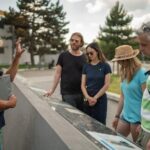
After that, you’ll reach a memorial for victims of deportation and the Holocaust, designed in GDR times. It’s described as standing in sharp contrast to another famous memorial near Brandenburg Gate.
This is one of the tour’s smartest moves: it nudges you away from the most obvious view and toward a different way Berlin chose to remember. That contrast is useful. It reminds you that memory in Berlin is not one-size-fits-all. Different eras built different languages for grief.
If you’re the type who likes to compare design choices—materials, scale, and placement—this is a stop that will reward your attention.
Memorial of the Berlin Wall: where the Wall is still “alive”
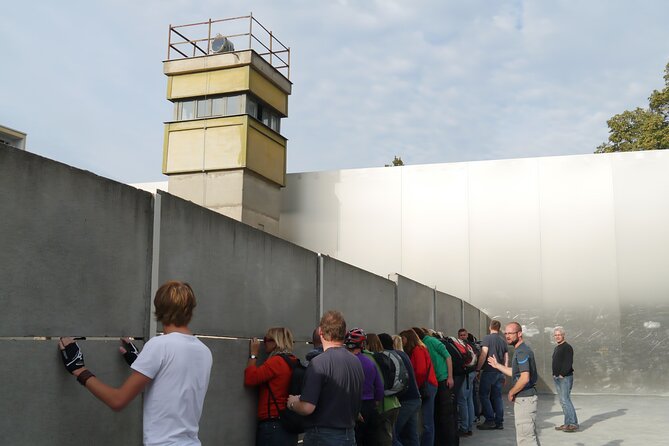
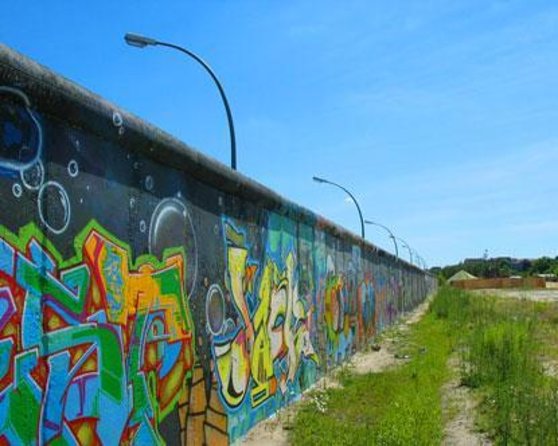
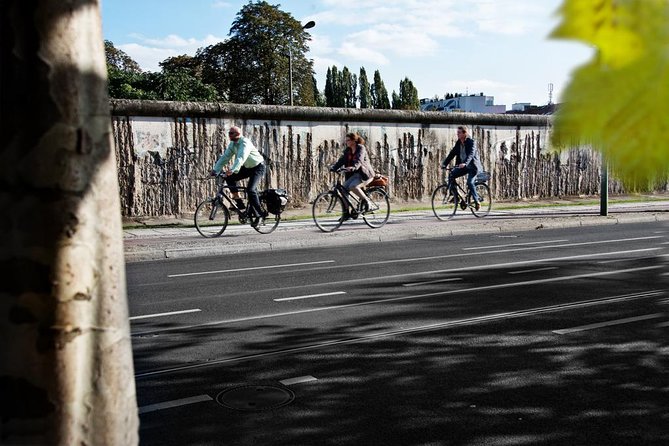
One of the biggest moments is the Memorial of the Berlin Wall. The tour notes that there are only a few places where the Wall feels truly intact enough for you to experience what it meant and did to Berlin.
This is where you shift from reading about borders to understanding what a border can do to bodies, routes, and daily life. The timing is short, but the point is strong: you don’t need hours here to get the impact when the setting is right.
Tip for getting more out of it: slow down on the bike before you reach the spot. Let your eyes adjust. If you rush in, you’ll miss the details that make this section stand out.
Mauerpark: the flea market above the border mindset
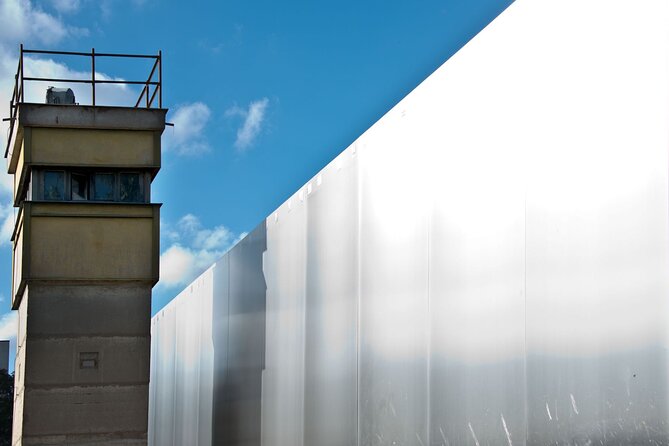
You then reach Mauerpark. Today it’s known for its Sunday flea market, but the tour frames it as a place tied to East Germany’s attempts to define the perfect border.
That’s a clever lesson in urban psychology. The place looks like leisure now, but the geography has a political past. Berlin’s ability to layer normal life on top of control systems is part of why the city feels both modern and haunted at the same time.
If you visit on a Sunday, the market atmosphere might be your first impression. Even then, keep listening for the story your guide connects to the ground under your tires.
Humboldthain Flak Tower: Nazi architecture and a panoramic view
Next is Humboldthain Flak Tower, described as a former giant air-raid shelter and fortress. It’s also pitched as a chance to enjoy a panoramic view and learn about Nazi architecture.
This stop balances horror and clarity. A tower like this isn’t just about war as a concept; it’s about how power turns into concrete and planning. The view then becomes more than scenery. It becomes a way to understand how planners thought about Berlin—where threats could be seen, where structures would dominate.
Photo tip: If it’s clear, you’ll probably want a few pictures from higher ground. Just don’t let photos replace the listening here. The architecture lesson is the main point.
Gunter Litfin Memorial: the first name in your Wall story
You’ll stop at the Günter Litfin Memorial, tied to the preserved original tower that remembers Günter Litfin as the first person shot at the Wall.
This is another “small place, big meaning” moment. When you get a specific name, the Wall stops being a general concept. It becomes a sequence of decisions that resulted in one person losing his life.
It’s also a reminder of why personal details matter in political history. Facts stick when there’s a person attached to them.
Invalidenfriedhof: a cemetery cut by the Wall
At Invalidenfriedhof, the tour points out that the burial place was cut in the middle by the Wall. It also notes the cemeteries’ connection to “heroes” of German military history—and questions how some of them should be remembered.
This stop can feel uncomfortable, and that’s part of its value. Cemeteries are where societies vote on what counts as honor. A Wall slicing through a graveyard is an unmistakable symbol of how borders can rewrite even memory spaces.
If you prefer a less interpretive approach, focus on what you can see: the physical division and how the cemetery sits in today’s city layout.
Spreebogenpark and the big-scale dream of Albert Speer
You’ll roll into Spreebogenpark, described as giving a perfect overview over the governing district. Here you also get discussion of architect Albert Speer and plans for a Great Hall that could have held 180,000 people.
This is the moment where the tour expands beyond daily hardship and into ideology as a physical blueprint. When you stand in a viewpoint area and talk about a project this massive, you start to grasp how dictatorship is often about scale—how power tries to control space, not just politics.
Even if you don’t love architectural history, the idea is easy to follow: big buildings were part of big propaganda.
Reichstag Building: democracy in the same frame as dictatorship
The tour then stops at the Reichstag Building. You’ll discuss Hitler’s grab of power and Germany’s democratic history. You don’t go inside, but the exterior viewpoint still gives you a useful anchor.
This is a good stop for people who like contrast. The same city that enabled extremist power later rebuilt democratic life. Seeing it outside, with context, helps you understand Berlin as a place where systems changed, not just governments.
Holocaust Memorial: the scale hits harder than you expect
One of the major stops is the Memorial to the Murdered Jews of Europe. It’s described as the largest genocide memorial in the world, and the tour emphasizes its importance and size.
The tour’s approach here stays respectful and focused. Even with a relatively short stop time, the scale does most of the work. You’ll likely feel that in your body more than in your head.
If you’re sensitive to emotionally intense sites, plan a little decompression afterward. This tour is dense, and this stop is one of the heaviest points.
Fuhrerbunker: what you can’t see, and why that’s the point
You’ll also stop at Fuhrerbunker, described as the place where Hitler hid during the last weeks of war and then committed suicide. Today, the tour notes that what you see is basically a parking lot, and the guide explains why.
That detail is one of the most instructive parts of the whole experience. Sometimes the past is not preserved as a museum. Sometimes it’s erased, paved over, or repurposed. You get the meaning without having to stare at a dramatic ruin.
It’s also a reminder that Berlin’s street-level life doesn’t stop for history. It just layers on top of it.
Checkpoint Charlie: Cold War tension in a few minutes
Finally, you reach Checkpoint Charlie. The tour description calls it the most famous border station of the Cold War and explains that it was the only shared one between the USA and USSR.
This stop comes with a specific warning: it’s listed as included only in the English version. If you want it, double-check your departure language when you book.
Even for a short stop, it’s a strong capstone because it ties together the themes of control and borders that started at the Wall remains.
How “private” changes the experience
Being a private tour matters more than it sounds. When you’re only a small group, your guide can slow down or speed up based on what you’re responding to. You can ask follow-ups when a stop sparks questions.
It also helps with pacing. A group that likes more photo time can manage it without derailing the entire day. A group that wants sharper facts can do that too, since the route is built around you.
Value check: is it worth $107.42 per person?
For the price, you’re getting several things that add up:
- A professional guide for about three hours
- A private group format
- Bicycle and helmet included
- Timed stops at major sites where entry is free during these segments
- A route designed with the Free-Berlin concept, where each guide crafts their own path
The quick-hit, outdoor format keeps the cost focused on guiding and access to the story, not on buying lots of ticketed admissions. So the “value” isn’t just the sticker price. It’s that you’re paying to move efficiently across key points without the hassle of planning a self-guided route.
Who this tour fits best
This works especially well if:
- you’re a history buff who wants a structured, factual walking path but faster pacing
- you like seeing how ideology shows up in architecture and city layout
- you want a manageable length in one day
It also can be a strong fit for families because it’s described as family-friendly, with children welcome and infant seats available on request. The cycling time and stop frequency are likely the deciding factor. Younger kids will do best if they can handle a steady but not exhausting rhythm.
If you dislike bikes, or if you need long indoor time, you might feel better with a museum-focused day instead.
Should you book it?
I’d book it if you want a guided, outdoor way to connect Berlin’s Wall era with Nazi-era sites and Cold War pressure, all without wasting half your day moving between locations. The private setup, free-entry outdoor stops, and included bike/helmet make it a practical choice.
I’d think twice if you want museum deep time or if you’re not comfortable riding in a busy city setting for the full 3 hours. In that case, consider adding longer stops to a shorter sightseeing plan.
FAQ
How long is the Berlin Wall and Third Reich private bike tour?
It runs for about 3 hours.
Is this tour private?
Yes. It’s a private tour/activity, so only your group participates.
What’s included in the price?
The tour includes a professional guide, bicycle use, and a helmet. It also includes a private tour format and the Free-Berlin concept route design.
What language options are available?
The tour is offered in English and German. Other languages may be possible on request.
Is it family-friendly for kids?
Yes. Children are welcome, and infant seats can be provided on request. Children must be accompanied by an adult.
Does the tour include Checkpoint Charlie in every language?
Checkpoint Charlie is listed as included only in the English version.