REVIEW · BERLIN
Modern Berlin Private Walking Tour: Diverse, Vibrant and Exciting German Capital
Book on Viator →Operated by Insider Tour Berlin · Bookable on Viator
Berlin looks different when you walk it.
This private route focuses on modern Berlin since 1990, moving across five neighborhoods that show how the city rebuilt after division. You’ll connect history to real streets—Wall art, neighborhood change, and the daily vibe you can’t read off a museum placard—while keeping the pace personal with a local guide.
Two things I really like about this tour are the hotel pickup option and how much ground you cover without rushing. In about 3 to 4 hours, you hit multiple areas in a way that’s hard to manage solo, especially if you want context beyond what’s on a postcard. A private format also means your guide can slow down for questions or speed up when you’re feeling good.
One drawback to consider: it’s $179.84 per person, so it’s best if you value a guide and a private route more than saving money. Also, food and drinks aren’t included, so you’ll want to bring water and plan a snack stop around your own preferences.
In This Review
- Key Things You’ll Notice on This Berlin Private Walk
- A Private Route Through Berlin’s Big Shift After 1990
- What’s Included, and What You Should Plan for Yourself
- Step 1: Mitte’s Rebirth, From Wall-Era Meaning to Today’s Streets
- Step 2: The East Side Gallery’s Wall Art That Still Hurts and Heals
- Step 3: Prenzlauer Berg’s Transformation, From Bohemian East to Family-Friendly Berlin
- Step 4: Kreuzberg’s Counterculture DNA Meets New Incomes
- Step 5: Friedrichshain’s Street Art, Music, and the Feeling of Community
- The Real Value: A Guide Who Explains the Why
- Comfort and Timing: How to Get the Best Day on Foot
- Who This Tour Suits Best (and Who Might Skip It)
- Should You Book This Modern Berlin Private Walking Tour?
- FAQ
- How long is the Berlin Modern Private Walking Tour?
- What is the price per person?
- Is this tour private or shared?
- What language is the guide?
- Do you get hotel pickup?
- Where does the tour start and end?
- Are there any admission tickets included?
- What’s included in the price?
- Is food or drinks included?
- What’s the cancellation policy?
Key Things You’ll Notice on This Berlin Private Walk
- Five neighborhoods, one big theme: change since 1990
- Hotel pickup and a private pace for your group
- East Side Gallery’s 1.3-kilometer stretch of Wall murals
- Stops set up as free-entry segments, so you control costs
- Guides who explain the why behind what you’re seeing
- All-weather operation, so you’ll dress for Berlin’s mood
A Private Route Through Berlin’s Big Shift After 1990
This is the kind of Berlin walk that helps you connect dots fast. You’re not just collecting famous sights—you’re seeing how the city evolved after reunification, neighborhood by neighborhood. That’s why it works so well for first-timers who want more than a checklist.
The tour time is about 3 to 4 hours, which is a sweet spot. Long enough to get meaning out of the route, but short enough that you won’t feel like you’re marching all day. And it tends to be planned ahead—on average, people book about 61 days in advance—so if your dates are fixed, it’s smart to lock it in early.
Because it’s private, your guide’s explanations aren’t generic. You’re not sharing your time with strangers who ask three questions and move on. Instead, you get a tighter flow where the guide can match your interests and energy level.
You can also read our reviews of more walking tours in Berlin



What’s Included, and What You Should Plan for Yourself
This experience includes a local, professional guide plus hotel pickup (or a central meeting point if that’s easier for you). You’ll also get a mobile ticket, and the tour runs in English.
The practical side matters. When food and drinks aren’t included, you have to decide your own rhythm. If you’re the type who needs a coffee midway, I suggest scheduling that before you meet—then you can enjoy it without feeling rushed or stuck waiting for the tour to end.
It also runs in all weather conditions, so treat the tour like real Berlin sightseeing: layers, comfortable shoes, and a light rain layer are your best friends. The route is also near public transportation, which is helpful if you want to add extra stops before or after.
Step 1: Mitte’s Rebirth, From Wall-Era Meaning to Today’s Streets
Your walk begins in Mitte, Berlin’s central district and the place where the city’s history is never far from the sidewalks. The idea here is simple: since 1990, Mitte has shifted from a symbol of division into a core you can feel in your daily routine.
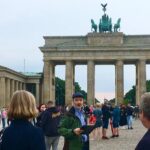
In about 30 minutes, you’ll connect major landmarks like the Brandenburg Gate and the Museum Island area to the bigger story. This isn’t presented as a static timeline. It’s shown as a living transformation—historic sites beside modern cafés, galleries, and boutiques, all rubbing shoulders with the questions people still debate about change.
One of the best reasons to start here is perspective. If you understand Mitte’s shift, the rest of the neighborhoods make more sense. You start to see that gentrification isn’t just a buzzword—it’s visible in restored buildings, changing storefronts, and who the street seems built for now.
Free-entry note: this stop is listed as ticket-free, so you’re not paying museum prices just to get the meaning of the place. You’re walking and learning, not buying timed entries.
Step 2: The East Side Gallery’s Wall Art That Still Hurts and Heals
Next comes the East Side Gallery, with 20 minutes focused on one of Berlin’s most direct links to the Wall. This stretch runs along about 1.3 kilometers of the former Wall, and it’s treated as the longest remaining segment turned into an open-air gallery.
What I like about this stop is that it’s not just a wall with paintings. The murals are tied to the moment around 1990, when artists from around the world created works that speak to freedom and unity. Each artwork carries its own message—so you can’t really rush it and expect to get the full effect.
This is a good place to slow your pace for a minute and actually read what you’re seeing. The messages of hope and peace sit beside the reality of division, and the contrast is the point. Even if you’ve seen photos, standing there helps you understand why Berlin treats this as more than street art.
Free-entry note: the East Side Gallery segment is also ticket-free, which makes it an easy win for value. You can spend your budget on time with your guide instead of entry fees.
Step 3: Prenzlauer Berg’s Transformation, From Bohemian East to Family-Friendly Berlin
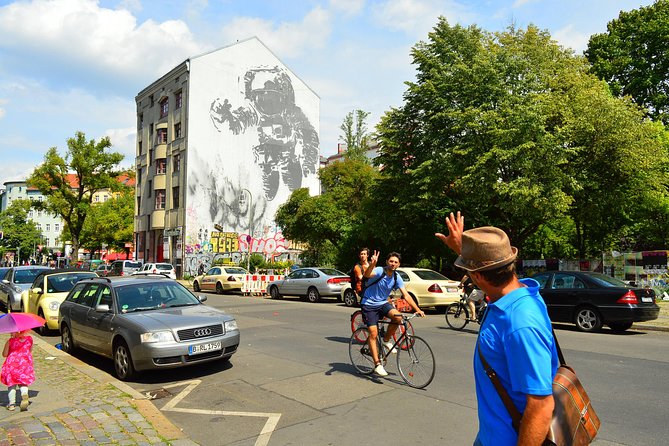
Then you move to Prenzlauer Berg, where the story shifts from Wall-era symbolism to post-reunification neighborhood change. You’ll spend about 40 minutes here, and the focus is the area’s move from a bohemian stronghold to a neighborhood that attracts families, young professionals, and people who like their Berlin a bit more polished.
The arc is clear: after 1990, Prenzlauer Berg drew artists and students when it was affordable and culturally countercultural. Then came rapid gentrification, with restored buildings and a wave of cafes, boutiques, and restaurants that reflect the neighborhood’s newer identity.
What I find useful is the balance. Prenzlauer Berg may look clean and upscale now, but the tour framing stresses that traces of its artistic past still show up in local galleries and cultural spaces. That’s the whole trick of good walking tours in Berlin—you learn where the old identity leaks through the new.
Free-entry note: this segment is listed as ticket-free, and it fits the concept of walking history rather than museum ticketing.
You can also read our reviews of more private tours in Berlin



Step 4: Kreuzberg’s Counterculture DNA Meets New Incomes
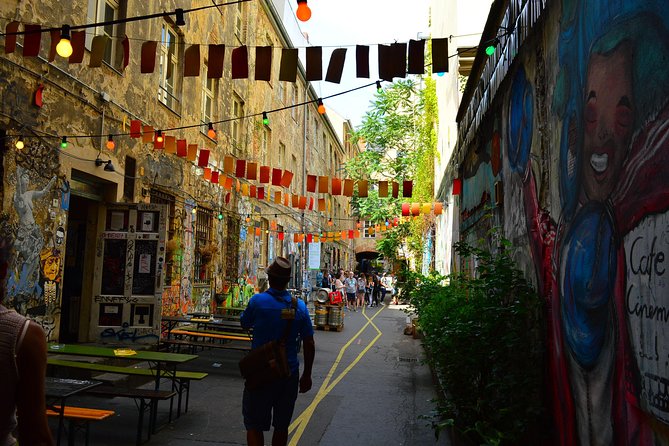
After that, the route hits Kreuzberg for about 35 minutes, and the tone gets sharper. Kreuzberg grew out of the West Berlin edge as a gritty alternative district, with a reputation for immigrants, artists, and activists. Since 1990, it’s also been a place where change has been loud.
You’ll see the effects of gentrification in the details: industrial spaces and older buildings turned into trendy cafés, art galleries, and international eateries. But the message here isn’t that everything changed and that’s that. Kreuzberg keeps a strong identity through street art, music, and multicultural festivals.
This is one of the most meaningful stops if you care about how cities grow without losing their soul entirely. Kreuzberg doesn’t read like a museum neighborhood. It reads like a working neighborhood where ideas, communities, and styles keep colliding.
Free-entry note: this stop is again marked as ticket-free, so you’re paying for the guide’s interpretation, not for entrances.
Step 5: Friedrichshain’s Street Art, Music, and the Feeling of Community
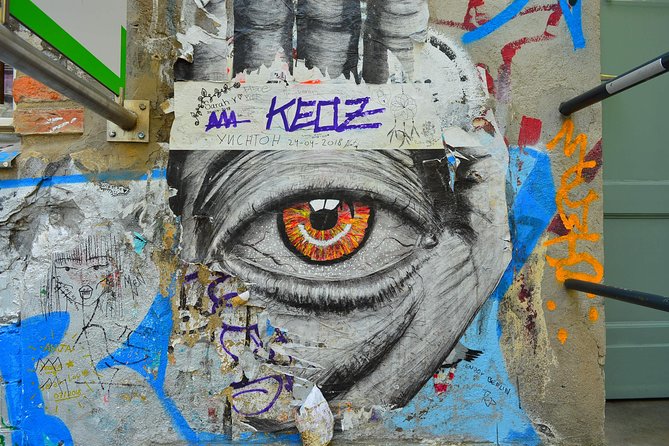
The final neighborhood stop is Friedrichshain, also around 35 minutes. The route ties Kreuzberg and Friedrichshain together as part of Berlin’s counterculture ecosystem—areas where activism, creativity, and multicultural life have been major forces long before the current wave of food spots and trendy stores.
Here, the emphasis is on what remains: street art, music scenes, festivals, and a sense of community that keeps the neighborhood from becoming just another renovated set. You’ll get a sense of how Berlin’s past-energy carries forward even while businesses and buildings evolve.
One practical benefit of ending here is that the last leg feels natural after the earlier stops. You’ve already learned to look for transformation and continuity, so Friedrichshain turns from a named area into a pattern you can recognize. It’s where the walking story clicks into place.
Free-entry note: this segment is listed as ticket-free as well, keeping the tour focused on walking and context.
The Real Value: A Guide Who Explains the Why
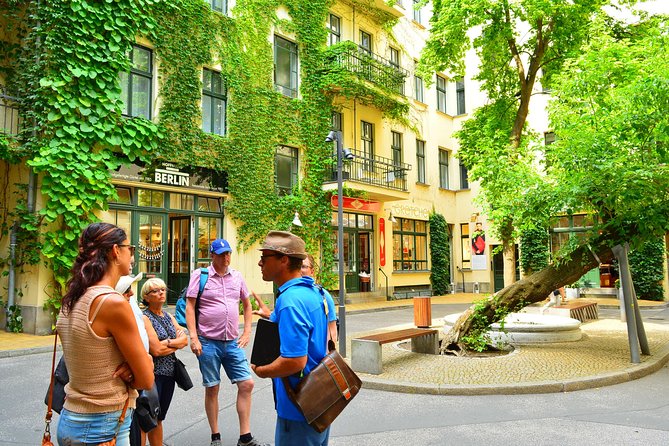
A private tour like this rises or falls on the guide. The route is designed around context—how Berlin’s neighborhoods changed after 1990, why those shifts happened, and what they mean in real life.
From the guidance styles described by different guides, a few traits really matter. Josh gets praised for personable, intelligent commentary that can even land with teens (so if you’re traveling with younger people, this matters). Maria is noted for delivering exactly what you expect from a modern-Berlin focus. Joerg is highlighted for balancing intellectual content with a pace that doesn’t crush you physically. And Stefano is the type who can tailor an alternative route when you already did the classic sights.
If you want to make this tour pay off, arrive with at least one question. Something like: How does gentrification show up in everyday life here? Or why did artists and activists cluster in certain places? Then let the guide steer the explanation. That’s where private time earns its keep.
Also, your tour is protected by the private format: only your group participates. That sounds basic, but it changes the whole feel. You’re not waiting for someone else to catch up or spending energy on group logistics.
Comfort and Timing: How to Get the Best Day on Foot
You’ll be walking for roughly 3 to 4 hours, with stop times around 20–40 minutes each. That means comfortable shoes aren’t optional. Choose something you can walk in for hours, not something that looks great in photos.
Berlin weather can swing fast, so dress for rain and wind as well as sun. The tour operates in all weather, which is exactly what you want if you’re planning a trip week and don’t want your day wrecked by a forecast.
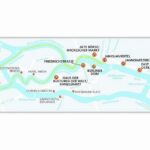
The meeting point is Reichstagufer 17, 10117 Berlin, and the tour ends back at that spot. If you choose pickup, you can be picked up from your accommodation, or you can meet centrally if pickup is less convenient.
If you like building a day with minimal stress, this route helps. You get the core story in one go, then you can add a museum or a long lunch after your tour ends without feeling like you missed the plot.
Who This Tour Suits Best (and Who Might Skip It)
This is a strong fit if you want Berlin’s modern story, not just the postcard icons. It’s also a great choice if you’ve been to Berlin before and want something different from the usual first-day route.
I’d especially recommend it for:
- Couples and friends who want a private guide and don’t want to guess their way around neighborhoods
- Travelers with teens who need explanations that stay interesting while still being grounded
- People who care about how history shows up in streets, not only in buildings
If you’re the type who wants lots of indoor stops, timed museum entries, and very structured sightseeing, this might feel more like a neighborhood walk with strong narrative than a museum day. The upside is that you see more of real Berlin life with fewer ticket lines.
Should You Book This Modern Berlin Private Walking Tour?
Yes, I’d book it if your goal is to understand Berlin after 1990 through the neighborhoods that shaped that change. The private format, hotel pickup option, and guide-led context make it feel efficient, not generic. And because the listed stops are ticket-free, your money goes toward interpretation, not add-on fees.
I’d think twice if $179.84 per person strains your budget or if you’re mainly after classic landmarks with minimal walking. You can still learn a lot from this route, but the price makes it best for travelers who value guided time.
If you want a Berlin day that helps you read the city like a living document—Wall art, gentrification, community culture—this walk is a practical choice.
FAQ
How long is the Berlin Modern Private Walking Tour?
It lasts about 3 to 4 hours.
What is the price per person?
The price is $179.84 per person.
Is this tour private or shared?
It’s a private tour/activity, so only your group participates.
What language is the guide?
The tour is offered in English.
Do you get hotel pickup?
Yes. Hotel pickup is included, or you can meet somewhere central.
Where does the tour start and end?
It starts at Reichstagufer 17, 10117 Berlin, Germany, and ends back at the same meeting point.
Are there any admission tickets included?
The stops listed are marked as admission ticket free.
What’s included in the price?
A local professional guide and hotel pickup are included.
Is food or drinks included?
No. Food and drinks are not included.
What’s the cancellation policy?
You can cancel up to 24 hours in advance for a full refund.