REVIEW · BERLIN
Private Tour: Jewish Heritage Walking Tour of Berlin
Book on Viator →Operated by Insider Tour Berlin · Bookable on Viator
Berlin’s Jewish story is written in streets.
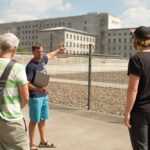
This private 4-hour walking tour pulls together major landmarks with a real professional guide, so you get the why behind each stop, not just the what. I also like the undivided attention of a private format—easy to ask questions, easy to pause, and easy to stay focused on what matters.
I love that the route mixes remembrance with real-world context: places tied to everyday Jewish life, efforts to save people, and the sites where deportations began. One possible drawback: expect a moderate amount of walking and emotionally heavy subject matter, so it’s not the kind of outing you do when you want distraction.
In This Review
- Key highlights to expect on this Berlin walk
- A private Jewish heritage walk that makes Berlin make sense
- Route plan: a steady 4-hour arc through Jewish Berlin
- Hackesche Höfe: courtyards where Jewish life clustered
- The New Synagogue and Centrum Judaicum: architecture plus education
- Otto Weidt Museum: a rescue story told through the original workplace
- Gleis 17 Memorial: names, dates, and a particular platform in Grunewald
- Alter Judischer Friedhof: memory you can walk through slowly
- Block der Frauen on Rosenstraße: protest turned into memorial
- Holocaust Memorial (Eisenman slabs): how to walk without losing your head
- Price and what you’re really paying for
- Who this tour fits best in Berlin
- Should you book this Jewish Heritage Walking Tour?
- FAQ
- How long is the Private Jewish Heritage Walking Tour of Berlin?
- Is this tour private or group-based?
- What language is the tour offered in?
- Are entrance tickets included for the stops?
- Do I need a public transport ticket?
- What kind of walking should I expect?
Key highlights to expect on this Berlin walk
- Private guide, not a crowd: you set the pace and your questions get answered
- Free entry at every listed stop: Hackesche Höfe, Centrum Judaicum, Otto Weidt, Gleis 17, and more
- Deportation history at Platform 17: a specific, named rail site tied to 1941–1945
- Human-scale rescue story at Otto Weidt: protection, jobs, and false papers mentioned in the museum
- Memorials that change how you walk: from name plaques in the ground to the Holocaust Memorial’s slab maze
- All-weather format: Berlin rain won’t cancel the idea, just your choice of shoes
A private Jewish heritage walk that makes Berlin make sense
Berlin can feel like a museum with traffic lights. That’s exactly why I like this format: a guide ties the city together into one line you can follow on foot. You start in places tied to Jewish life and community space, then shift toward memorials where memory is built into architecture and ground.
Since it’s private, it’s not about keeping up. It’s about understanding. Your guide can point out what you’d otherwise miss—like why a courtyard matters, why a train platform matters, and why some memorials are designed to slow you down.
And yes, you’re walking. The tour is only about 4 hours, but you’ll still want good shoes. This is the kind of route where your feet do a lot of the thinking.
You can also read our reviews of more walking tours in Berlin


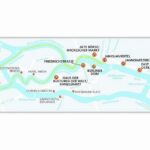
Route plan: a steady 4-hour arc through Jewish Berlin
You’ll spend roughly 4 hours moving between seven main stops. It’s planned as a sequence: community life first, then persecution and resistance, then memorial space. Each stop is short (many are around 10–20 minutes), which works well for keeping energy up while still covering a lot of ground.
The route also includes places that are free to enter (based on what’s listed), which helps you keep the day from turning into a spend-fest. Your only likely add-on is transit, since the Berlin Transport AB Zone ticket is not included.
If you like tours that have a clear storyline, this one fits that style. If you prefer a long, slow pace with long time inside museums, you might feel slightly rushed—though the stops are short for a reason: the walking acts like transition time between eras.
Hackesche Höfe: courtyards where Jewish life clustered
Your first stop is Die Hackeschen Höfe on Rosenthaler Straße. These interconnected courtyards are the kind of place Berlin does well: architecture that explains how people actually lived. Here, you’re seeing a late-19th-century complex linked with Jewish artisans, merchants, and immigrants.
What I like about starting here is that it breaks the usual pattern of jumping straight to the Holocaust. Before the memorials, you get a baseline of everyday life. A courtyard might sound minor on a map, but in Berlin it’s often the whole social world—work, community, and movement in a compact area.
Practical note: this is a good first stop because it’s easy to orient yourself. It also helps you mentally switch from modern Berlin streets to the historical Berlin you’re about to walk through.
The New Synagogue and Centrum Judaicum: architecture plus education
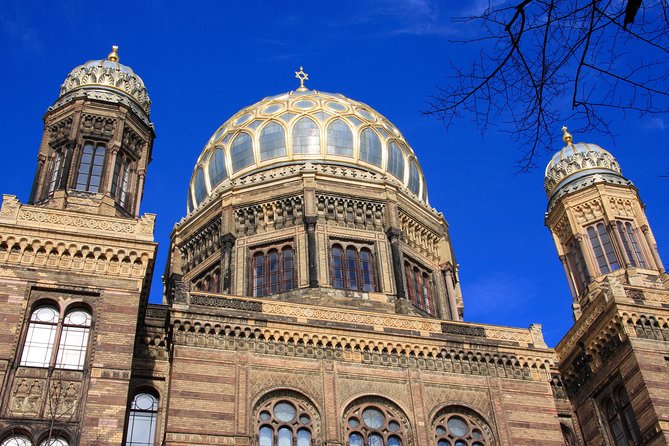
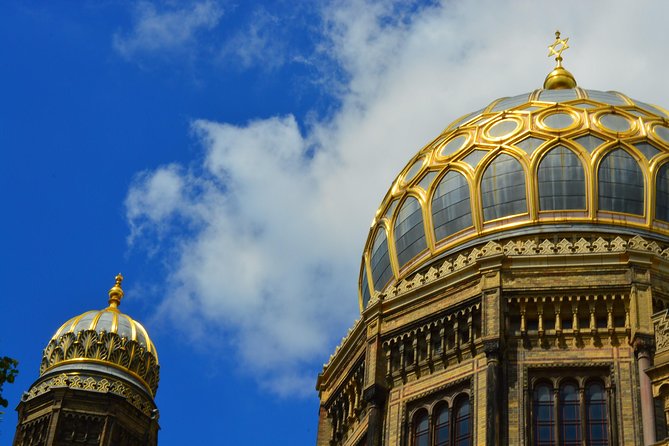
Next comes the Stiftung Neue Synagoge Berlin – Centrum Judaicum, housed in the restored New Synagogue. This stop matters because it connects two things at once: a major architectural landmark and a museum/education center focused on Jewish heritage in Berlin.
The New Synagogue originally opened in 1866. That alone gives you a time anchor: this wasn’t a small community space. It was built for visibility and religious life, in a city where Jews had become part of the urban fabric.
At Centrum Judaicum, you’re not just looking at buildings. You’ll have a chance to see exhibitions that cover the artistic, cultural, and religious contributions of Berlin’s Jewish community, past and present, along with remembrance-focused context.
A nice detail: the listed stops include an “admission ticket free” entry, which makes this a smart use of your limited time. If you only have one day for Jewish heritage in Berlin, this stop helps you cover both meaning and material.
Otto Weidt Museum: a rescue story told through the original workplace
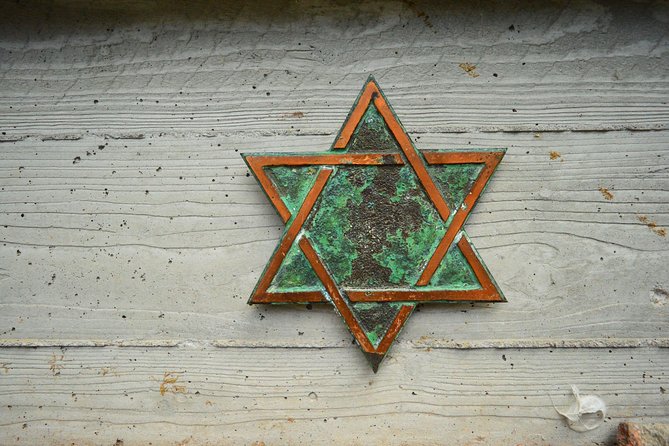
Then you’ll head to the Museum Blindenwerkstatt Otto Weidt in Mitte. This is one of the most striking stops on the route because it turns history into human-scale action.
Otto Weidt was a blind brush maker who provided refuge and employment to Jewish workers during Nazi persecution. Unlike memorials that primarily document tragedy, this one highlights what protection could look like in practice. The museum is in Weidt’s original workshop, which matters. You’re not touring a replica. You’re in the place where the work happened.
The exhibits describe methods used to protect workers, including efforts like creating false papers and using influence to keep people safe from deportation. That’s heavy material, but it’s also specific. It answers a question many people carry into Berlin: what did rescue look like when the danger was real and immediate?
If your group includes kids or teens, this stop often lands well because it explains choices, not just dates. (Guides are also praised for patience in how they handle younger members, which helps here.)
You can also read our reviews of more private tours in Berlin


Gleis 17 Memorial: names, dates, and a particular platform in Grunewald
After the Otto Weidt story, the route turns sharply toward deportation history at Gleis 17 Memorial, located at Grunewald train station. This is where you encounter a specific site used for deportations from 1941 to 1945.
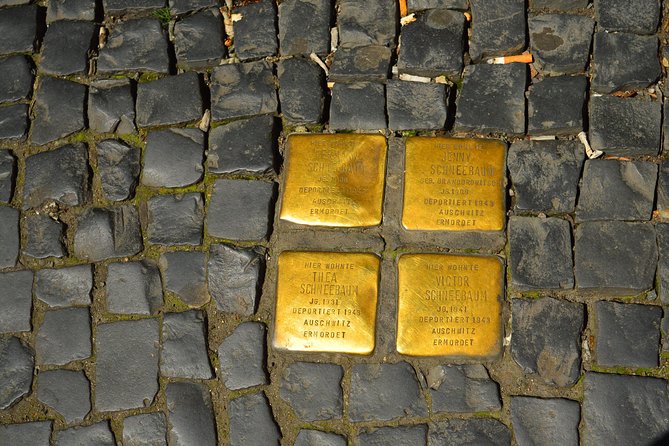
What hits hardest here is the memorial format. You’ll see metal plaques embedded in the ground, each bearing names and dates of people transported. It’s not abstract. It’s documented identity.
This stop is powerful, but I suggest you treat it like a conversation with yourself. Slow down. Read what you can. Then look away and notice how the station area feels now. That contrast is part of the point: modern life sits above historical machinery of terror.
If you’re prone to sensory overwhelm, take your time. You can spend the listed short amount of time here, but you might want a minute longer to absorb the names.
Alter Judischer Friedhof: memory you can walk through slowly
Next is the Alter Judischer Friedhof (Old Jewish Cemetery). Cemeteries are sometimes treated like quiet scenery on tours. Here, it’s more than that.
The cemetery includes the final resting place of prominent Jewish figures—scholars, philosophers, and community leaders. You’ll see intricate tombstones and memorials with different artistic styles and epitaphs. Even if you don’t read the inscriptions in detail, you still get the visual language of remembrance.
I like adding a cemetery stop mid-route because it gives your mind somewhere to breathe. After the concentration and deportation memorials, you need a space that focuses on continuity—people who shaped Berlin’s Jewish life across centuries.
As a practical matter, this stop is reflective by nature. Wear shoes that can handle uneven paths, and don’t rush. You’re walking in a place meant for slowing down.
Block der Frauen on Rosenstraße: protest turned into memorial
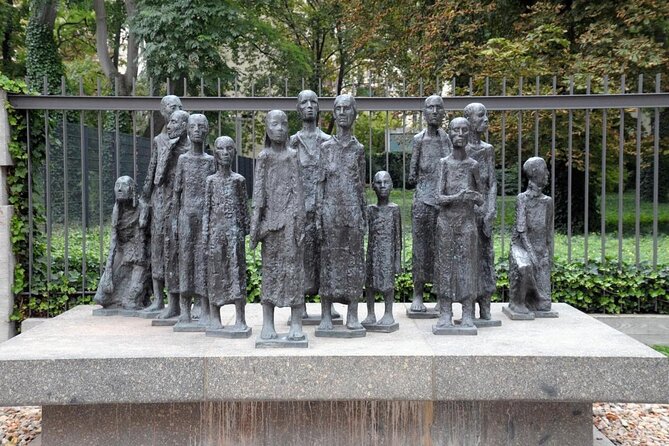
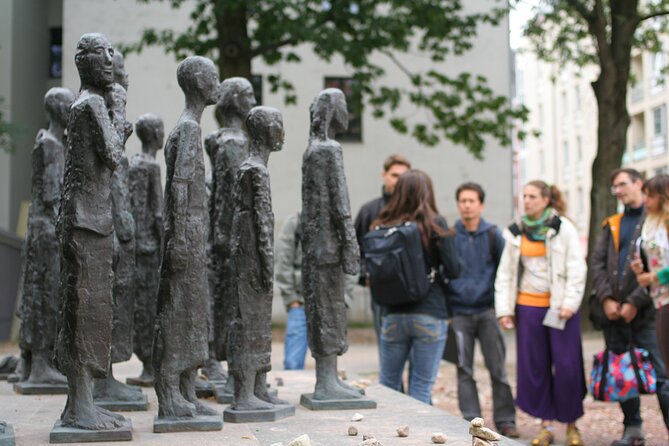
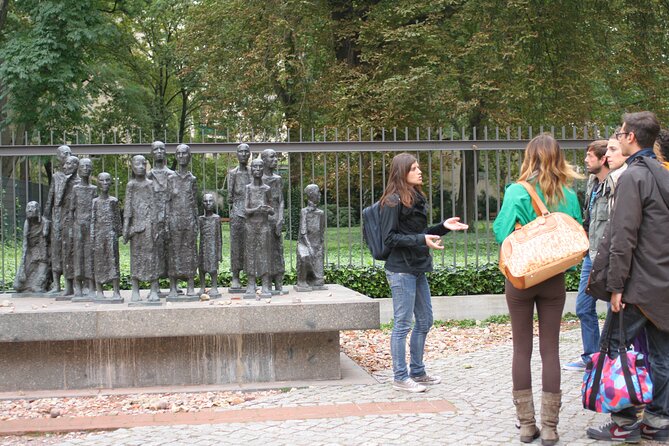
From the cemetery, you move to the Block der Frauen memorial on Rosenstraße. This one honors the women who protested for the release of their Jewish husbands during the Nazi regime in Berlin.
The memorial is tied to early 1943, when many Jewish men were rounded up for deportation. The protests lasted several days, and the women demanded their loved ones be returned from police headquarters. That’s an important reminder: even in brutal circumstances, there was organized resistance.
What makes this stop meaningful is that it includes an inscription that lays out what happened at this specific location. It turns a story that could feel vague into something grounded in a known place and a known moment.
If you want one sentence to carry forward from this stop, make it about courage. These protests were risky, not symbolic.
Holocaust Memorial (Eisenman slabs): how to walk without losing your head
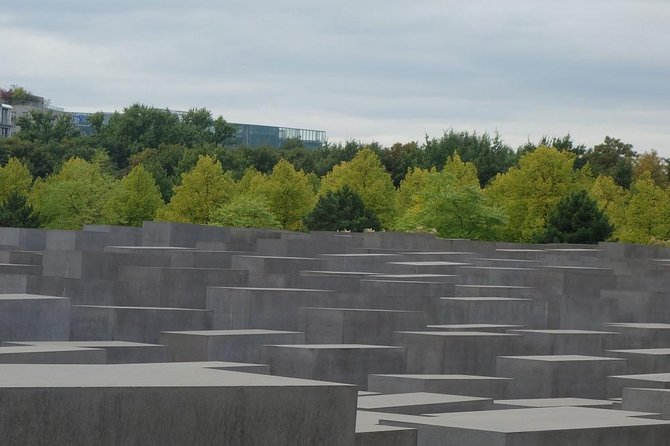
The final major stop is the Memorial to the Murdered Jews of Europe, commonly called the Holocaust Memorial. It was inaugurated in 2005 and designed by architect Peter Eisenman.
This memorial is built from 2,711 concrete slabs of varying heights across a field of paths. The layout creates disorientation as you walk. You can’t see everything at once. You end up navigating among the slabs, which can feel physical and disorienting in a way that matches the history it honors.
I recommend approaching this with a simple plan: choose a direction, walk a few rows, pause, then decide whether to continue. The goal isn’t to “finish” the monument. It’s to let the experience slow you down and make space for reflection.
This stop is free to enter as listed, so there’s no friction in time or cost. It’s also central, which makes it a strong final anchor after the more scattered Jewish heritage sites.
Price and what you’re really paying for
At $191.62 per person for an approx 4-hour private tour, this sits in the “serious value” zone rather than the cheap-and-cheerful zone. Here’s why it can still be worth it.
You’re paying for:
- A private guide, meaning your questions don’t get squeezed into a group schedule
- A route that bundles multiple major sites into one day’s logic
- Time efficiency: several stops are ticket-free, so you’re spending your budget on guidance and context rather than entry fees
- A pacing advantage: the tour is structured enough to fit within a normal visit length, yet detailed enough to cover sites with heavy meaning
The main extra cost to plan for is transit. A Berlin Transport AB Zone ticket (2.70 Euro) is not included. There’s also no food or drinks included, so you’ll want to budget for a snack if you’re the type who gets hungry while thinking.
If you’re traveling with another adult or a small group, the “group discounts” feature can improve the math. Since it’s private, you can often make the day more personal than you would with a big coach tour.
Who this tour fits best in Berlin
This tour is a strong match if you:
- Want a guided walk that connects Jewish life, persecution, rescue, and remembrance across real Berlin places
- Prefer asking questions over reading plaques alone
- Appreciate a mix of architecture, memorials, and education centers
- Want a private guide rather than a headcount-and-herd approach
It can also work well for families who want meaning, not just sight-seeing. The tour format and the way guides handle questions (especially with younger participants, based on what I’ve seen reflected in guide feedback) are part of why it tends to be recommended.
If you’re looking for a party-day itinerary, this will feel too serious. If you want understanding with a human guide standing next to you explaining what you’re seeing, you’ll likely find it hits the right tone.
Should you book this Jewish Heritage Walking Tour?
Yes, with a few smart conditions.
Book it if you want a focused 4-hour private walk that covers key Berlin Jewish landmarks—from Hackesche Höfe to Gleis 17, plus Otto Weidt, Rosenstraße, and the Holocaust Memorial—and you’ll appreciate having a guide to connect the dots.
Think twice if you’re sensitive to heavy Holocaust-related content or if you’re not comfortable with moderate walking for a few hours. Also, if your priority is spending long hours inside museums, you might want to pair this with additional independent time elsewhere.
For most visitors who want depth without a multi-day commitment, this is a practical way to get oriented fast—and to leave Berlin with stories that stick.
FAQ
How long is the Private Jewish Heritage Walking Tour of Berlin?
It runs for about 4 hours.
Is this tour private or group-based?
It’s a private tour. Only your group participates.
What language is the tour offered in?
The tour is offered in English.
Are entrance tickets included for the stops?
The listed stops are shown as admission ticket free (including Hackesche Höfe, Centrum Judaicum, Otto Weidt Museum, and the memorial sites).
Do I need a public transport ticket?
A Berlin Transport AB Zone ticket is not included, and is listed as 2.70 Euro.
What kind of walking should I expect?
A moderate amount of walking is involved, so good walking shoes are recommended. It operates in all weather conditions.